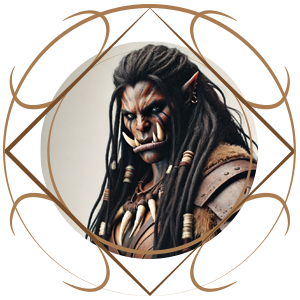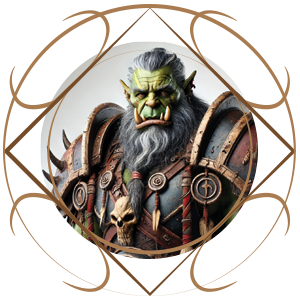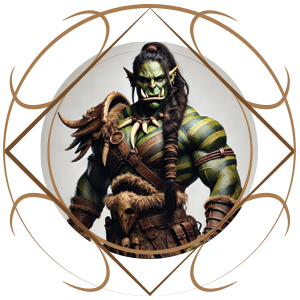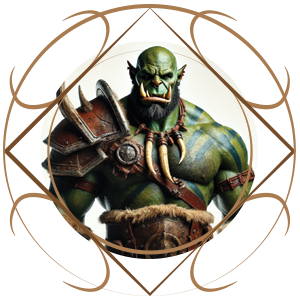


The orcs of Chann’Thrav are not a people born into safety. Their cradle was drought; their teachers were hunger, storm, pain and war. From this merciless school arose a people whom others fear, misunderstand and too quickly call barbaric.
Yet the orcs are not hard because they lack culture.
They are hard because their world devours softer souls.
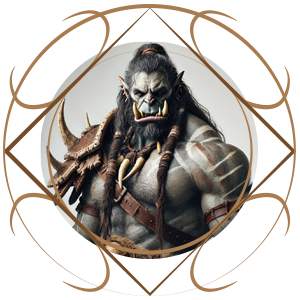
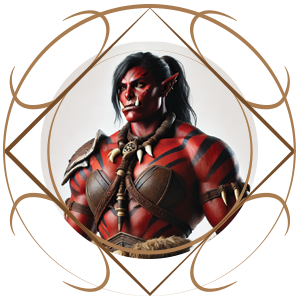
An orc carries the history of his land upon his body: in rough skin, heavy muscle, old scars and eyes that rarely beg for mercy. To him, strength is neither ornament nor a right to rule the weak. Strength is duty. The strong protect the clan. The strong find food. The strong stand at the front when the storm comes.
Strangers often see only violence in them. But behind every warrior stands a clan. Behind every clan stand children. And behind every child stands the hope that the names of the ancestors will not vanish into the dust.
The orcs know what they have done. Their history is not pure, not gentle and not free of blood. They have plundered, fought, conquered and destroyed. But whoever sees the whole truth in that sees only the shadow.
For Chann’Thrav gave them no songs of gentleness. It gave them dust, hunger, poison, beasts and war. It taught them that weakness is not merely small — it can be dangerous. A careless watchman can deliver an entire camp to death. A cowardly warrior can break a battleline. A foolish chieftain can lose a spring and lead his clan into a drought from which no one returns.
Thus, an orc’s life never belongs to the individual alone. It belongs to the clan, to the ancestors and to those yet to be born.
Their affection rarely lives in soft words. It shows itself in the sharing of the last water, in keeping watch by the fire, in the protection of a child, in the passing down of an old weapon, or in the final stand of a chieftain who falls so his people may escape.
To the orcs, a scar is no flaw. It is memory. Some speak of hunts, others of duels, loss, trials, or sacrifice. While other peoples hide their scars, orcs bear them openly. For a scar proves that pain came — and did not prevail.
We live not because the world spared us.
We live because we withstood it.
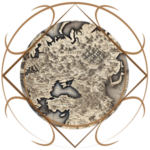
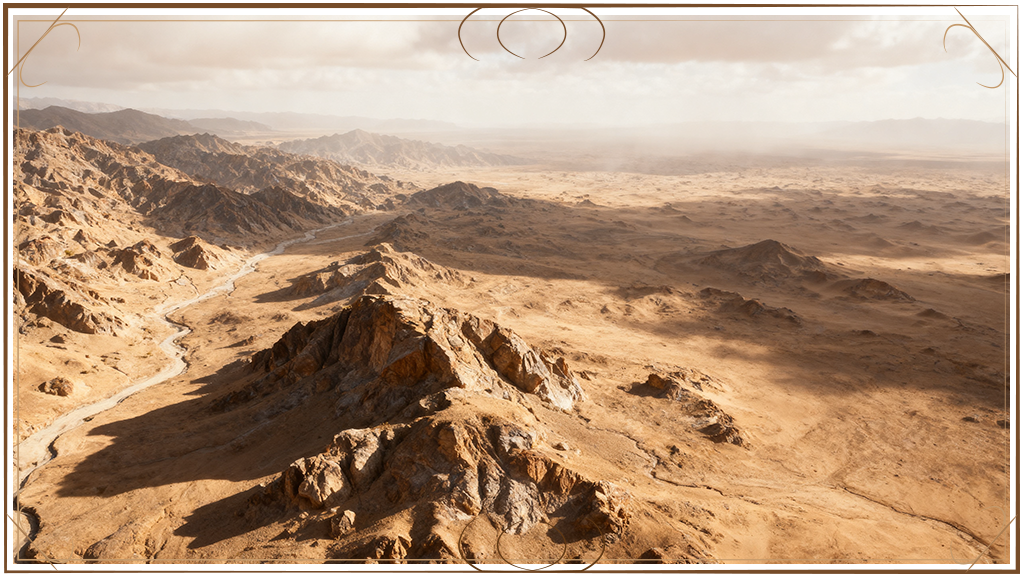
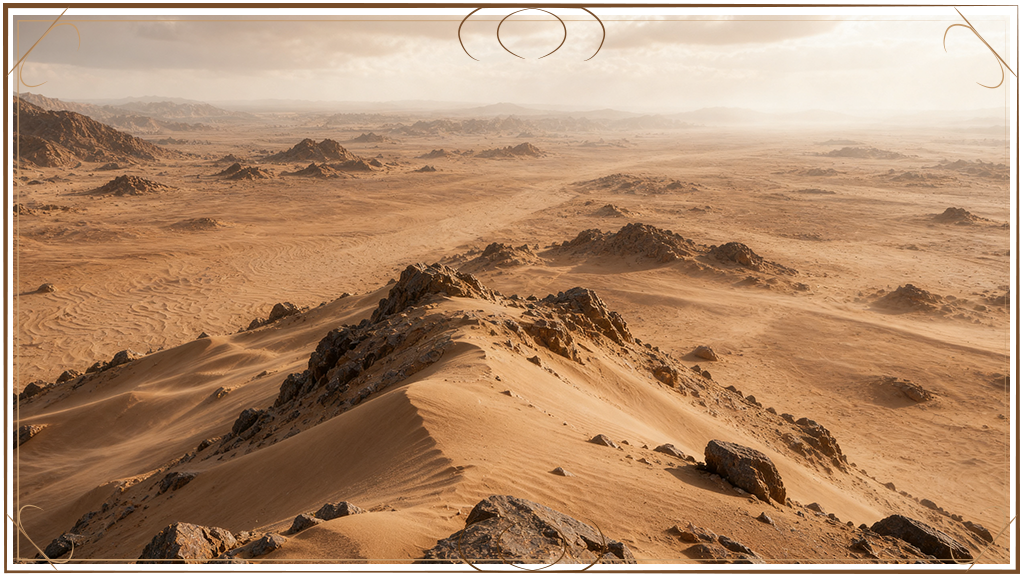
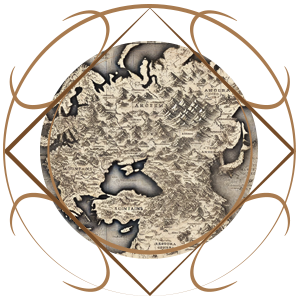
Chann’Thrav is no land of fertile valleys, no forest brimming with life, no soil that nourishes its children. It is dust, stone and drought. A harsh expanse of withered steppe, parched woodland and broken earth, beneath a sun that hangs above it like a burning judgment.
Here, the elements are no gentle forces. They are judges. Heat splits the earth. Wind drives dust across the plains like knives. Rain is rare, water hidden and every spring a treasure for which tribes fight, bleed and die.
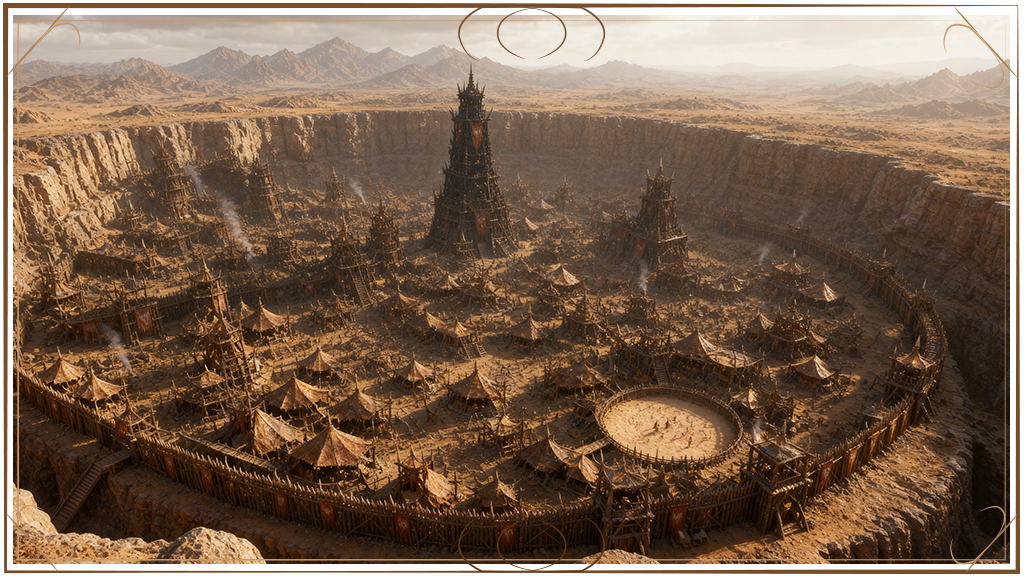
Upon a high plateau rises Khal’Kinthâ, the greatest orcish stronghold and the beating heart of Chann’Thrav. Its walls were not raised to be beautiful. They were raised to endure.
Thus, Chann’Thrav became more than the homeland of the orcs.
It became their teacher, their enemy and their mirror.
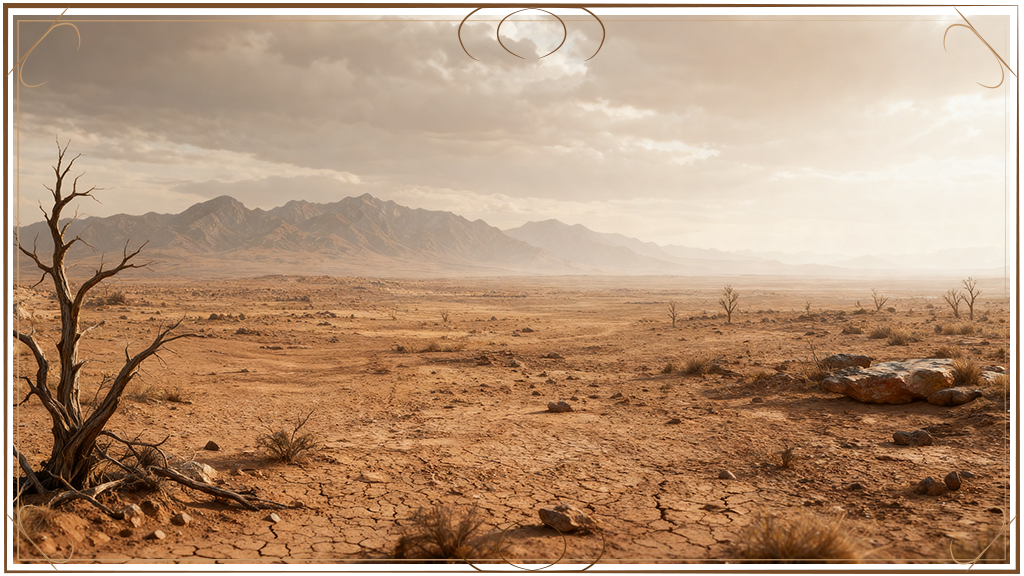
Chann’Thrav tolerates no comfort. Isolated hills and rocky heights rise from the endless expanse. They serve the tribes as watchposts, gathering places and sacred sites where shamans read the wind and warlords decide over life and death.
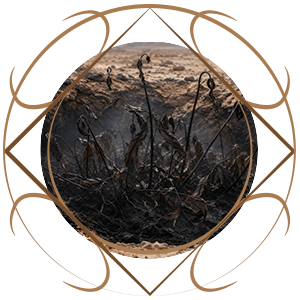
Farming is scarcely possible. Only the toughest plants cling to the cracked soil and even they seem as though they must fight the sun anew each morning. Whoever wishes to live here cannot hope that the world will grant him anything. He must take, preserve and defend.
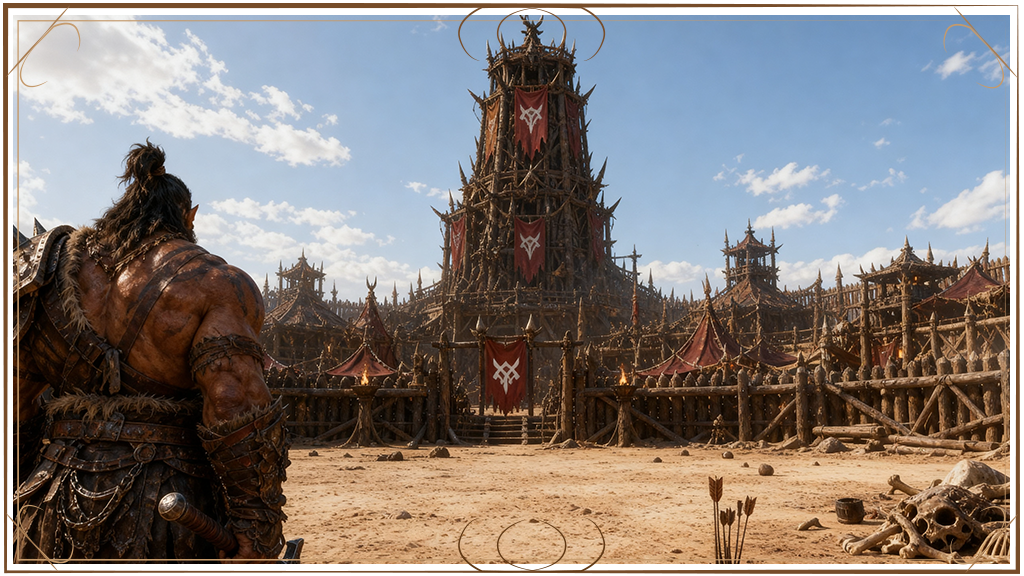
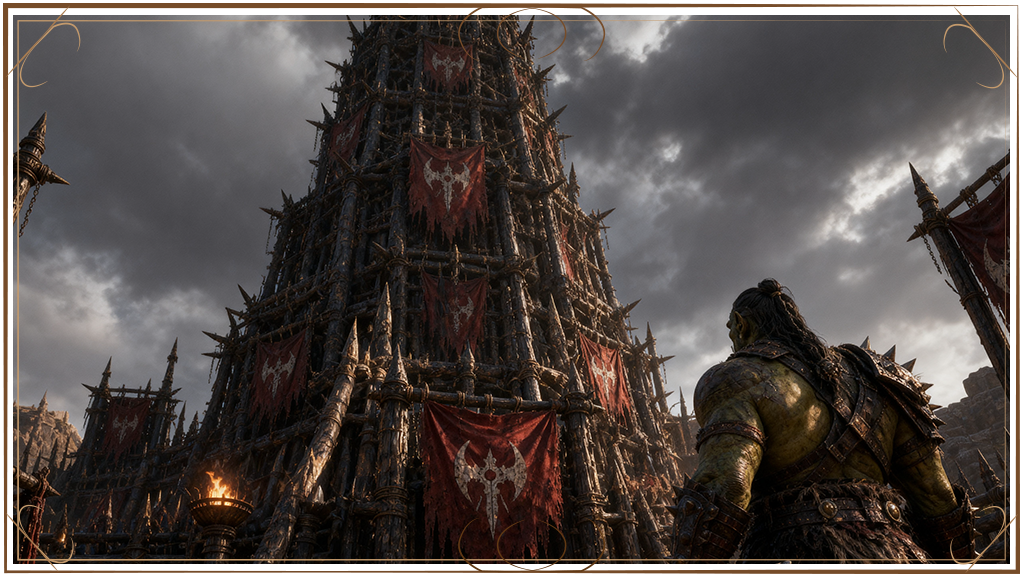
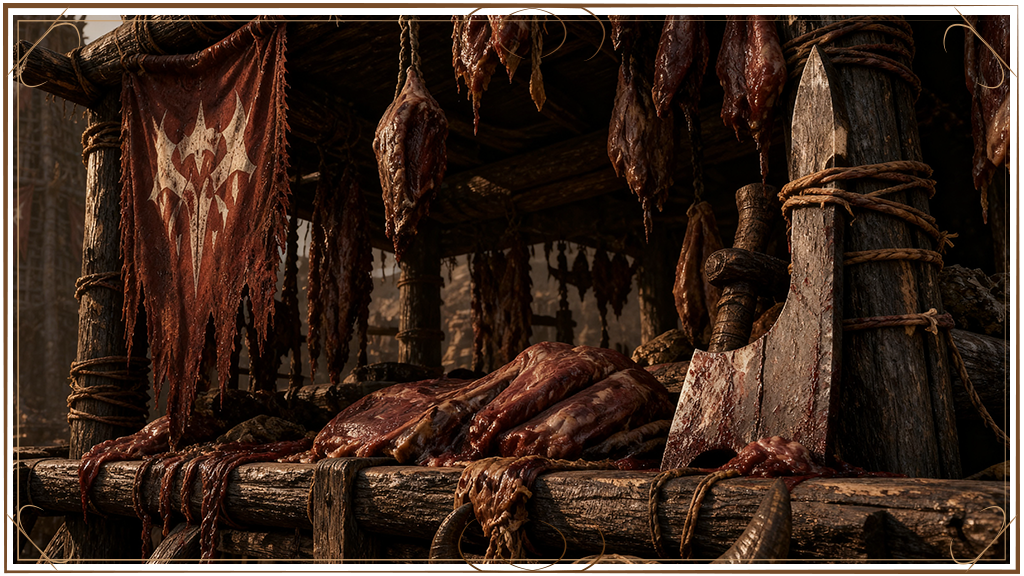
To strangers, Khal’Kinthâ, the greatest orcish fortress, appears like a threat made of stone, wood, leather and bone. In its dusty streets, messengers from distant tribes arrive. Warlords bargain over alliances and ancient feuds. Shamans read signs in smoke, blood and wind. Smiths hammer glowing steel into shapes that resemble warnings more than tools.
Yet even Khal’Kinthâ lives only so long as its people are strong enough to hold it. The city is no promise of safety. It is proof that the orcs have learned to raise walls even in a land without mercy.
An orc may leave Chann’Thrav.
But Chann’Thrav never leaves the orc.

The plants of Chann’Thrav are no gentle gifts of nature. Whatever breaks through the soil here does so against the will of the world. Every root claws deep into cracked earth. Every blade resists the sun. Every tree seems as though it survived the storm and chose not to fall.
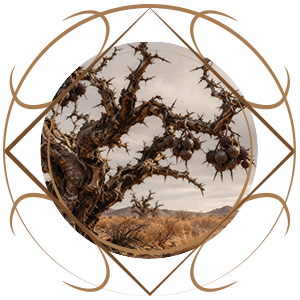
Steppe swordgrass cuts careless hands, yet also provides fibers for ropes, textiles and bindings. Thorn-trees bear poisonous fruits from which shamans draw salves, weapon oils and ritual brews. Bitter roots can carry a clan through a night of hunger — or make the ignorant sick.
In Chann’Thrav, nothing is merely food.
Everything is a trial.
And so the orcs learned to waste nothing and underestimate nothing. A blade of grass can cut. A fruit can kill. A root can save a life. Even the vegetation of this land speaks the same language as its people: survival belongs to those who observe, endure and seize the right moment.
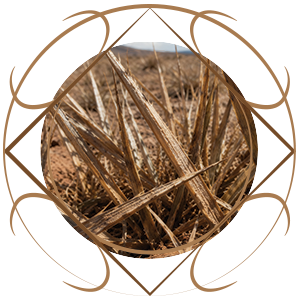
Across the withered plains stretches steppe swordgrass, tough, sharp-edged and resilient. To strangers, it is an obstacle. To the orcs, it is both teacher and tool. From its fibers they make ropes, coarse textiles, bindings for weapons, tents and burdens. Children learn early how to grasp it without being cut.
More dangerous still are the thorn-trees. Their branches are armed with sharp spines, their bark hard and cracked and their fruits carry poison within them. A wanderer who does not know their signs rarely finds shelter beneath them — more often pain, fever, or death.
Yet the orcs do not despise these trees. They respect them. For what can kill can also serve. In knowing hands, poison becomes trial, remedy, weapon oil, or ritual substance. In foolish hands, it remains death.
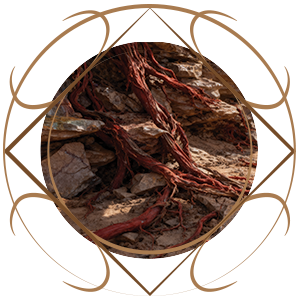
Bitter roots grow in the cracks of stone, stilling hunger and numbing the mouth. In darker hollows lie herbs whose smoke can bring visions — or madness. In the eastern swamps thrive plants hardly distinguishable from mud, shadow and disease.
Thus, the flora of Chann’Thrav is no mere backdrop to orcish life. It is part of their upbringing, their weapons, their rituals and their blood.
I live not because the world is kind.
I live because I refuse to die.

The animals of Chann’Thrav are no peaceful creatures of gentle forests. They are hunters, prey, omens and trials. Each of them carries the harshness of the land in bone, claw, hide, or venom.
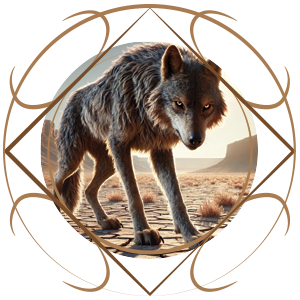
Steppe wolves teach the value of the pack. They do not always strike the strongest; they wait for weakness. Sandcrawlers lurk beneath the hot ground, hidden like death itself. Whoever slays one carries not merely a trophy, but proof that he reached into the jaws of the land and drew his hand back out.
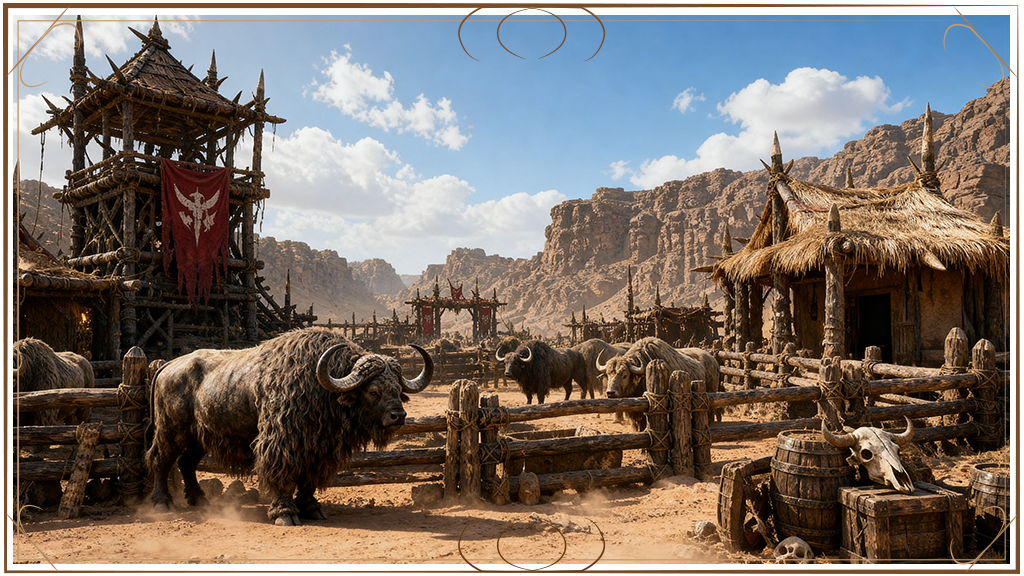
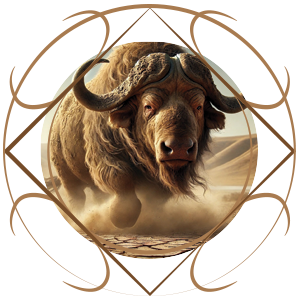
Dust buffalo are walking violence. A herd can save a clan; a single misstep can crush a hunter. Above all circle the rock crows, black as burned steel, interpreted by many orcs as signs of the ancestors.
Thus, every animal of Chann’Thrav teaches the same truth: life is not given. It is hunted, defended and preserved.
The steppe wolves roam the dry expanses in packs. They appear starved, yet their endurance is uncanny. They test, observe and wait for weakness: an injured animal, a weary wanderer, a child straying too far from the fire. In them, the orcs recognize the value of the pack and the patience of the hunter.
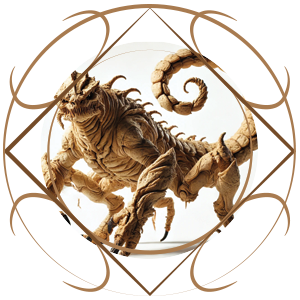
The sandcrawlers live deeper within the terror of the steppe. Giant, scorpion-like and hidden beneath hot ground, they are the nightmare of every careless traveler. Their armor is hard as stone, their pincers can break bone and their venom paralyzes faster than a man can cry for help. Whoever slays a sandcrawler proves not only courage, but cunning.
The dust buffalo, by contrast, are no silent hunters, but walking violence. Their herds can feed a clan, but they can also shatter a hunter. That is why hunting them is more than the gathering of food. It is a trial of courage, planning and unity.
Above it all circle the rock crows. They appear where death is near: above battlefields, sick camps, marching hordes. Some orcs believe they are the eyes of the ancestors.
The wolves taught the pack. The sandcrawlers taught caution. The dust buffalo taught that food must be fought for. The rock crows taught that death is always watching.

To outsiders, orcish society appears harsh, loud and cruel. Yet behind this hardness lies no meaninglessness. It is order — shaped by a land that forgives no mistake.
At the center of orcish life stands the clan. Not the individual warrior, not the small family, not even the chieftain. The clan is protection, food, memory and future all at once. An orc is born into it, grows beneath its eyes, fights for it and dies in the hope that his name will continue to be spoken.
Loyalty, to the orcs, is no polite ideal. It is the law of survival. Whoever strengthens his clan honors the ancestors. Whoever betrays it loses more than honor — he loses his place in memory.
Thus, every task has dignity if it preserves the clan: the warrior who protects; the hunter who brings food; the smith who shapes weapons; the elders who preserve history; and the children who will one day carry the name onward.
At the head of a tribe stands the chieftain. He rules with great power, yet that power is never comfortable and never secure. He is no king hiding behind crown or bloodline. He is the visible embodiment of his clan’s strength. So long as he protects, leads and bears the weight of decisions, he is followed. If he grows weak, he may be challenged.
Beneath him stand warlords, hunters, smiths, craftsmen and shamans. Each contributes differently to survival. No clan lives by courage alone. A warrior with an empty stomach falls faster than one with scars. A poor blade can end a bloodline. A lost tool can decide life and death in a drought.
The old are not honored out of pity, but out of reverence. An old orc is a victory over time, hunger, war and sickness. His scars are chronicles. His warnings carry the weight of survived mistakes.
And the children are the most precious possession of a clan. Not because they are spared, but because they mean future. A child is a new name in the chain of ancestors. That is why orc children are tested early — not out of lovelessness, but because false gentleness in Chann’Thrav can be crueler than any trial.
A single orc may win a battle.
But only a united clan can survive Chann’Thrav.
The orcs know no crowns, no lines of succession and no councils lost in endless debate while the springs outside run dry. Their order was not born in palaces, but beneath a burning sun, in times of hunger, dust storms and battles.
At the head of a tribe stands the chieftain. His power is great, yet it is never comfortable and never secure. A chieftain rules only as long as his clan believes he can protect, feed and lead them.
If he grows weak, he may be challenged. To strangers, the ritual duel for leadership seems brutal. To the orcs, it is necessity. For a weak leader endangers not only himself, but children, hunters, smiths, elders, warriors, springs and entire bloodlines.
Power in Chann’Thrav is no possession.
It is a burden.
And only one strong enough to bear that burden may command.
A chieftain decides over migrations, hunting grounds, raids, alliances, punishments and wars. His word carries weight — often the weight of life and death. Yet that word remains strong only so long as the clan recognizes that its leader does not speak for himself, but for the survival of all.
Beneath the chieftain stands the commander, his right hand and supreme war leader. He gathers warbands, organizes defenses and ensures that the leader’s will takes shape in camp, on the march and in battle. A commander must be more than a brutal warrior. He must judge enemies, scent betrayal and know when a fight cannot be paid for.
Among the tribes of Chann’Thrav, a tense balance reigns. The steppe belongs wholly to no one and yet every tribe defends its waterholes, hunting grounds and sacred places with bitter ferocity. A violated border, a stolen herd, or a claimed spring can be enough to kindle ancient feuds anew.
Only in times of greatest threat does something rise that is greater than any single tribe: the Blood Pact Gathering. Then chieftains from steppe, desert, mountainland and swamp come together. Not as friends, but as leaders who have understood that a danger has grown beyond them all.
A Blood Pact can turn feuding tribes into a horde whose thunder rolls across all Argenon. Yet when the danger has passed, the tribes return to their own fires.
Power is a burden.
And only the strong may bear it.
The Language of the Orcs of Chann’Thrav – Ur’Khaar
Ur’Khaar, the ancient tongue of the orcs, is a harsh, unpolished current of sound, resembling the growl and rumble of a beast more than the melodious languages of the elves or the well-shaped words of men. Across the centuries, it has remained almost unchanged — a relic of an age in which words were not adorned, but wielded like weapons.
It is forced from deep within the throat, threaded with guttural sounds, broken syllables and sharp consonants. To outsiders, Ur’Khaar often sounds like the threatening growl of a predator moments before it strikes — a martial sound that awakens fear and reverence in equal measure.
Phonetics and Sound
Ur’Khaar does not follow the refined order of other tongues. It lives through sharply stressed sounds and a natural rhythm shaped by emphasis and tone. Sentences are short, forceful and brutally efficient. There is no needless embellishment, no tangled construction. An orc does not speak to decorate his meaning, but to command, to warn, or to threaten.
Characteristic Sounds and Features:
Hard consonants: K, G, R, T and D dominate, giving the language its cutting, abrupt sound.
Guttural throat sounds: Kh, Gh, Rr — sounds drawn from deep within the chest and given particular force in commands and names.
Short, angular syllables: No unnecessary sounds; every word has a clear purpose.
Grunts and growls: Often used to intensify emotion or underline aggression.
Grammar and Sentence Structure
The language of the orcs is minimalist, stripped of unnecessary weight. Its structure is direct and blunt; lengthy explanations and elaborate phrasing are alien to it.
Basic Principles:
Subject – Verb – Object: A direct, clear sequence
(for example: “I kill you” → “Ghaar murrk thrak”).
No articles: Words such as “the”, “a”, or “an” do not exist.
Few tenses: Most sentences stand in the present or in a simple past. The future is understood through context.
Commands as the essence of the language: A single word is often enough to give an order
(“Ghaar!” – “Kill!”).
Doubled verbs for intensity: Repetition strengthens meaning
(“Thrak-thrak” – “Slaughter them to the last!”).
Common Terms:
“Ghaar” – killing, war
“Marrk” – flesh, prey
“Drak” – strength, power
“Khaar” – blood, honour
“Ruk” – fire
“Thrak” – combat, battle
“Ur’kharr” – the land of the orcs
Typical Phrases:
“Thrak’Ghaar!” – “Battle and death!”
“Ghaar murrk thrak!” – “I kill you!”
“Khaar urrh Drak!” – “Blood is strength!”
“Ruk’Marrk!” – “Meat upon the fire!”
“Drak urth Marrk.” – “The strong eat first.”
Gesture and Body Language
Orcs do not speak with words alone, but with their entire bodies. A short utterance often receives its full meaning only through the gesture that accompanies it.
Common Gestures:
A strike against the chest – a sign of pride or respect.
A headbutt against another orc’s brow – a greeting among warriors.
An outstretched arm with a clenched fist – a challenge to single combat.
A deep grunt with lowered head – an expression of respect or submission.
A loud snort or spitting upon the ground – a sign of contempt.
Dialects and Regional Differences
Although all orcs of Chann’Thrav speak Ur’Khaar, variants of the language have emerged through their differing habitats:
Steppe orcs – Their words are sharp and clipped, suited to swift commands upon the battlefield.
Mountain orcs – Their speech is slower, with drawn-out vowels that echo through the wind-lashed heights.
Desert orcs – Their language is quieter, marked by hissing sounds, as though they made the sand itself whisper.
Swampland orcs – Their dialect is wet and throaty, often accompanied by smacking sounds.
These variations remain mutually intelligible, yet they are often a source of mockery. A mountain orc may laugh at the “soft tongues” of the swampland orcs, while a steppe orc may find the slow speech of the mountain orcs sluggish and dull.
Orcish Names and Their Meanings
Among the orcs, a name is more than a mere designation — it is a statement about the one who bears it.
Common Names:
“Ghaar” – “Killer”
“Brukk” – “Striker”
“Drakh” – “The Strong One”
“Rukharr” – “Fireblood”
“Thar” – “Warrior”
“Grash” – “Wolf”
“Zurr’gh” – “Bloodhound”
Some orcs earn an honour-name over the course of their lives, granted through great deeds:
“Thrak’Marrk” – “He Who Slew Many”
“Ruk’Drak” – “Firestorm”
“Ghaar’Urrh” – “The Bloody One”
Writing and Runes
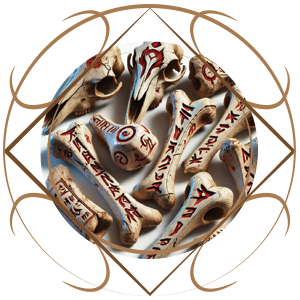
The orcs of Chann’Thrav do not possess a fully developed written culture, yet they carve symbols and runes into bone, stone, or weapons to leave messages behind.
Common Signs:
Two crossed lines – symbol of combat or duel
A carved claw – mark of territory
Three parallel lines – warning of danger
A circle with a dot in the centre – sacred place or gathering site
Only the shamans preserve ancient knowledge through runes upon parchment or animal hide, often whispered to them by the ancestors themselves.
| Word (Ur’Khaar) | Translation | Meaning |
|---|---|---|
| Ghaar | Killing, war | Used for battle and honour, often as a war cry. |
| Marrk | Flesh, prey | Describes both food and the spoils of battle. |
| Drak | Strength, power | A central concept in orcish culture; power and respect through strength. |
| Khaar | Blood, honour | Symbolises both life and the warrior tradition. |
| Ruk | Fire | Used for fire, heat and also destruction. |
| Thrak | Combat, battle | A general term for any kind of confrontation. |
| Ur’kharr | The land of the orcs | The orcish name for Chann’Thrav. |
| Brukk | Bone | Can stand both literally and metaphorically for hardness and resilience. |
| Thal | Hunt | Hunting and combat are closely bound in orcish thought. |
| Varr | Fist | Symbol of raw strength and violence. |
| Zurr | Wolf | A symbolic animal of the orcs, representing ferocity and intelligence. |
| Ghurr | Thunder | Expression of powerful presence, also used for loud cries. |
| Rukh | Shadow | Symbolises concealment and cunning in battle. |
| Drog | Death | The inevitable companion of the warrior. |
| Harr | Wind | Often used in combination with other words, for example to express speed. |
| Zharr | Firebringer | A metaphor for a destructive warrior. |
| Krash | Ash | Stands for annihilation and the legacy of battle. |
| Urg | Stone | Symbol of steadfastness and unyielding will. |
| Thruk | Hammer | Weapon and symbol of absolute force. |
| Vor | Storm | Used as a metaphor for uncontrollable power. |
| Thul | Claw | Stands for brutal efficiency in close combat. |
| Bor | Flame | Metaphor for passion, wrath and destruction. |
| Thar | Warrior | An honourable title for a proven fighter. |
| Kraal | Butcher | Used for particularly cruel warriors. |
| Ghaz | Victor | Orcish rulers often bear this title. |
| Targ | Shield | Protection and defence in battle. |
| Drog’Marrk | Blood cry | Expression for a berserker-warrior. |
| Ur’Vash | Daughter of the Earth | Name for an orc especially bound to the land. |
| Vok | Fist | Stands for raw violence and dominance. |
| Zarak | Lord of Ashes | Title for those who have destroyed entire settlements. |
| Phrase (Ur’Khaar) | Translation | Meaning |
|---|---|---|
| Thrak’Ghaar! | Battle and death! | War cry of the orcs. |
| Ghaar murrk thrak! | I kill you! | Threat or declaration of a duel. |
| Khaar urrh Drak! | Blood is strength! | Central creed of the orcs. |
| Ruk’Marrk! | Meat upon the fire! | Ritual call during a feast. |
| Drak urth Marrk. | The strong eat first. | Points to the hierarchy within a tribe. |
| Bruk’Khaar! | Bone and blood! | Expression of courage and will to fight. |
| Thal’Vor! | Hunt like the storm! | Rallying cry before a hunt or attack. |
| Harr’Ghaar! | Wind and war! | Describes a sudden assault. |
| Zharr’Morr! | Burn them down! | Command for plunder and destruction. |
| Urg’Drak! | Stone is strength! | Expression of steadfastness and discipline. |
| Marr’Khaar! | Bloodied prey! | Expression of joy after a successful hunt or battle. |
| Rukh’Thrak! | The shadow fights! | Term for an ambush or act of cunning. |
| Ghurr’Thal! | The thunder hunts! | Term for an relentless warrior. |
| Drog’Zharr! | Death in fire! | Cried in desperate, honourable battles. |
| Targ’Morr! | The shield of war! | Title for a defender or mighty warrior. |
| Word (English) | Ur’Khaar |
|---|---|
| I | Murrk |
| You | Thurr |
| He/She/It | Garr |
| We | Kurrm |
| They | Tharr |
| This | Brak |
| That | Drak |
| Who | Gharr? |
| What | Throk? |
| Where | Marrk? |
| Why | Zorr? |
| How | Khuur? |
| Not | Nurr |
| Yes | Urgh |
| No | Brukh |
| And | Thrak |
| Or | Zrak |
| With | Marr |
| For | Gorr |
| In | Rukh |
| On | Thruk |
| A/An | Grash |
| Good | Kraal |
| Bad | Brath |
| Love | Varrk |
| Life | Zurrk |
| Death | Drog |
| Time | Harrk |
| Eat/Food | Marr’khaar |
| Drink | Ruk’marr |
| Phrase (English) | Ur’Khaar |
|---|---|
| Hello! | Urgh! |
| How are you? | Khuur thurr? |
| I am well. | Murrk kraal. |
| Thank you! | Thorr! |
| Please. | Rukh’tharr. |
| Forgive me! / Excuse me! | Brukh’marr! |
| No problem. | Nurr throk. |
| I do not understand. | Murrk nurr throk. |
| Can you repeat that? | Thurr marrk drak? |
| Where is …? | Marrk …? |
| What time is it? | Khuur harrk? |
| What are you doing? | Throk thurr? |
| I am hungry. | Murrk marr’khaar. |
| I am thirsty. | Murrk ruk’marr. |
| I am tired. | Murrk brath. |
| I love you. | Murrk varrk thurr. |
| Watch out! | Thruk’gharr! |
| Until later! | Harrk’tharr! |
| I do not know. | Murrk nurr throk. |
| Good fortune! | Drak’kraal! |
| Good night. | Harrk’brukh. |
| Welcome! | Thorr’gharr! |
| I need help. | Murrk throk’brukh. |
| I am sorry. | Brukh’marr murrk. |
| It is good to meet you. | Kraal’thurr thorr. |
| What is your name? | Khuur thurr marrk? |
| My name is … | Murrk’gharr … |
| I come from … | Murrk marrk’urr … |
| I like this. | Murrk kraal drak. |
| I do not like this. | Murrk nurr kraal drak. |
Ur’Khaar is no language for diplomats or poets. It is the tool of a warrior — sharp, direct and merciless. An orc who masters it can demand respect with a single word — or bring death.
The Names of the Orcs of Chann’Thrav – Words of Power and War
In the harsh and merciless tongue of the orcs, Ur’Khaar, a name is far more than a mere designation. It is a proclamation of strength, an echo of victories past and an omen of deeds yet to come. Every name carries meaning, shaped from ancient roots that reach deep into orcish culture. A young orc receives his first name at birth, yet over the course of his life, he must still earn it. Those who accomplish great deeds may be granted an honour-name — a second, weightier title, consecrated by the blood of their enemies or by the trials of the ancestors.
| Name | Gender | Translation | Meaning |
|---|---|---|---|
| Gur’Dam | Male | The Unyielding One | An orc who never kneels, neither before enemies nor before nature. |
| Thrak’Dur | Male | Storm of Blood | Born for war, his name is feared upon the battlefields. |
| Khaar’Morg | Male | Shadow of War | A merciless hunter who strikes without sound. |
| Bruk’Ghar | Male | The Bonebreaker | His enemies hear their bones crack before they fall. |
| Zurr’Thag | Male | The Steel One | Unshakable as stone, hardened by fire and battle. |
| Gharm’Rok | Male | Fire of the Steppe | He moves across the lands like a blazing flame. |
| Varr’Tok | Male | Fist of the Sky | His blows are like lightning, his wrath a storm. |
| Drak’Marr | Male | Hunter of Life | To him, life is an eternal hunt and the weak are his prey. |
| Thorg’Zhan | Male | Bringer of Lightning | When he comes, the rumble of thunder follows. |
| Marr’Uk | Male | The Blood Wolf | A hunter, a fighter, a master over life and death. |
| Thrash’Gor | Male | Breaker of Chains | Nothing holds him back — no shackle, no wall. |
| Khurr’Nag | Male | The Relentless One | He fights until his final breath and knows no retreat. |
| Ur’Zorr | Male | Heir of the Storm | The wind whispers his name; the thunderstorm calls to him. |
| Ruk’Thrak | Male | The Fighter Without Fear | No wound halts him, no pain is too great. |
| Kraal’Gosh | Male | The Fire-Tusk | His fury burns hotter than any flame. |
| Zarak’Dran | Male | Lord of Ashes | From burned cities, he rises as victor. |
| Vok’Dur | Male | The Iron Fist | His hand is his sword, his fist a hammer. |
| Ghurr’Mat | Male | The Rockbreaker | No obstacle holds him back, no enemy remains standing. |
| Targ’Morr | Male | Shield of War | The first to enter battle, the last to fall. |
| Grash’Burr | Male | The Earth-Wanderer | An orc who carries his homeland in the dust of the steppe. |
| Drog’Thul | Male | The Death-Claw | His grip means the end. |
| Tarok’Gur | Male | Blessing of the Ancestors | The old spirits watch over him. |
| Rhukk’Marr | Male | Storm Hunter | He follows the thunder, hunts the winds and fears nothing. |
| Ghaz’Khar | Male | Born Victor | Destined for battle from birth. |
| Thal’Dor | Male | The Bone-Slaughterer | Every enemy who meets him remains behind as a heap of bones. |
| Bor’Gash | Male | Son of Flames | Fire runs through his veins and destruction follows him. |
| Harr’Vuk | Male | The Dark Claw | A hunter of the night, a shadow beneath the stars. |
| Zharr’Thak | Male | The War Hound | A warrior without restraint, a living weapon. |
| Urg’Moth | Male | Voice of the Rocks | His words echo like thunder, his will is unbreakable. |
| Khaa’Mir | Female | Flame of War | A warrior whose fury burns as hot as the steppe. |
| Vash’Zurr | Female | The Untamed One | None can tame her; no law can hold her. |
| Thar’Gosh | Female | The Storm Claw | She strikes like lightning and her enemies fall like rain. |
| Marr’Thak | Female | Huntress of Shadows | Silent as the wind, deadly as the night. |
| Ur’Vash | Female | Daughter of the Earth | Born of stone and dust, unshakable upon her path. |
| Zarra’Dru | Female | The Bone Whisperer | She knows the stories of the ancestors and reads from the dead. |
| Brash’Marr | Female | The Beast-Rider | Her mounts fear nothing and her spears never miss. |
| Thrag’Ruh | Female | Blade of Thunder | Her voice thunders, her blade tears paths through all before her. |
| Vor’Zan | Female | The Storm-Born | Where she walks, winds rage; where she strikes, order falls. |
| Kurr’Morr | Female | Blood of the Ancestors | In her heart burns the fire of those who came before. |
| Zarn’Khaa | Female | The Fire-Gaze | Her gaze scorches, her words blaze. |
| Ruk’Dosh | Female | Slayer of Lies | She knows no deception, only the steel of truth. |
| Krash’Mir | Female | The Ash Goddess | She rises from the embers of fallen cities. |
| Drak’Nurr | Female | The Untamed Heart | No cage holds her, no oath binds her. |
| Vok’Thar | Female | The Earth Trembles | Her steps are thunder, her deeds are legend. |
| Thuur’Garr | Female | The Vengeful One | Whoever wrongs her shall never find peace. |
| Urr’Thok | Female | The Shadow Tongue | Her words are arrows, her lies deadly. |
| Grash’Dorr | Female | The Stone Singer | Her voice echoes in the mountains; her enemies hear it last. |
| Hurr’Mash | Female | The Spear of the East Wind | None escape her thrust. |
To the orcs of Chann’Thrav, a name is not a gift, but a trial. Every word spoken in Ur’Khaar carries the echo of the ancestors, the weight of battles long past and the expectation of wars yet to come. A weak name is forgotten; a meaningless name is despised. But one who bears a name that resounds in legend leaves footsteps in the dust of the steppe.
And so the orcs walk through life with their names — as chains that bind them to the expectations of their tribe, or as blades with which they carve their own place in history. For only those who write their names in blood are recognised by the ancestors.
The smithcraft of the orcs was not born from a desire for beauty. It arose from need, hunger and war — from the knowledge that a blade breaking at the wrong moment does not merely kill a warrior, but may weaken an entire clan.
Orcish forges are smoking places of embers, soot, slag and hammer blows. There, steel is not gently shaped, but subdued. Many weapons are born from broken steel: shattered blades, captured armor, old spearheads and the remnants of battles past.
What others throw away, orcs cast back into the fire.
Bone, leather, sinew, claws and poison also find their place. Nothing is wasted. Every weapon carries history: the hand of the smith, the hunt of a beast, the steel of an enemy, the rune of an ancestor.
An orcish blade need not be beautiful.
But it must hold.
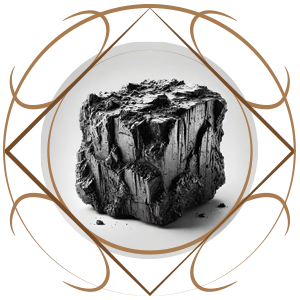
The most important material for many orcish smiths is broken steel. It comes from shattered blades, captured armor, old spearheads and the remains of past battles. What others would discard as scrap, the orcs throw back into the fire. There it is melted, hardened, beaten and born anew.
Thus, every weapon carries a past within it. Perhaps the shield of a fallen enemy. Perhaps the blade of a slain warrior. Perhaps the iron of a defeat that must not be forgotten.
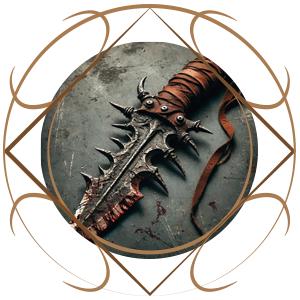
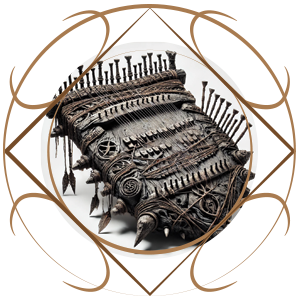
Bone, claws, leather and sinew are not wasted either. From bone come grips, reinforcements and rune-bearers. From claws come hooks and barbs. From animal sinews come bindings. Even the remains of slain beasts are carried on within weapons, as though some part of their strength still lived in the steel.
Weapons passed down through generations hold special meaning. An old axe may be worth more than a pouch full of gold — not because its steel is flawless, but because it has carried names: hands, victories, losses and oaths.
When a warrior dies, his weapon is not carelessly set aside. It passes to a child, a companion, a student, or one worthy of carrying on his legacy. Sometimes it is forged anew and yet even then, a part remains.
This blade will not be beautiful.
But it will hold.
The orcs do not first learn combat when they take a weapon in hand. They learn it with their first thirst, their first fall, their first night when something waits among the rocks outside.
To them, combat is no noble game and no art apart from life. Combat is the language of Chann’Thrav itself. Drought fights the body, hunger the will, beasts the camp and enemies the clan.
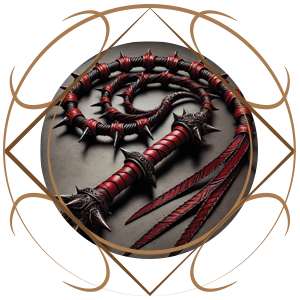
Their martial art is direct, heavy and relentless. A strike is not meant to impress. It is meant to break. A shield is not meant to shine. It is meant to hold. A blade is not meant to sing. It is meant to cut.
Yet beneath this rawness lies experience. The greatest warriors know that rage must be guided, that pain is not an ending and that a true fighter does not stand for himself alone.
For behind him burns the fire of his clan.
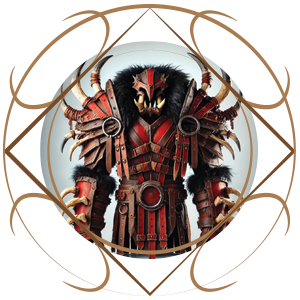
Other peoples seek elegance, discipline, or perfection in warfare. The orcs respect such arts, yet they measure them by a single question: Do you remain standing when the blow falls?
An orcish warrior is not shaped by drills alone. He is shaped by hunts, duels, marches beneath a burning sun and watches through dangerous nights. His first lesson is not: “Strike beautifully.” It is: “Survive.”
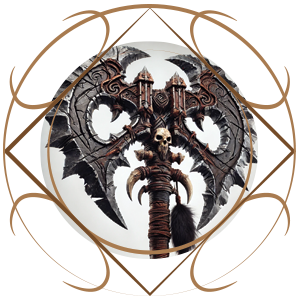
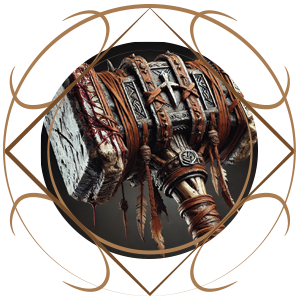
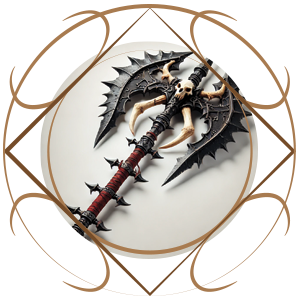
In close combat, the orcs favor weapons that turn their bodily strength into immediate violence: great axes, heavy warhammers, broad blades and massive spears. Yet anyone who mistakes their weapons for primitive tools is wrong. An orcish axeman knows when to strike with all his force. A hammer-bearer knows how to throw an armored foe off balance. A spearman knows how to keep distance until the moment of breakthrough comes.
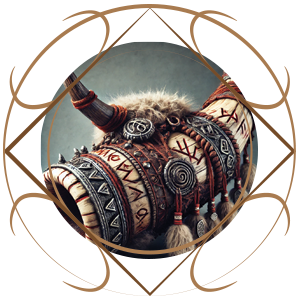
Before a battle, the orcs wield fear as a weapon. Their drums begin slowly, deep and heavy, like a second heart beneath the earth. Then they grow faster. War horns cut through the dust. Warriors call the names of their ancestors and raise their weapons to the sky.
Yet the greatest warriors know: fury is a fire that must be guided. A young warrior who only roars and charges often dies early. An old warrior has learned when the storm must break loose — and when it must be held within.
Courage begins when fear arrives.
Strength begins when pain remains.
Honor begins when, despite both, you do not yield.

The orcs of Chann’Thrav are no people of grand academies of magic. They possess no silent halls filled with scrolls and no masters who teach their art in cleanly drawn circles. To the orcs, magic is no noble craft.
Magic is danger.
It awakens from blood, storm, pain and ancestral whispers. A power that does not wish to be tamed. A flame that serves the one strong enough to hold it — and consumes the one who believes he can touch it without sacrifice.
Thus, magic lies only in the hands of a few shamans, storm-callers and blood priests. They are shaped not by books, but by visions, trials, smoke, fever and dreams. Some return stronger. Some do not return as they were.
A shaman reaches for something older and more unpredictable than steel. That is why the orcs both fear and honor him.
A young orc does not become a shaman because he wishes it. He is called: through fever, voices in the wind, dreams of ancestors, or a storm that seems to answer only him. But a call alone is not enough. Chann’Thrav gives nothing freely. Not even magic.
Whoever steps onto the path of the shaman must endure trials that can break body and mind. He walks alone through thunderstorms, fasts beneath a burning sun, breathes the smoke of bitter herbs and learns to understand pain not as an enemy, but as a threshold.
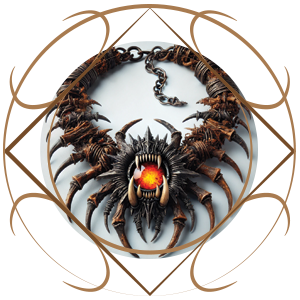
Magical crystals hold special value among the orcs. They are rare, hidden in veins of rock, found upon old battlefields, or taken from fallen enemies. To an orc, a crystal is no ornament. It is a captured spark — dangerous and precious.
The best-known form of orcish magic is the blood-rage. A shaman does not merely summon anger. He opens a door within the warrior, to the place where pain, fear, ancestral voices and the will to survive become one burning current. This power grants strength, but it demands its price.
The storm itself also speaks in orcish magic. A bolt of lightning may be warning. A gust of wind, answer. A sudden rain, judgment. A silent sky, the worst message of all.
Orcish magic does not comfort by taking pain away.
It comforts by giving it meaning.
The orcs possess no art in the sense of the gentler peoples. They do not create to please foreign eyes. Their art was born from war, grief, memory and the fear of being forgotten.
For to the orcs, a life does not end with death. It ends only when no one speaks the name of the dead.
Their drums are the oldest memory of the people. Deeply they beat into the night, slowly at first, heavy and dark like a heart beneath the earth. Then they grow faster, harder, mightier, until an entire horde breathes in the same rhythm.
Totems, runes, scars, weapons and body markings also tell history. A notch may speak of a battle. A bone ornament of a hunt. A rune of a name that must not be forgotten.
To the orcs, art is true when it remains. When it defies dust, wind, time and death.
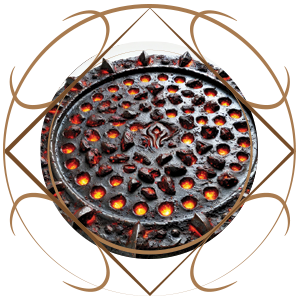
When the sun sinks over Chann’Thrav and the fires of the camps flare up, the oldest memory of the orcs often begins to speak: the drums.
To strangers, orcish music sounds like noise. To the orcs, it is history. Every rhythm has meaning. A slow beat may carry grief. A double beat may call to the hunt. A fast, unstoppable rhythm may set a horde in motion.
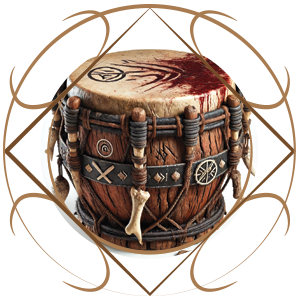
The most revered instruments are the thunder drums, the Ghârag-Drûn. Their frames are made from heavy woods, the bones of mighty beasts, or the remains of sacred totems. When they are struck, they are not merely heard. They are felt in the chest, in the bones, in the ground beneath one’s feet.
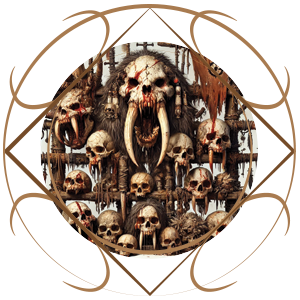
Totems, too, are living chronicles. They are made of stone, wood, bone, leather, metal and trophies of past victories. A clan totem is never finished. It grows with its people. When a clan triumphs, a new sign is added. When a hero falls, his name is carved. When a defeat is survived, it too remains in wood or stone.
The body itself is a canvas of memory. Scars, brands, tattoos and war paint tell what no song can fully carry.
Every drumbeat says: We are still here.
Every rune says: This happened.
Every scar says: I survived.
Every totem says: Do not forget us.

The orcs do not pray for an easy life. Not for peace, riches, or protection from pain. Such a prayer would be foreign to them. For their faith teaches that the world is not a cradle, but a trial.
At the heart of this faith stands Thragos, Lord of Storms, Blade of the Sky and Tester of the Strong. He is no god of mercy. He does not lift his children out of the storm. He places them within it and watches who remains standing.
Thus, orcish prayers rarely consist of soft words. A warrior who fights despite fear is praying. A hunter who finds food when the clan hungers is praying. A chieftain who falls last so his people may escape is praying.
Death is not the greatest defeat to the orcs. Being forgotten is worse. A name must endure — before the ancestors, before the clan and before the storm.
Thragos is no god of mercy. He gives nothing. He tests. The shamans tell that the gods once granted the peoples their homelands. To the elves, forests. To the dwarves, mountains. To humans, fertile plains. When the orcs’ turn came, Thragos is said to have remained silent for a long time. Then he pointed to Chann’Thrav — to drought, dust, hunger, beasts and storm — and spoke: There, you shall become strong.
Whether this tale is truth or parable, no one knows. Yet to the orcs, it contains all they need to know of their god.
The principles of their faith do not live upon tablets, but in scars, oaths, duels, totems and the stories of the old. Strength is responsibility. The clan stands above the individual. Honor is proven through deeds. A name must be earned. Pain is not an ending. Death is not the greatest defeat. Being forgotten is worse.
When an orc dies, the shamans believe his soul rises from the body with smoke, wind, or storm. Those who were worthy enter the Halls of the Storm. There the ancestors sit beside eternal fires, while beyond them thunder rolls across endless plains.
But whoever lived as a coward, betrayed his clan, or cast aside his responsibility is not carried home by the storm. He is scattered by the wind: nameless, homeless, without song, without fire, without ancestors.
Thus, the burial of an orc is no quiet ending. It is a passage. The shamans name the deeds of the dead, his victories, his failures and his trials. For no false image must stand before the ancestors. A name must be true when it is carried into the storm.
The storm comes for everyone.
The question is not whether you fall.
The question is whether your name still stands after.