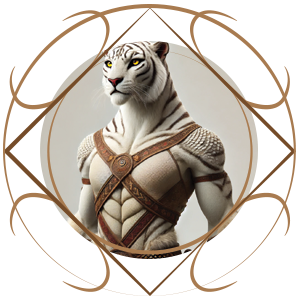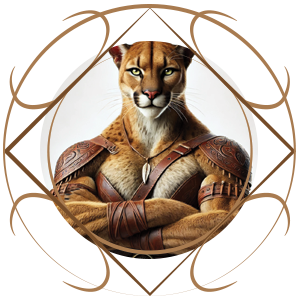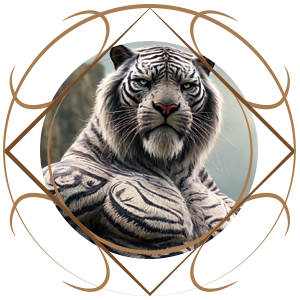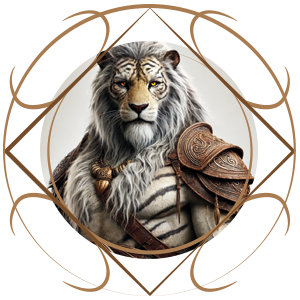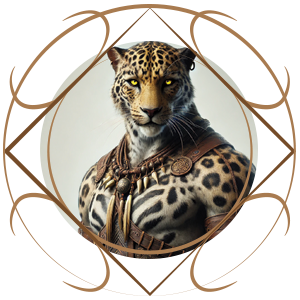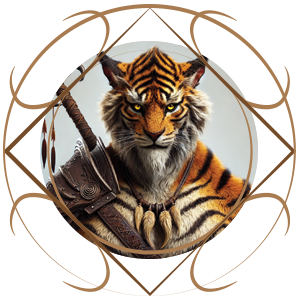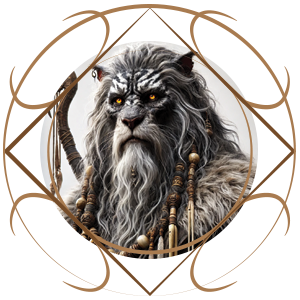



The Togar of Khylias are no young people still seeking their place in the world. They once possessed it. Their mages walked the halls of Frantir, their hunters read the jungle like an open book and their crystals held a power that other peoples both admired and feared.
Then came war, guilt and judgment.
Their magic was taken from them. Their freedom. Their ways through Argenon. Foreign chronicles turned a people of meaning into a warning. Their greatness became suspicion. Their history became a shadow.
Yet the Togar did not disappear.
They withdrew deeper into Khylias, into jungle, mist, temple stone and memory. There, they preserved their language, their songs, their scars and the truth that a people does not die so long as it still knows itself.
The world may have forgotten the Togar.
Khylias has not.
The Togar carry a wound that reaches deeper than lost battles. They were not merely defeated. They were diminished. Their power was forbidden, their crystals stolen or sealed, their paths closed and their history told by others.
Yet they also know that they were not victims alone. They followed rulers. They waged wars. They stood at the edge of decisions whose blood still echoes through the shadows of Argenon.
For that very reason, their memory is heavy. It consists not only of pride, but also of guilt. Not only of loss, but also of the question whether old greatness may ever return without bringing old mistakes with it.
In every Togar lives this tension: the longing to carry weight in Argenon once more — and the quiet fear that return may mean not healing, but repetition.
Their four inner pillars are memory, grace, instinct and lost power. Memory, so the world cannot erase them. Grace, so strength does not become crude. Instinct, so they read before others act. And lost power, because a part of their nature still sleeps.
What the world struck from its chronicles, Khylias preserves in root, blood and shadow.
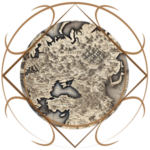
Khylias is no land that reveals itself easily. Whoever crosses its borders enters a world of heat, haze, shadow and ancient remembrance.
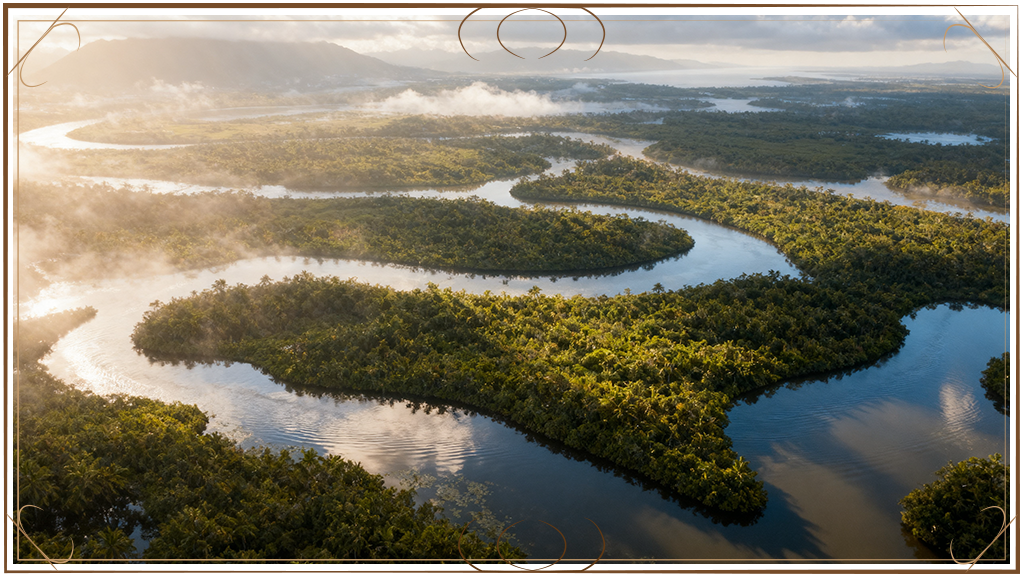
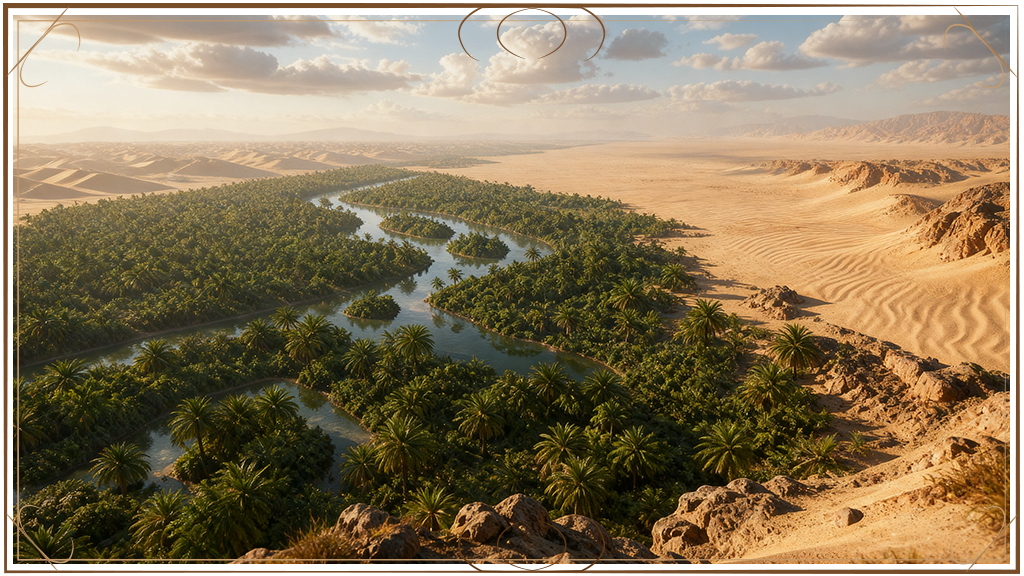
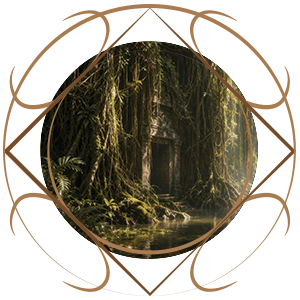
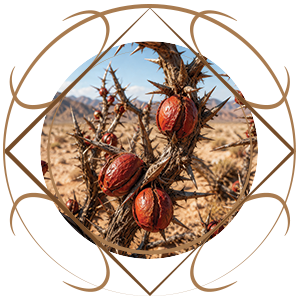
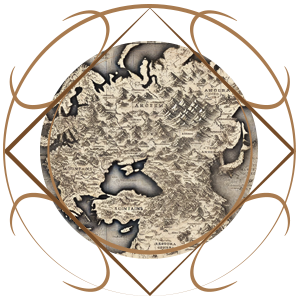
In the north, dry plains burn beneath an unforgiving sun. There, firethorns cling to barren soil and every living thing carries within it the lesson of resistance. Farther south, the air grows heavier, the ground wetter and the light rarer. There rises the jungle of Khylias — a vast sea of leaves, vines, roots, mist and hidden voices.
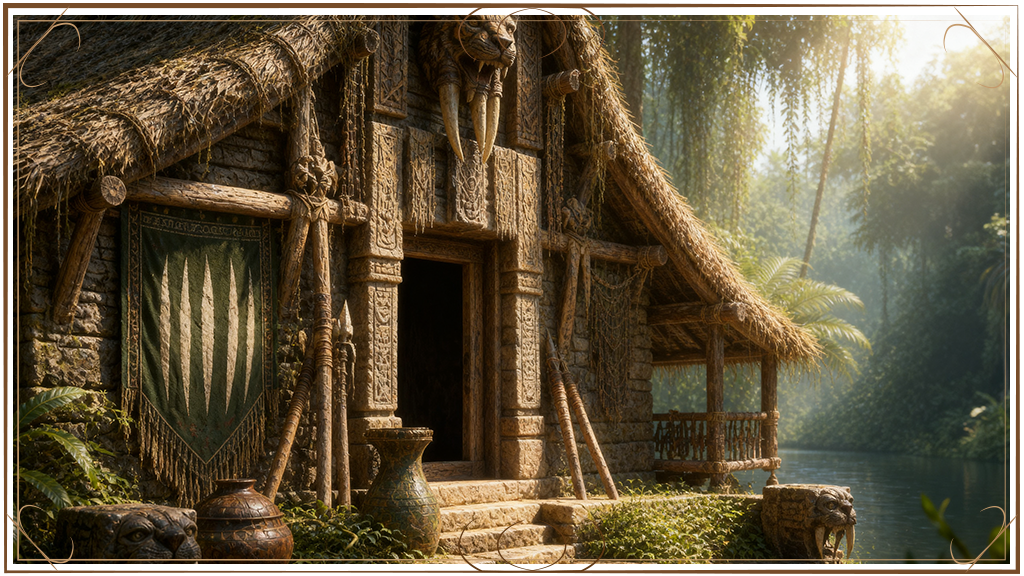
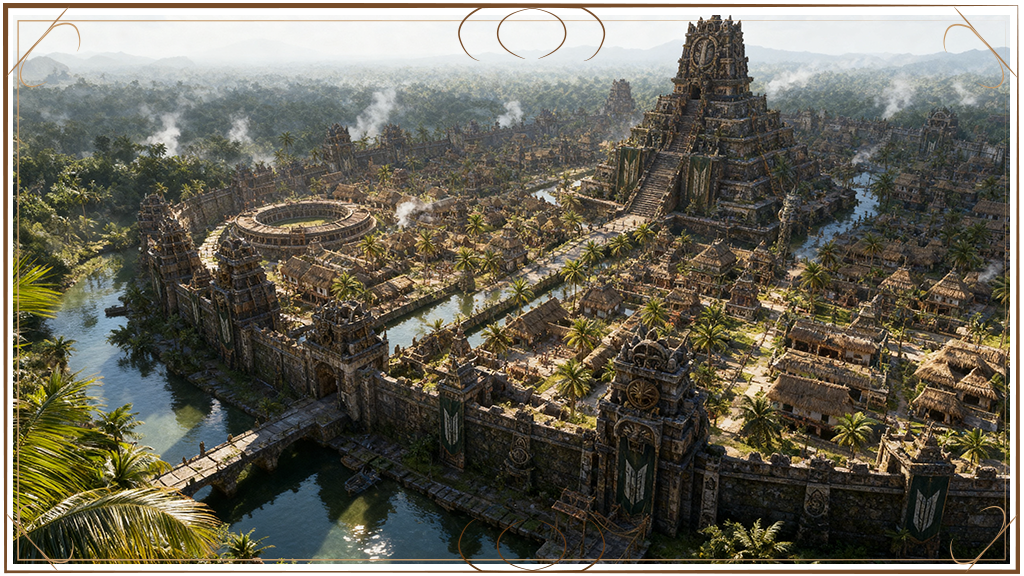
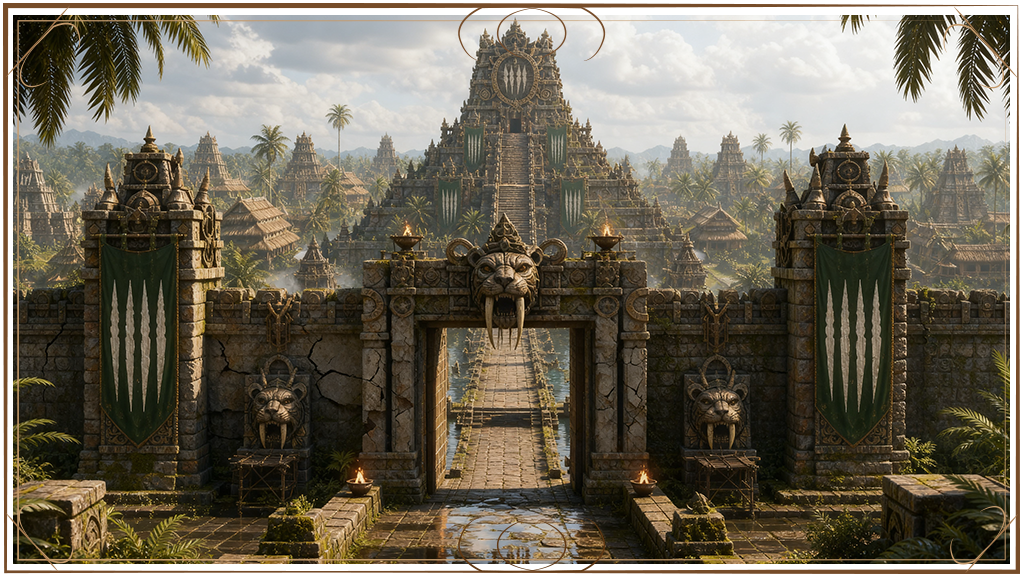
Deep within this green lies Frantir, the stone soul of the Togar. Step pyramids rise above the canopy, temples and terraces rest between waterways and weathered reliefs preserve hunts, rulers, rituals and lost signs.
To strangers, Khylias is wilderness.
To the Togar, it is memory.
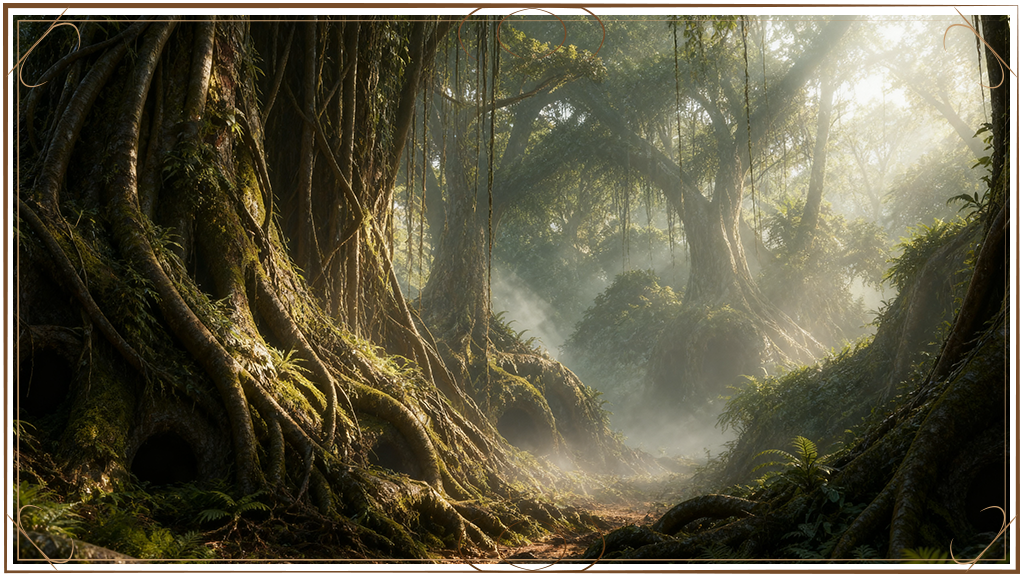
Khylias shaped the Togar long before foreign realms condemned them. The dry edges of the land taught endurance. The jungle taught patience. The rivers taught measure. Frantir taught remembrance.
Whoever does not understand the jungle becomes lost. Whoever disrespects it dies. Its paths are rarely straight, its sounds rarely accidental, its silence rarely empty. In Khylias, danger often begins not with a roar, but with the sudden silence of a bird.
Frantir itself does not lie open and inviting like the cities of other peoples. The capital is hidden, entwined and embraced by the jungle. Its step pyramids rise from the green, its canals gather rainwater and its stones bear signs of an architecture from an age when the Togar still possessed knowledge few peoples today could even begin to interpret.
Some reliefs are damaged. Some overgrown. Some seem as though Khylias itself has hidden them from foreign eyes. To others, they may be ornament. To the Togar, they are memory in stone.
When their magic was forbidden, signs remained in temple walls, songs and patterns. When their paths through Argenon were closed, paths remained through root, mist and shadow. When foreign chronicles shortened their history, Khylias continued to speak.
The desert taught resistance.
The jungle taught instinct.
The rivers taught measure.
Frantir taught memory.

The plants of Khylias are not merely food, resource, or beauty. They are signs. Every root, every thorn and every blossom carries within it a truth that the Togar have learned to read for centuries.
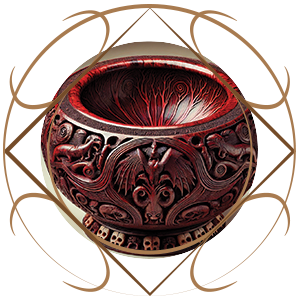
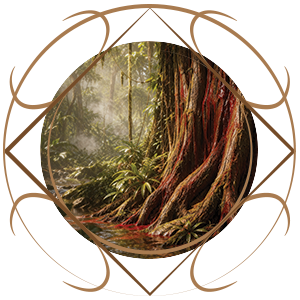
At the dry edges grow firethorns. Their spines protect small, water-rich fruits that may mean salvation or pain. Deep in the jungle, bloodtrees rise from damp earth. When their bark is wounded, red gleaming sap emerges — remedy, poison, dye and ritual substance all at once.
Creepers and mangroves hide paths, seal ruins and turn the jungle into a living labyrinth. From them, the Togar learned that strength does not always lie in open resistance.
Sometimes it lies in concealment.
In waiting.
In closing the path.
The firethorn is hard, spiked and difficult to reach. Yet within it, it carries water. To the Togar, it is an image of their own nature: dangerous on the outside, bearer of a precious truth within. It teaches that protection is not hardness alone, but the preservation of what must not belong to everyone.
The bloodtree holds even deeper meaning. Its red sap heals, stains, poisons and consecrates. No bloodtree is cut lightly. Before the first incision, the Togar speak quiet words in Rr’Chyraa. Not because the tree is asked permission like a person, but because every taking requires remembrance.
One who takes without reverence is no hunter.
He is only a thief.
Creepers teach another art. They cover entrances, close paths and turn every movement into a decision. The mangroves along the swampy banks stand at once in water and in mud. They hold where other ground gives way. Border and passage. Support and labyrinth.
Thus, the flora of Khylias became a book without pages. Whoever cannot read it sees only wilderness. Whoever understands it recognizes why the Togar became what they are.
Not merely hunters.
Not merely warriors.
But children of a land that never separated beauty from danger.

To the Togar, the animals of Khylias are not merely prey or danger. They are teachers. Mirrors. Omens. Reminders of the law of the wild.
The shadow panther teaches silent dignity. It does not hunt with noise, but with patience. Its strike comes when the prey has already lost, without yet knowing it.
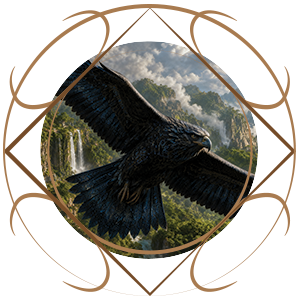
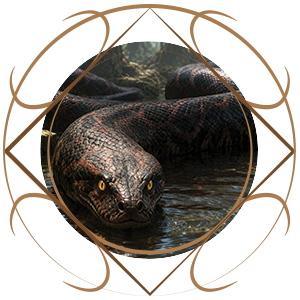
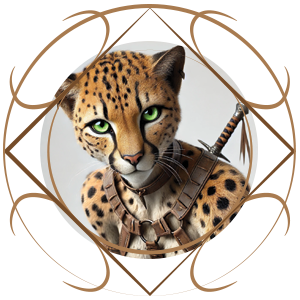
The desert runner teaches adaptation between dry steppe and humid jungle. The storm eagle teaches farsight above shadows, leaves and ancient temples. The water python teaches patience, depth and inevitable force.
None of these creatures is harmless.
And precisely for that reason, the Togar honor them.
For Khylias teaches: whoever is hunter today may be prey tomorrow.
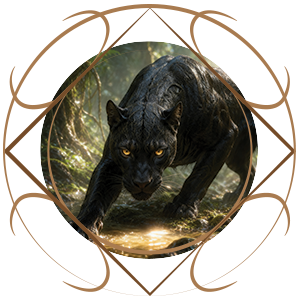
The shadow panther is one of the most feared hunters of Khylias. Its dark fur merges with the undergrowth, its steps are scarcely heard and its movement wastes nothing. To the Togar, it is no mere predator. It is a master of control. From it, they learned that true danger does not need to roar.
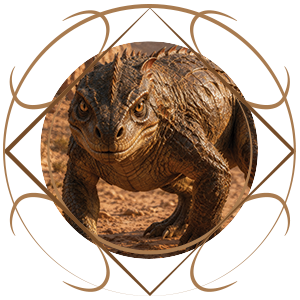
The desert runner lives at the borders between dry expanse and humid wilderness. It is swift, enduring and sure-footed on shifting ground. To the Togar, it embodies adaptation without loss of self — a truth that belongs deeply to their own people.
High above Frantir circle the storm eagles. They see patterns hidden from those on the ground: movements in the sea of leaves, changes in the wind, unrest among herds, false gleams upon water. A Togar who thinks only with claws remains dangerous. A Togar who thinks with the gaze of an eagle becomes wise.
In the dark rivers lurks the water python. It seems calm, almost sluggish, until the moment comes. Then its strike is unavoidable. It teaches that stillness is not weakness and that hidden power is not dead merely because it waits.
Perhaps the Togar understand these animals so well because they recognize themselves within them: silent, patient, graceful, dangerous — and never fully visible.
The society of the Togar is not shaped first by the gaze of the world. It is shaped by the pack.
A Togar is never merely an individual. He is voice, trail, name and memory of his pack. What foreign chroniclers erased was spoken on beside the fire. What vanished from archives lived on in songs, scars, gestures and names.
Thus, belonging among the Togar is no casual bond. It is protection, duty and identity all at once. Whoever is seen by the pack has a place in the living history of his people. Whoever betrays his pack loses more than trust.
He loses the place where his name continues to live.
The Togar do not fear death most of all.
They fear vanishing without meaning.
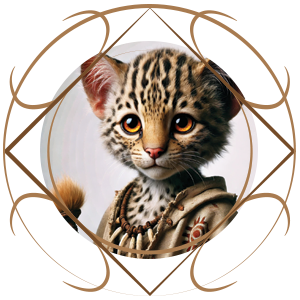
Strangers often believe the Togar worship raw strength. This is a misunderstanding. Strength alone can create fear, but not lasting respect. A worthy Togar possesses self-command, patience, perception, loyalty, memory and the ability to act at the right moment.
Strength without control is considered immature.
Courage without measure, dangerous.
Wildness without grace, shameful.
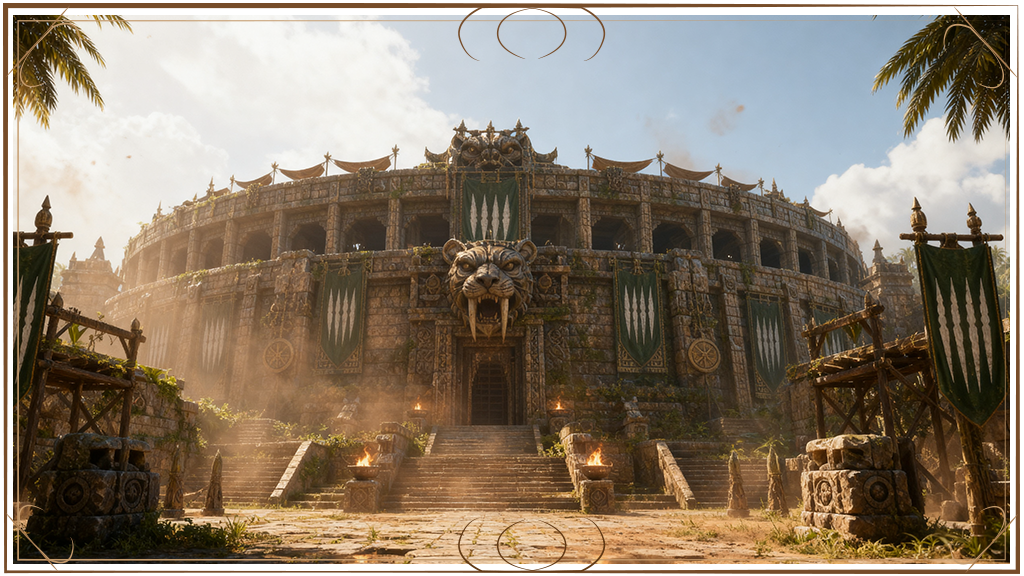
Togar society is divided into packs whose duties carry the survival and memory of the people. War packs protect Frantir and stand close to the crown. Hunter packs roam jungle, swamps, rivers and desert edges. Keeper packs preserve knowledge, songs, names, fragments of magic and those truths other peoples erased from their chronicles.
Children are rare among the Togar. For this reason, every new life is received with deep reverence. Not first with loud rejoicing, but with silence. The elders listen to the child’s breath. The hunters lower their gaze. The keepers speak quiet words in Rr’Chyraa.
A Togar child belongs not only to mother and father. It belongs to the pack. Not as possession, but as hope.
It is not broken in order to become strong.
It is observed, guided, protected and tested.
For every child is more than future. It is refutation — against those who believed the Togar would fade.

The Togar know no rule sanctified by birth alone. A name may be old, a bloodline venerable, a claim loudly spoken. Yet none of this is enough.
At the head of the Togar stands the king or queen of Khylias. But the throne of Frantir is no seat of comfortable power. Whoever ascends it bears not only authority, but memory, guilt, wounded greatness and the longing of a people who wish to carry weight in Argenon once more.
The highest trial of rule is the Rr’Tharrak, the Battle of Claws. A ruler may be challenged if another Togar believes himself stronger, worthier, or more fit to lead.
Claw against claw.
Breath against breath.
Will against will.
Yet the Togar do not see only who wins. They see how victory is won.
The Rr’Tharrak is not decided by victory alone. A fight may be won — and still sow mistrust. A defeated one may fall — and still gain respect. For the Togar do not ask only who stands at the end. They ask who has shown that he can carry the people.
The code of the Togar demands loyalty to the ruling claw. A Togar may doubt, struggle and ask in the shadows of ancient halls whether the crown’s path is right. But when the crown calls, he takes his place.
Not always from agreement.
Not always from conviction.
Sometimes only from duty.
This loyalty is one of the Togar’s greatest strengths — and one of their deepest dangers. For if the crown is wise, it preserves the people. If it is blinded by pride, pain, or vengeance, an entire people may follow and carry the scar together.
Around the crown stand councils: war leaders, voices of magic, keepers of knowledge and elders whose memory reaches farther than many foreign royal houses. They advise, warn and preserve. Yet even their voice cannot easily break the crown.
Thus, Togar politics is a bond of claw, pack and memory. A system born of wilderness, exile and the will not to disappear.
So long as the crown remains worthy, the packs follow.
So long as the packs remember, the people live.
Solange die Krone würdig bleibt, folgen die Rudel.
Solange die Rudel erinnern, lebt das Volk.
Ancient and powerful sounds echo through the jungles and steppes of Khylias — the language of the Togar, known as Rr’Chyraa. It is a constant stream of sounds reminiscent of the hissing, growling and purring of great cats, shaped by throat, tongue and breath. While the language of the orcs is marked by hardness and broken clarity, Rr’Chyraa resembles a river — at times soft and flowing, at times sharp and cutting, yet always saturated with meaning.
It is said that the first words of this language were not spoken, but growled — an echo of the untamed wild, which over time became one of the most expressive tongues in the world.
Rr’Chyraa lives through sound symbolism and intonation. A misplaced sound can change the meaning of a statement entirely. The rhythm of the language mirrors the nature of the Togar themselves: watchful, fluid, yet always ready to strike.
“Rr” and “Chh” are dominant sounds, spoken deep from the throat, often lengthened or shaped into a rolling growl.
Purring sounds such as “Rrrh…” and hissing sounds such as “Chh…” serve as emphasis, strengthening commands or signaling affection.
The language moves in waves. A softly spoken “Rrrh” may express belonging, while an abrupt “Chh!” is a warning.
Long, rolling sounds shape its melody. The way a word is stressed can express respect, threat, mockery, tenderness, or challenge.
“Rr’chyrraa” — originally “language,” but also “river of voices” or “the voice of the pack.”
“Chh’rraka” — “hunter,” literally: “the one who strikes from shadow.”
“Rrrh’kath” — a long, purring word for “friend” or “ally.”
“Chh’thrak” — an aggressive insult, meaning something like “cowardly shadow” or “worthless fighter.”
Though the Togar are a people of war and the hunt, their language is artistic and flexible. Rr’Chyraa has no rigid syntax, but it does follow clear rules for emphasis, tense and belonging.
The usual order is Subject – Verb – Object, similar to many other languages, though pitch and tone may alter emphasis.
Soft purring sounds bridge pauses instead of filling them with additional syllables.
Sentence melody determines intent: a rising tone marks a question, while a falling tone signals resolve.
The past is marked by a doubled “Rr”:
“Rr’charr rr’thraa.”
→ “The hunter hunted.”
The future is indicated by “Chh” before the verb:
“Chh’thraa rr’karis.”
→ “The hunter will come.”
The present has no special marker:
“Thraa rr’karis.”
→ “The hunter comes.”
Singular:
“Rr’Thar” — one warrior.
Plural:
“Rr’Tharaa” — several warriors.
“Rr’thar chh’kharis.”
→ “The warrior belongs to me.”
“Rr’kath rr’fran.”
→ “The friend of Fran.”
“Rr’thar” — warrior.
“Chh’kar” — to hunt / hunting.
“Rr’kath” — friend.
“Chh’thrak” — shadow.
“Rr’kharr” — blood.
“Thraa” — to move / to come.
“Rr’Khyl” — land / homeland.
“Rr’thar rr’karis.”
→ “A warrior comes.”
“Chh’thraa rr’kharr!”
→ “I will spill blood!”
“Rr’kath rr’frrrah…”
→ “You are my friend…”
The purring sound at the end signals affection.
“Chh’rraka rr’tharrr!”
→ “Hunters and warriors!”
A battle cry.
Rr’Chyraa is more than spoken words. Posture, tail movement, the play of the ears and tone of voice carry as much meaning as the sounds themselves.
A slow purr with half-closed eyes:
Expression of contentment or agreement.
A short hiss — “Chh!”:
Warning or rejection.
A focused growl:
Challenge or threat.
A soft, drawn-out “Rrrh…”:
Friendship or affection.
The raising of a claw during conversation:
A demand for attention or interruption.
Although all Togar speak Rr’Chyraa, regional nuances have developed over time.
Jungle Togar:
More melodic, with many “Rr” sounds and purring tones.
Desert Togar:
Sharper, faster, more clipped, with harsher hissing sounds.
Mountain Togar:
Deep, resonant and heavy, with pronounced “Chh” sounds.
All dialects are mutually understandable, yet they are often a source of prejudice between the tribes.
The script of the Togar consists of curved symbols reminiscent of claw marks. They are often carved into stone or painted with ink upon parchment.
Circular signs:
Belonging or pack.
Three parallel claw lines:
Combat or war.
A curved stroke with a dot above it:
Eye or wisdom.
Though many Togar know how to write, the script is used sparingly. Their culture remains deeply rooted in spoken and lived language.
| Word (Rr’Chyraa) | Translation | Meaning |
|---|---|---|
| Rr’thar | Warrior | An experienced fighter who has proven his worth. |
| Chh’kar | Hunting | The act of hunting, often associated with cunning and patience. |
| Rr’kath | Friend | Expression of deep connection and loyalty. |
| Chh’thrak | Shadow | Used for concealment, stealth, or danger. |
| Rr’kharr | Blood | Symbol of life, battle and honor. |
| Thraa | Movement | Refers to movement or an approaching action. |
| Rr’Khyl | Land, homeland | Term for Khylias or the territory of a pack. |
| Khyrr | Wilderness | The untamed nature in which the Togar live. |
| Chh’var | River | A lifeline that provides food and protection. |
| Rr’Nyx | Night | The time of hunters and hidden dangers. |
| Chh’Zorr | Fire | Symbol of energy, destruction and rebirth. |
| Rr’Gash | Storm | Represents uncontrollable power and the force of nature. |
| Vash | Sky | Expression of vastness, freedom and infinity. |
| Chh’Lir | Wind | A silent companion that changes paths and tracks. |
| Rr’Morr | Moon | A sign of the night, often connected to hunting and wisdom. |
| Chh’Soy | Gold | Symbol of value, pride and honor. |
| Rr’Kaan | Fireheart | A passionate and determined soul. |
| Chh’Nyrr | Silence | Used for quiet, concealment, or inner peace. |
| Rr’Dorr | Thunder | Symbol of power and the roar of a warrior. |
| Chh’Thal | Thorns | Stands for resilience and protection. |
| Rr’Fran | Name | Term for identity or title. |
| Chh’Ruun | Claw | A symbol of attack and defense. |
| Rr’Zyrr | Eagle | Stands for sharpness of mind, far sight and superior hunting skill. |
| Chh’Vaash | Heart | Expression of feeling, courage and life force. |
| Rr’Thraa | To move | A general term for movement or flow. |
| Chh’Thrak | Danger | Warning of threat or challenge. |
| Rr’Chraa | Voice | The essence of communication and expression. |
| Chh’Varyn | Darkness | A sign of night and the unknown. |
| Rr’Shyra | Spirit | A breath of the past, the ancestors and their wisdom. |
| Chh’Lirra | Hunt | Refers to the art of killing with skill and patience. |
| Word (English) | Rr’Chyraa |
|---|---|
| I | Rr’murr |
| You | Chh’thurr |
| He / She / It | Rr’garr |
| We | Rr’kurr |
| They | Chh’tharr |
| This | Rr’brak |
| That | Chh’drak |
| Who | Rr’gharr? |
| What | Chh’throk? |
| Where | Rr’marrk? |
| Why | Chh’zorr? |
| How | Rr’khuur? |
| Not | Chh’nurr |
| Yes | Rr’urgh |
| No | Chh’brukh |
| And | Rr’thrak |
| Or | Chh’zrak |
| With | Rr’marr |
| For | Chh’gorr |
| In | Rr’rukh |
| On / Upon | Chh’thruk |
| A / An | Rr’grash |
| Good | Chh’kraal |
| Bad | Rr’brath |
| Love | Chh’varrk |
| Life | Rr’zurrk |
| Death | Chh’drog |
| Time | Rr’harrk |
| Eat / Food | Chh’marr’khaar |
| Drink | Rr’ruk’marr |
| Phrase (English) | Rr’Chyraa |
|---|---|
| Hello! | Rr’urgh! |
| How are you? | Rr’khuur chh’thurr? |
| I am well. | Rr’murr chh’kraal. |
| Thank you! | Chh’thorr! |
| Please. | Rr’rukh’tharr. |
| Excuse me! | Chh’brukh’marr! |
| No problem. | Rr’nurr chh’throk. |
| I do not understand. | Rr’murr chh’nurr throk. |
| Can you repeat that? | Chh’thurr marrk drak? |
| Where is …? | Rr’marrk …? |
| What time is it? | Rr’khuur harrk? |
| What are you doing? | Chh’throk chh’thurr? |
| I am hungry. | Rr’murr chh’marr’khaar. |
| I am thirsty. | Rr’murr chh’ruk’marr. |
| I am tired. | Rr’murr chh’brath. |
| I love you. | Rr’murr chh’varrk chh’thurr. |
| Watch out! | Chh’thruk’gharr! |
| See you later! | Rr’harrk’tharr! |
| I do not know. | Rr’murr chh’nurr throk. |
| Good luck! | Rr’drak’kraal! |
| Good night. | Rr’harrk’brukh. |
| Welcome! | Chh’thorr’gharr! |
| I need help. | Rr’murr chh’throk’brukh. |
| I am sorry. | Chh’brukh’marr rr’murr. |
| Nice to meet you. | Rr’kraal chh’thurr chh’thorr. |
| What is your name? | Rr’khuur chh’thurr marrk? |
| My name is … | Rr’murr chh’gharr … |
| I come from … | Rr’murr chh’marrk’urr … |
| I like this. | Rr’murr chh’kraal chh’drak. |
| I do not like this. | Rr’murr chh’nurr chh’kraal chh’drak. |
Melodic and powerful — Rr’Chyraa is a language of hunters and warriors.
More than words — tone, gesture, breath and sound are as important as the terms themselves.
Not a silent people — a Togar speaks not only with words, but with his entire presence.
A language born from the wild — raw, yet filled with deep meaning, as untamed as the land that gave it life.
While other peoples press their words into books and bind them upon parchment scrolls, the Togar know that true language is not written, but lived — in every movement, every sound, every heartbeat of the wild.
The Togar of Khylias are a people of hunters, warriors and keepers of an ancient heritage. A name among them is far more than a mere designation — it is a story, a prophecy, a promise to their ancestors and to the jungle that shaped them.
A young Togar does not receive his name through birth alone, but through his first deeds. It may change, grow and gain new meaning. Some Togar bear honor-names that reflect their greatest victories or deepest trials — a second soul, a whisper of the past.
In the language of the Togar, Rr’Chyraa, names often carry the essence of nature within them: the hiss of the panther, the whisper of the wind, the rumble of thunder. Below are names of the Togar, with their translations and meanings.
| Name | Gender | Translation | Meaning |
|---|---|---|---|
| Rr’Tharr | Male | Clawstorm | A warrior who strikes like the storm and vanishes without a sound. |
| Karr’Vash | Male | Jungle Blade | A blade sharpened by life in the wild. |
| Nyx’Zorr | Male | Shadowfang | One who strikes from darkness and remains unseen. |
| Rr’Kalis | Male | Whisperpaw | A hunter whose steps are inaudible, even to the wind. |
| Chh’Ruun | Male | Bloodclaw | A warrior whose claws are ever reddened by battle. |
| Rr’Zyrrak | Male | Stormhunter | One who reads the signs of the sky and hunts with them. |
| Thar’Nyx | Male | Nightwing | A Togar whose movements are silent as the wings of an owl. |
| Chh’Korr | Male | Moonwalker | One who walks in moonlight and lives by night. |
| Rr’Vask | Male | Thunder-Gaze | A warrior with a piercing stare that freezes his enemies in place. |
| Zorr’Kaan | Male | Flamestep | A fighter whose wrath burns like fire. |
| Rr’Gashar | Male | Shadow Wolf | One who hunts with the pack, yet kills alone. |
| Chh’Thurr | Male | Stormclaw | An unconquerable fighter whose attack comes like the wind. |
| Rr’Vaash | Male | Heart of the Jungle | A guardian of nature, protector of the wild. |
| Rr’Morr | Male | Blood Moon | One who triumphs beneath a red sky. |
| Nyx’Rhaal | Male | Tiger Soul | A Togar with the spirit and ferocity of the great hunters. |
| Khyrr’Thal | Male | Thorn King | A leader, unyielding as the roots of the forest. |
| Chh’Dorr | Male | Caller of Storms | One who knows the winds and speaks with them. |
| Vash’Thrak | Male | Blade of Dawn | A hunter who strikes in the first light of day. |
| Rr’Varyn | Male | Darkwing | One who descends silently like a bird of prey. |
| Soy’Chraa | Female | Golden Flame | A warrior woman whose strength burns within her heart. |
| Nyx’Shara | Female | Panther Heart | A fighter guided by instinct and strength. |
| Chh’Varys | Female | Night Wind | A huntress who comes and goes as her will commands. |
| Rr’Zyrah | Female | Claw-Pride | One who never bows, only fights. |
| Khyrr’Maia | Female | Forest Soul | A healer who knows the language of trees. |
| Thar’Lyn | Female | Shadowrunner | A silent warrior whose paths no one knows. |
| Chh’Vanya | Female | River Runner | Swift, agile and unstoppable as water. |
| Rr’Nyssa | Female | Storm Eye | A warrior woman who sees every movement. |
| Zorr’Thali | Female | Catcher of Fire | One who fights with courage and resolve. |
| Rr’Shyra | Female | Spirit Claw | A huntress who leaves no tracks behind. |
| Rr’Chyra | Female | Voice of the Ancestors | A keeper of ancient knowledge. |
| Soy’Nyx | Female | Night Blade | A fighter swift as shadow. |
| Chh’Lira | Female | Dance of Flames | A leader whose will is unshakable. |
| Vash’Raya | Female | Eagle Feather | An archer whose arrows never miss. |
For the Togar, a name is no mere word. It is a blade, a trail through the jungle, a destiny. Whoever bears a name bears a story — whether it is the past that shaped them or the future they have yet to write.
Some names change over time. Others remain forever. Yet one thing is certain: no name is given lightly. A Togar must earn his name — in blood, in shadow, in honor.
And so their names echo through the wild: as voices of the forest, as the call of the storm, as the memory of those who came before and the promise of those yet to come.
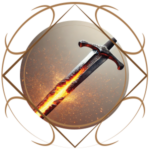
The smithcraft of the Togar did not arise from a desire for splendor. It was born from necessity, loss and adaptation.
In the depths of Khylias, they shaped an art as supple as their bodies and as dangerous as their silence. Their weapons are no heavy signs of raw power. Their armor no rigid shells behind which a warrior hides.
Everything must glide, wait, deceive and strike.
Once, the Togar were masters of crystals, runes and magical bindings. Then this power was taken from them. Yet they did not break. They adapted.
If magic was no longer permitted to flow openly through weapons, then the steel itself had to become more perfect.
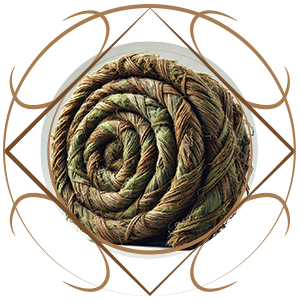
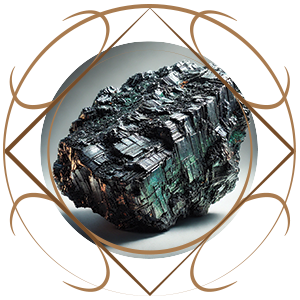
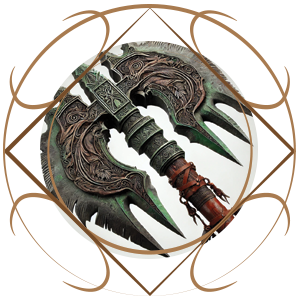
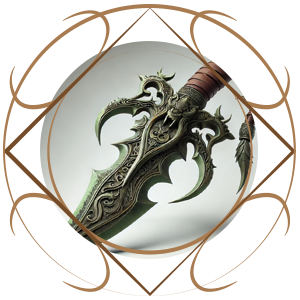
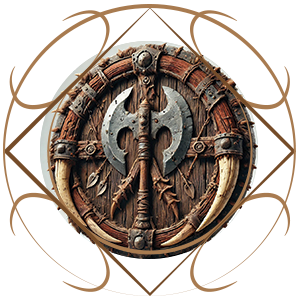
The best-known materials of the Togar are green steel and lizardsteel. Green steel shimmers faintly like light beneath leaves. It is light, resilient and made for the flowing combat style of the Togar. A blade of green steel rarely appears crude. It is line, tension and intent.
Lizardsteel possesses a different dignity. Its making combines minerals, metal and finely worked scales from ancient creatures of Khylias. Its surface sometimes bears a barely visible scaled structure, as though the wilderness itself had given the metal a skin.
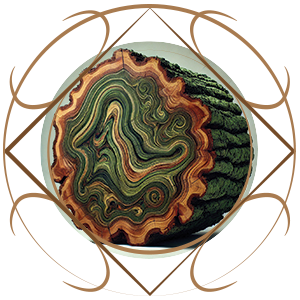
Wood, bone, claws, teeth, vine fibers and bloodtree wood also have their place. A panther tooth on a dagger does not say: I possessed an animal. It says: I survived its lesson.
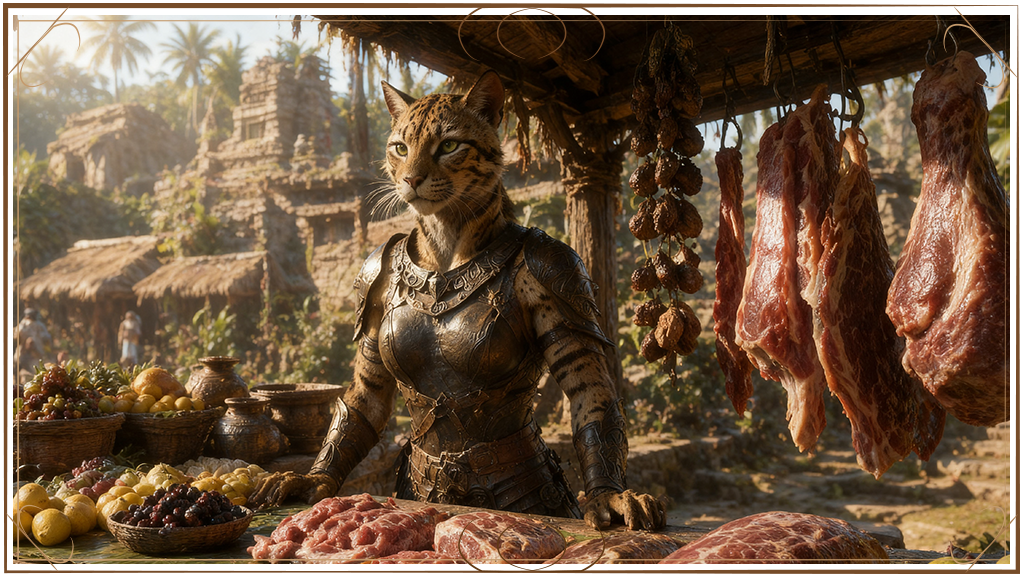
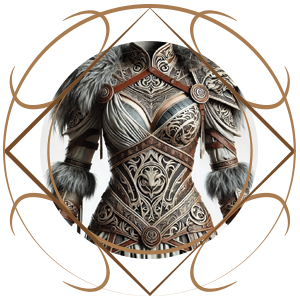
The armor of the Togar is light, silent and flexible. Shadow-panther leather, hardened scales, vine bindings, bone plates and fine metal segments protect without binding the body. Heavy armor that slows a Togar is considered poor armor — even if it might withstand one more blow.
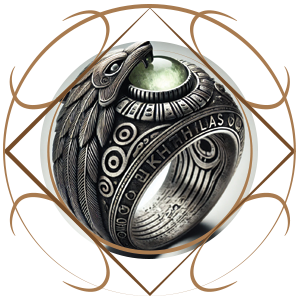
No significant work remains without signs. Lines of rivers, arcs of claws, panther eyes, storm-eagle feathers, serpent bodies, bloodtree leaves and Rr’Chyraa syllables run across steel, wood, bone and leather.
A stranger sees patterns.
A Togar reads history.
Some old weapons still bear crystal shards, rune-lines, or patterns that once guided spells. Perhaps they are only memory. Perhaps they are waiting.
The Togar do not fight like other peoples. They do not face the enemy as a thundering mass. They build no walls of shields and seek no glory on the open field.
Their martial art was born in the jungle: among roots, mist, shadow, water and the sudden silence of animals.
For the Togar, a fight begins long before the first blow. It begins with the wind, with a broken branch, with an opponent’s breath, with the moment a bird falls silent.
Combat, to them, is not a sequence of techniques.
It is the hunt.
And a hunt does not begin with killing. Killing is only its end.
A poor hunter hunts the body. A good hunter hunts the mistake. A masterful hunter hunts the moment when the prey has already lost, without knowing it.
This way of thinking shapes every form of Togar martial art. An opponent is not merely an enemy, but a being made of habits, fears, reflexes, pride and weaknesses. Whoever recognizes these patterns wastes less strength. And whoever wastes less strength lives longer.
The Togar do not always answer force with force. Where others block, they slide aside. Where others hold, they withdraw. Where others press forward, they vanish. Where others rage, they wait.
The oldest style is combat with the body itself: claws, teeth, leaps, turns, grips and the full weight of the body. A weapon can be lost. A claw cannot.
Shadow daggers, spears, staves, bows and blowpipes complement this art. No weapon is meant to boast. Each is meant to prolong the right moment.
Within the pack, this martial art becomes especially dangerous. One Togar distracts. One drives. One cuts off retreat. One waits. One watches whether a second danger is drawing near. A pack of Togar is no cluster of fighters.
It is a shadow with many claws.
After the loss of their open spellcraft, the Togar sharpened their bodies to perfection. What magic once made easier must now be achieved through silence, muscle, breath and will.
A people from whom magic is taken may break.
Or it may learn to become the magic no one can forbid.

Once, magic was no rare wonder to the Togar. It was breath, inheritance, language, art, science, hunt, war and memory.
In the ancient days of Frantir, crystals glowed in temple halls like captured stars. Runes ran across weapons, garments, masks and pyramid walls. Voices in Rr’Chyraa shaped spells not only with words, but with breath, sound, body and will.
Then came the breaking.
Crystals were confiscated, destroyed, sealed, or placed under foreign supervision. Teachings vanished, writings were removed, formulas suppressed. The halls of Frantir, once filled with light, grew darker.
Yet the world made one mistake.
It believed magic dies when its tools are taken.
The magic of the Togar did not disappear. It hid.
In songs.
In tattoos.
In dances.
In jewelry.
In lullabies.
In engravings.
In masks.
In half-sentences of the elders.
In chambers of Frantir whose doors no stranger finds.
What had once been taught openly became whisper. What had once shone in crystal light moved into symbols, bodies, sound and silence. A dance could preserve the structure of a spell. A children’s song could hide a formula. A relief might show a hunting scene to strangers — and to the initiated, an instruction for binding ancient forces.
The Togar speak of four great currents of the old power: light, shadow, nature and blood. Light purified, healed and revealed. Shadow concealed, protected and could break perception. Nature bound them to Khylias. Blood was the most dangerous art, tied to life-force, sacrifice, names and price.
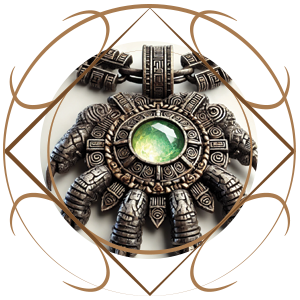
Not all crystals were found. Not all were broken. Not all were surrendered. In Khylias, shards still exist: hidden in amulets, weapons, garments, temple walls, or in the hands of families who would rather die than give up their final fragment.
Every shard asks the same question:
Do we preserve our old power —
or are we preparing its return?
The true trial of the Togar, therefore, is not whether their magic still lives. It lives.
The question is what it will do when it awakens.
The art of the Togar does not hang silently upon walls. It does not rest only in stone, nor lie only in ancient writings.
The art of the Togar breathes.
It moves, sounds, dances, bleeds and lives upon skin, in voices, in masks, in scars, in steps and in the shadows of Frantir. To other peoples, art may be something one looks at. To the Togar, art is something one carries, speaks, sings, dances and preserves.
Since the world began to push the Togar out of its chronicles, every form of their art became resistance.
A song can carry a forbidden name.
A dance can preserve an ancient battle.
A tattoo can be an oath, a guilt, or a truth.
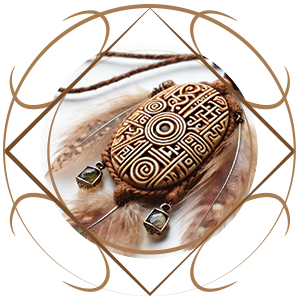
Frantir itself is art made of stone, water and shadow. The step pyramids, temples, canals and reliefs are not merely architecture. They are a language. A stranger may see an overgrown jungle city. A Togar sees a memory made of stone.
The highest and most personal art form of the Togar is body marking. Tattoos, scar-lines, resin marks and fur patterns tell of trials, pack-belonging, hunts, losses, oaths and guilt. A sign is not worn because one desires it. It must be earned.
A tattoo without meaning is, in the eyes of the Togar, worse than unadorned skin.
For it imitates memory without possessing it.
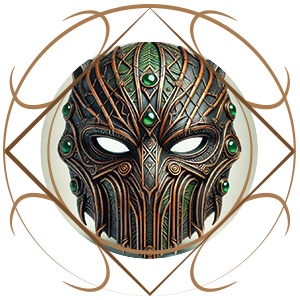
Masks hold a special dignity. They are worn during rituals, dances, mourning rites and hunting ceremonies. A mask does not serve to hide oneself. It serves to call something forth: an ancestor, an animal, an ancient truth, a part of the pack that speaks through the wearer for a moment.
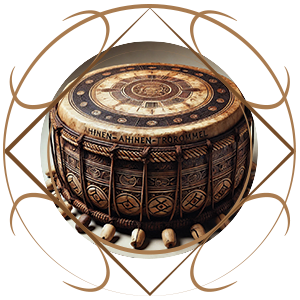
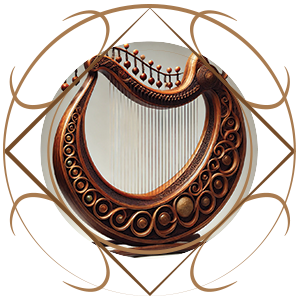
Music follows breath, heartbeat, rain, step and hunt. Heart drums do not strike with raw force, but with open resonance. Panther harps, forest flutes and claw-tones tell of longing, grief, birth, hunt and return.
Dance is a form of chronicle. A war may be preserved in a movement. A hunt in a shift from stillness to eruption. A lost love in a hand that rises and does not touch.
The Togar remember not by becoming still.
They remember by living.
What breaks in stone may continue in voice.
What vanishes from books may remain written upon skin.
What the world forgets, the pack may dance again.

The Togar do not worship distant gods on golden thrones. Their faith is older, more immediate and more uncomfortable. It lives in the rustling of leaves, in the silence before the strike, in the breath of a hunter and in the final gaze of prey that recognizes its fate.
At its center stands Nyxara, Guardian of the Wild, Huntress in Shadow and Voice of Khylias. She is no goddess of easy forgiveness. She does not protect because she is asked, but because her laws are honored.
To the Togar, Khylias is not simply a land beneath Nyxara’s protection. Khylias is her body. The jungle is her breath, the rivers her veins, the roots her memory and the animals her watchful eyes.
Nyxara’s most important law is the law of hunter and prey.
These roles are never final.
Today, the Togar hunts. Tomorrow, he may be hunted. Today, the claw strikes. Tomorrow, it feels the tooth at its own neck. This truth does not make the Togar fearful, but attentive.
A hunter who believes he can never become prey has forgotten the first law of the wild.
From this faith arise the principles of the Togar. They do not hunt to kill without measure, but because life takes life and yet demands restraint. They honor their prey because every slain creature belonged to the cycle before it became food, material, sign, or memory. They despise waste, careless cruelty and greed.
For this very reason, Nyxara’s faith is uncomfortable even for her own people. For if balance is sacred, what then does the past of the Togar mean? What does the desire for old greatness mean? What does lost magic mean, if not every fear of that magic was unfounded?
Nyxara does not comfort the Togar with the lie that their wound makes them innocent.
She lets the questions continue to live in the jungle.
Death, to the Togar, is no ending in the ordinary sense. It is return. Not to some distant paradise, but into the cycle of the wild. A Togar who lived honorably enters Khylias: perhaps as a shadow in the jungle, as the gaze of a panther, as the cry of a storm eagle, as wind over Frantir, or simply as memory in the blood of the pack.
Yet more important than the body is memory. The name of the dead is spoken. Their signs are read. Their deeds are told — not only the beautiful ones. For a beautified memory is, to the Togar, a form of lie.
The harshest punishment is not death.
It is the loss of memory.
A Togar whose name is no longer spoken dies more deeply than by any blade.
The wild belongs to no one.
The Togar belong to the wild.
And every life leaves a trail.