There are peoples born from prosperity. There are realms that grow from ambition. And then there is Kelvor.
Kelvor did not arise from the desire for power, but from the necessity of holding a border. Between forests, mountains, sea and the dark reaches of the Wastelands, a people grew who understood early that peace is never a thing to be taken for granted.
While other realms built their walls to protect possession, Kelvor raised its fortresses so that others might live in safety at all. For beyond its western borders lurk dangers that in many lands are spoken of only as tales beside the fire.
From this truth, its nature was shaped: its severity, its vigilance, its pride and its hardness. Not from coldness. Not from cruelty. But from the knowledge that someone must stand so others may sleep.
Thus, Kelvor measures greatness not by what a person gains,
but by what is preserved through them.
In Kelvor, every child grows up with a sentence that weighs heavier than many laws:
So long as we stand, others may live.
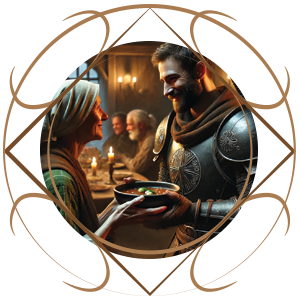
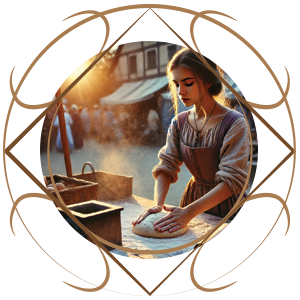
This oath does not belong only to the warriors upon the walls. It belongs to the farmer who feeds the garrisons. To the smith who shapes a shield that must not break. To the scholar who preserves old mistakes so they will not be repeated. To the keeper who forges alliances before mistrust becomes war. To the mother who raises her child strong, though her heart would rather remain soft.
In Kelvor, protection is no task for lone heroes.
It is the duty of an entire people.
That is why the people of Kelvor are solemn, because they know what is at stake. Proud, because they know their place. Stern, because negligence costs lives. And unbending, because behind them lie not merely walls, but families, villages, children — and all of Argenon.
Yet in this also lies their shadow. Kelvor can judge harshly, forgive slowly and place more duty upon the human heart than it can easily bear. Its strength is great. But it remains noble only so long as it does not forget why it exists.
Kelvor does not live in order to fight.
Kelvor fights so that life may continue.
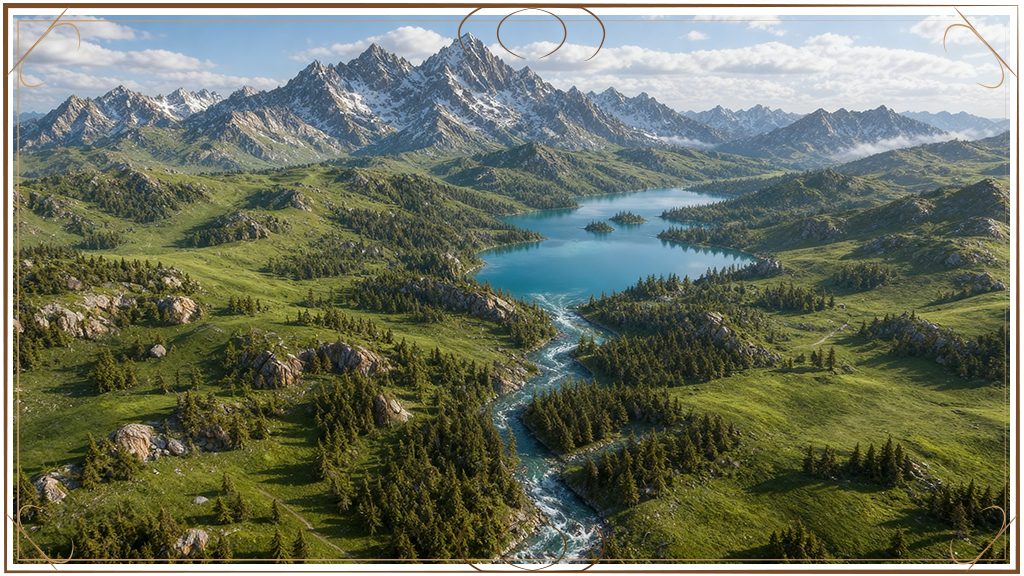
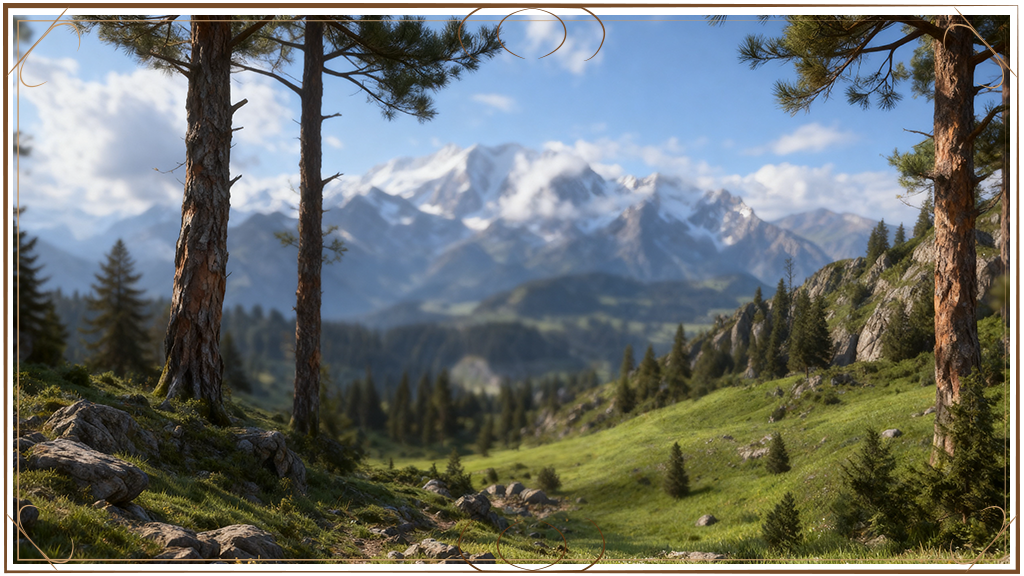
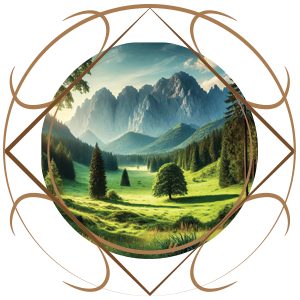
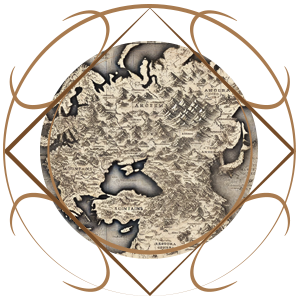
Kelvor lies in the southwest of Argenon, where the inhabited lands meet their harshest edges. It is a land of solemn beauty: deep forests, cold mountains, rushing rivers, rugged coasts and dark passes over which the wind sounds like a warning.
To the east rises the Ganidar Mountains, a wall of stone, mist and ancient paths. To the west towers the Hima Range — Kelvor’s heaviest burden, for beyond its passes begin the Wastelands. There stand the strictest fortresses; there burn the most vital signal fires.
In the south, the land opens toward the Eternal Sea, which brings food and trade, yet demands vigilance in equal measure. To the north, old roads lead to Lohiras, Kelvor’s loyal ally.
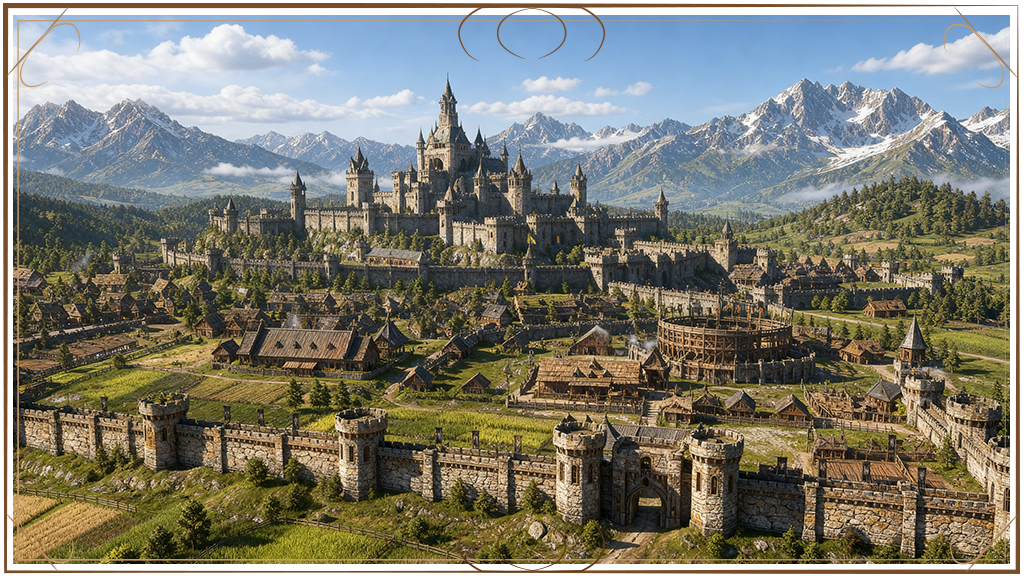
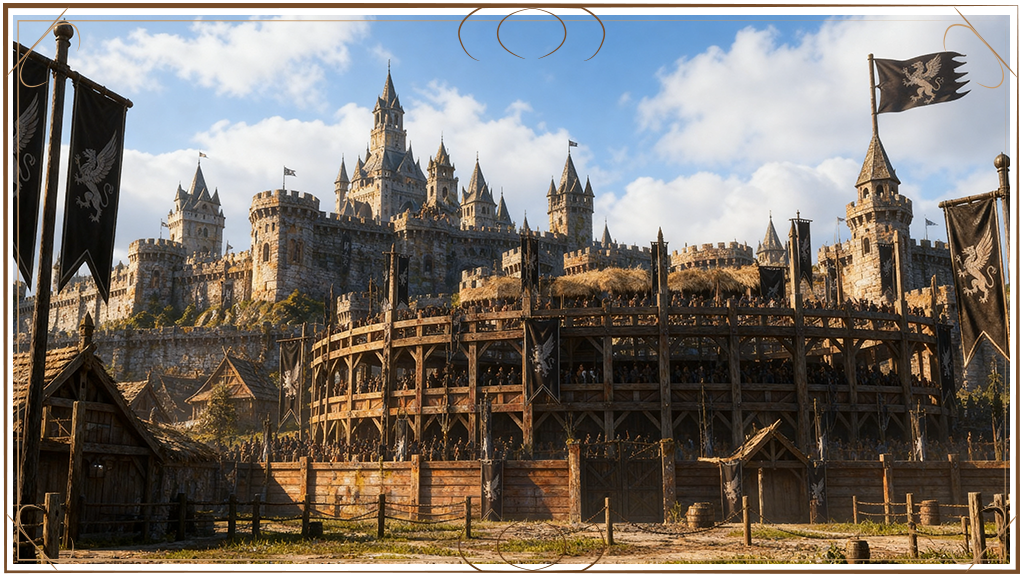
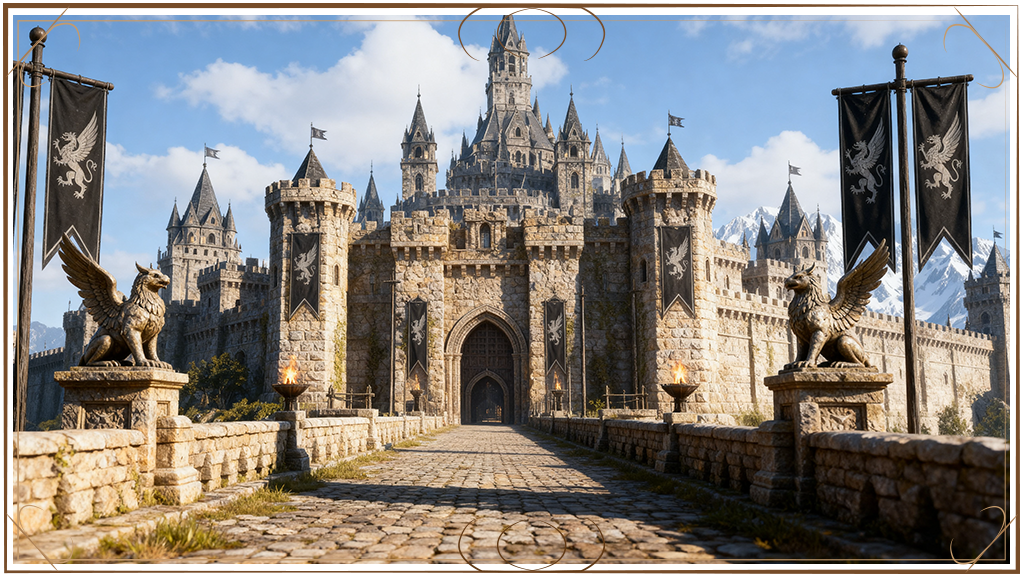
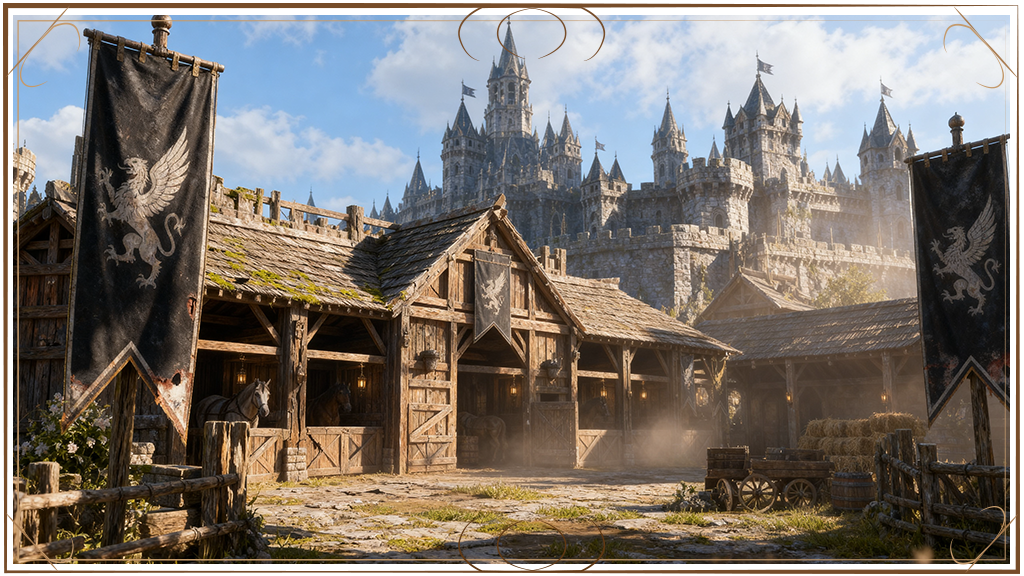
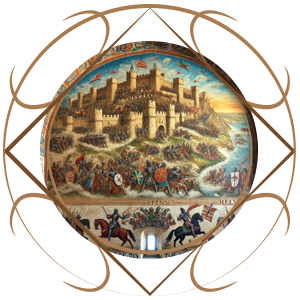
Above all of this rises Castle Kelvor. Not a palace of splendor, but a fortress of responsibility.
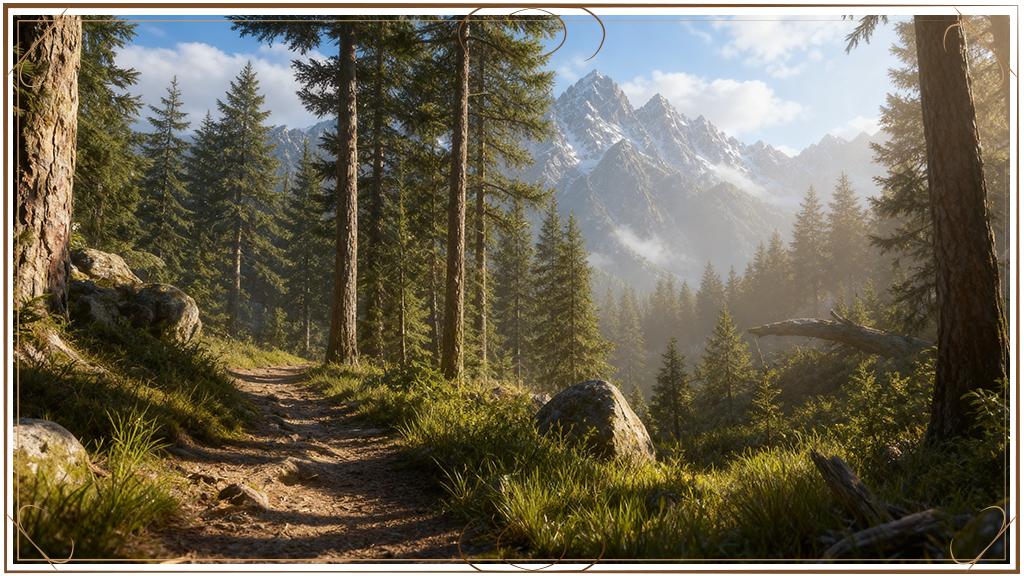
Whoever looks at Kelvor only on a map sees a principality between mountains and sea. But whoever enters Kelvor soon understands that this land was never meant to be carefree.
Every pass may become a gate of invasion. Every forest path a patrol route. Every river crossing a decision between life and death. Thus, the people of Kelvor did not grow up in a land that granted them ease, but in a land that asked them a question from an early age:
Will you keep watch — or will you fall?
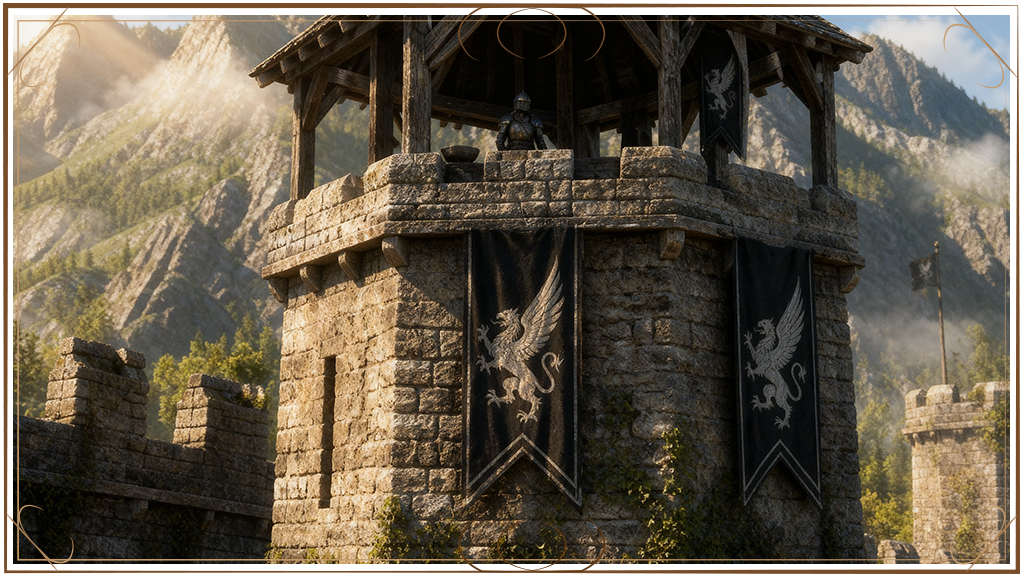
Castle Kelvor is the political and symbolic heart of the land. Yet anyone expecting a golden residence will be disappointed. Castle Kelvor is massive, solemn and vigilant. In its halls hang no signs of idle vanity, but maps of the borders, banners of ancient castes, weapons of fallen defenders and the names of those whose decisions preserved or wounded Kelvor.
From here, border reports are read, watchtowers supplied, alliances forged and young recruits reminded of their oath. Castle Kelvor is not the place where power rests.
It is the place where responsibility keeps watch.
Thus, the land shaped its people. The mountains taught steadfastness. The forests taught patience. The sea taught vigilance. The Wastelands taught duty. And the villages between all these borders taught Kelvor why all of it was necessary.
For Kelvor does not defend empty lines on a map. It defends the smoke above rooftops, the fields before harvest, the voices of children and the fires within homes.
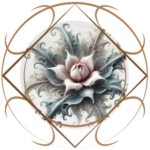
The nature of Kelvor is no ornament of the world. It is teacher, storehouse, border and sanctuary all at once. The people of this land do not live beside their forests, mountains and rivers — they live with them.
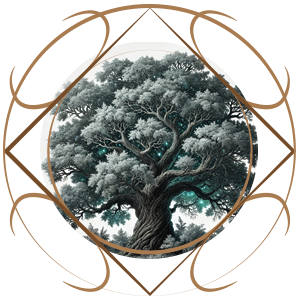
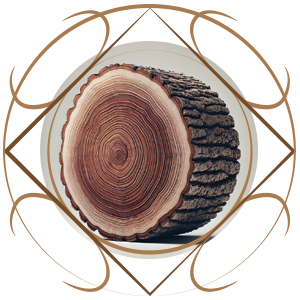
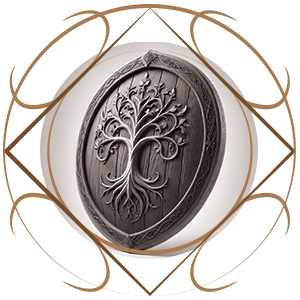
Among all growing things, the Kelvor oak holds the greatest meaning. From its wood come houses, gates, bridges, bows and shields. Its roots reach deep, its crowns defy wind and season. No tree embodies Kelvor more strongly.
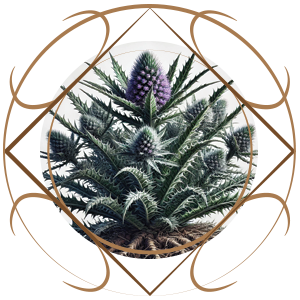
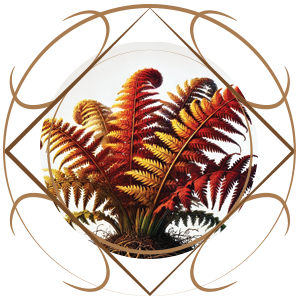
In the moonleaf forests, leaves gleam silver between the trunks on clear nights. Along coasts and slopes grow flame ferns like embers beneath ash. Guard-thistles bear thorns outward and healing within.
Thus, Kelvor’s flora became a mirror of its people: steadfast, useful, defensive and protective.
The Kelvor oak is more than a resource. It is an example. It grows slowly, does not yield easily and gives protection without asking for glory. A shield of Kelvor oak is not merely wood in a guardian’s hand. It is a piece of home placed between danger and life.
Yet precisely because the oaks are so precious, they are not felled carelessly. Ancient groves stand under protection, new trees are planted and whoever takes from the forest must know what purpose their work will serve.
Whoever destroys his roots will one day lose his shield.
The moonleaf groves are considered places of quiet vigilance. Young guardians are often led near them before their first oath. There, beneath silver light and silent branches, they learn a truth no training ground can teach: not every watch is loud. Not every form of protection shows itself in drawn steel.
Flame ferns remind Kelvor that not all strength stands large and mighty. Some things survive because they are resilient. Some shine precisely when the world grows dark.
The guard-thistle teaches another truth. Its thorns ward outward, yet its sap heals within. It is hard on the outside and protective at its heart — like Kelvor itself.
That is why a person of Kelvor sees in the forest not merely wood, in a plant not merely usefulness and in a root not merely food. They see lesson, memory and duty.
The animals of Kelvor are not merely creatures of its forests, rivers and mountains. They are symbols of what this people honors: restrained strength, vigilance, loyalty and dignity.
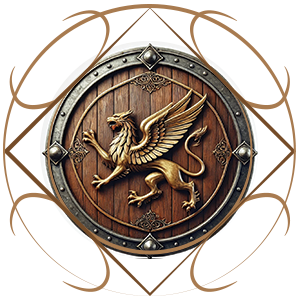
The guardian bears are regarded as wardens of the wild. Vast, calm and fearless, they embody strength that does not boast. Night griffins circle high above passes and cliffs; their gaze reaches farther than the next step. River wolves hunt in packs and remind Kelvor that one alone may be strong, but community endures.
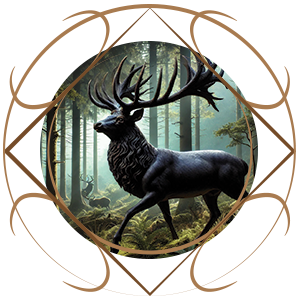
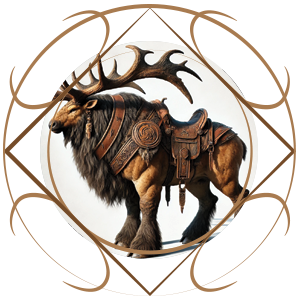
And in the quieter valleys appear the Kelvor stags, proud and dignified. They do not seek battle. Yet when cornered, they lower their antlers.
Thus, Kelvor’s animal world teaches: peacefulness is not weakness. And protection begins long before the first blow.
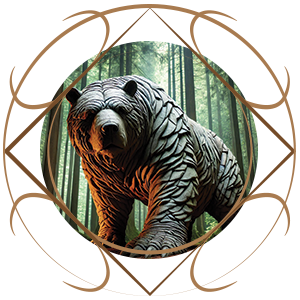
A guardian bear does not need to prove its strength. It is strong. That is precisely why it does not waste its power. Many warriors of Kelvor see in it an example: the greatest fighter is not the wildest, but the one who masters his strength and releases it only when protection demands it.
The night griffins are signs of vigilance. High in the mountains, they detect movements hidden from human eyes. Their cry above the passes is taken by many guardians as a warning. They teach Kelvor to recognize danger before it reaches the gate.
The river wolves embody loyalty and community. A single wolf may be strong. But a pack survives winter, hunger and peril. Just as a single guardian may be brave, yet only the shieldwall of many shoulders becomes unshakable, Kelvor’s strength lies in unity.
The Kelvor stags stand for dignity without weakness. Their beauty is not fragile, their calm not defenseless. They flee when flight is wise. Yet when cornered, they defend themselves.
All these animals have shaped the people of Kelvor. The guardian bear teaches restrained strength. The night griffin, the gaze into the distance. The river wolf, loyalty within the pack. The Kelvor stag, dignity without weakness.
Kelvor did not become unbending because it never knew fear.
It became unbending because its land showed it that life endures only where eyes remain watchful and community is stronger than solitude.
The culture of Kelvor was not born in golden halls. It arose upon walls, in forests, beside border fires and in homes where families waited for the return of those who kept watch at the passes.
Honor, duty, hard work, community and protection are not beautiful words in Kelvor. They are laws of survival. A person is not first asked what they wish to possess, but where they will stand when Kelvor needs them.
At the heart of society stand family and caste. The Guardians hold the line. The Scholars preserve knowledge and judgment. The Artisans give protection its shape. The Keepers guard roads, alliances and messages.
Each caste bears one part of the same wall. None stands alone. None may forget that its service receives meaning only within the whole.
Kelvor distrusts solitary glory. Not because it despises heroes, but because no shieldwall is made of one person alone. No fortress is built by a single hand. No village survives winter through one worker only.
Thus, a person of Kelvor belongs to a family, a caste, a village, an oath. These bonds give support, but they also demand responsibility. A lazy worker weakens more than himself. An unreliable messenger endangers more than his own honor. A broken oath wounds not only the speaker, but the trust upon which Kelvor stands.
The castes are not a mere division of trades. They are the order of a people who have learned that protection takes many forms.
The Guardians stand where Kelvor must not yield. The Scholars preserve law, strategy, history and uncomfortable truth. The Artisans forge, build, sew, fell, repair and provide. The Keepers do not always protect with steel, but with words, treaties, messages and vigilance.
Yet this order also has its shadows. It can wound those who need longer to find their way. It can break people when no one sees that even the strong grow tired.
Kelvor is great because it endures.
But it remains human only so long as it does not forget why it endures.
Kelvor is no principality in which power is regarded as ornament. The crown is no sign of comfortable greatness, but a burden heavier than steel.
The Prince of Kelvor does not rule over a carefree land. He rules over border fortresses, castes, families, guardians and decisions whose consequences reach even the simplest homes. Therefore, blood alone is not enough. A prince must prove that he can bear the burden of his house.
At his side stands the Council of Voices: the heads of the great castes. They advise, admonish and contradict when contradiction is needed.
For Kelvor distrusts any power that comes from only one direction. A good prince listens to his council. A weak one fears it. A foolish one ignores it.
For centuries, the prince has come from the House of Kelvor, that bloodline whose name is inseparably bound to the fate of the land. Yet a name alone is not enough. A son or daughter of the princely line may inherit the claim — but not automatically the right to lead without being tested.
A future prince is not raised for vanity. The Guardians teach him combat, border command and the meaning of an order that costs human lives. The Scholars teach history, law and judgment. The Artisans teach provision, fortresscraft and the worth of every simple hand. The Keepers teach alliances, trade, language and the art of preventing war before the first arrow flies.
When a new prince wishes to raise the crown, he stands before the Voices of Kelvor. The heads of the castes do not test him as enemies, but as wardens of the land. They do not ask whether he wishes to rule. They ask whether Kelvor can follow him.
The Council of Voices is no place of courtly flattery. Its task is not to please the prince. It is to warn, admonish, doubt and remember.
If a prince betrays his duty, disregards the castes, or turns the crown into a tool of his own pride, the Call of the Voices begins. Then the four caste leaders stand before him as one. Not as rebels. Not as enemies. But as Kelvor itself.
A crown of gold is light.
A crown of duty can break a person.
In the endless forests and along the wind-scoured mountain passes of Kelvor, where every tree tells a story and every stone bears witness to an ancient oath, a language is spoken that is far more than mere words. Caldorin is no tongue of diplomacy, no tool for empty promises or ornamented speech — it is an oath, a duty, a legacy.
Here, words are not chosen lightly. They are forged with care, like steel beneath the hammer. Its sentences are clear, its sounds deep and distinct, carried by a rhythm that belongs both in the halls of the prince and upon the battlefield. Caldorin is the language of warriors, of guardians, of those who stand when others fall.
For whoever speaks in Kelvor speaks with honor.
And whoever swears in Kelvor swears for eternity.
Caldorin is a language of weight and clarity, its words spoken with a firm tongue and strong breath. It is not a soft, flowing melody like the speech of the elves, yet neither is it the clipped command-language of the dwarves.
Deep, full-sounding vowels:
“A”, “O” and “E” are often emphasized and lengthened in order to underline meaning and resolve.
Distinct, forceful consonants:
“R”, “T”, “D”, “G” and “Th” are pronounced clearly, conveying strength of will.
Sharp endings symbolizing determination:
“Caldr” — “guardian”
→ “Caldran” — an honorific title for guardians, protectors of the castes.
“Thyld” — “honor”
→ “Thyldor” — honorable ruler, bearer of the highest oath.
Double consonants to intensify meaning and purity:
“Ardan” — “blood”
→ “Arrdan” — untainted blood, symbol of purity and lineage.
“Wyth” — “wisdom”
→ “Wythren” — exalted wisdom, an honorific title for scholars.
“Caldorin” — “Language of the Guardians”
“Ardan” — “Blood”
“Thyldor” — “Honor”
“Caldr” — “Guardian”
“Wythren” — “Exalted Wisdom”
“Thargrim” — “Storm of Battle”
“Haldrith” — “The High Oath”
Caldorin is not merely a means of communication. It is a language that must be spoken with conviction, with backbone and with the knowledge that every word carries meaning.
Caldorin is a direct yet powerful language in which every word serves a purpose.
Subject – Verb – Object is the usual order, though important information is often placed at the beginning of a sentence for emphasis.
“Thyldor ardan haldrith.”
→ “Honor and blood swear the High Oath.”
“Caldran styrm fyr Thargrim.”
→ “The guardians march into the Storm of Battle.”
Direct statements are concise and unmistakable:
“Ardan brenn.”
→ “Blood flows.”
“Caldr stand fyr Thyldor.”
→ “The guardian stands for honor.”
The past is marked with “-orn” or “-thar”, expressing endurance and permanence.
“Ardan’orn.”
→ “Blood had been spilled.”
“Thyldor’thar.”
→ “Honor endured.”
The present form usually remains unchanged, emphasizing clarity and certainty.
“Caldr fyr Thyldor.”
→ “The guardian serves honor.”
The future is formed with “-wyn” or “-raen”, underscoring the inevitability of what is to come.
“Thargrim’wyn!”
→ “Battle will come!”
“Haldrith’raen!”
→ “The High Oath shall be renewed!”
The plural is marked by “-en” or “-arn”, symbolizing unity and cohesion.
“Caldr” — “guardian”
→ “Caldrarn” — “order of guardians.”
“Ardan” — “blood”
→ “Ardarn” — “bloodlines, ancestors.”
“fyr”
→ “for, in honor of”
“Caldr fyr Thyldor.”
→ “The guardian stands for honor.”
“weth”
→ “with, at the side of”
“Ardan weth Wythren.”
→ “Blood united with wisdom.”
“thor”
→ “through, because of, by means of”
“Haldrith thor Caldran.”
→ “The High Oath through the guardians.”
Caldorin is a language not only heard, but seen and felt.
A clenched fist struck against the chest
→ A sign of loyalty or oath-taking.
A brief, slow nod
→ Agreement or recognition.
Both hands placed upon the sword or at the hips
→ A sign of readiness for battle.
A focused gaze with the chin slightly lowered
→ A challenge, or respectful acknowledgment of an opponent.
The people of Kelvor do not speak only with their voices. Their posture, their movements and their gaze carry just as much meaning.
Caldorin is not written upon parchment. It is carved into stone, struck into steel and burned into wood.
Its letters are heavy and linear, radiating strength and permanence.
Its rune-like symbols represent honor, battle and wisdom.
Texts upon banners or shields often bear sworn oaths and the names of great ancestors.
| Word (Caldorin) | Translation | Meaning |
|---|---|---|
| Caldorin | Language of the Guardians | The language of the people of Kelvor, powerful and resolute. |
| Ardan | Blood | Symbol of heritage, battle and family. |
| Thyldor | Honor | The highest principle in Kelvor. |
| Caldr | Guardian | A protector of the land and the community. |
| Wythren | Exalted Wisdom | A term for wise advisers and scholars. |
| Thargrim | Storm of Battle | An expression for a mighty warrior. |
| Haldrith | The High Oath | A binding vow upon life and honor. |
| Valdrik | The Steadfast One / The Steel-Bound | Symbol of resolve and endurance. |
| Mordain | The Highborn | Title for a leader or noble. |
| Vandrik | The Spearbreaker | A master of war and defense. |
| Thelor | The Winter-Bearer | Stands for constancy and endurance. |
| Garthen | The High Guardian | Defender of Kelvor’s borders. |
| Drevan | The Fire Oath | One whose will burns like flame. |
| Tormund | The Iron Falcon | An experienced strategist and war leader. |
| Lysara | The Flame of Protection | Symbol of hope and defense. |
| Thalena | The Shieldmaiden | A warrior woman who fights for her homeland. |
| Ylanna | The Falcon Rider | Expression of speed and courage. |
| Malveris | The Fortress Wall | Embodies steadfastness and protection. |
| Sylvara | The Iron Huntress | A silent and deadly warrior. |
| Vaethis | The Storm Guardian | Defender of the community. |
| Idrissa | The Fearless One | A woman who never yields. |
| Valdria | The Flame of Justice | A fearless leader. |
| Thelyra | The Lion Mother | Protective and wise. |
| Drisana | The Sun Maiden | A symbol of hope. |
| Tisara | The Falcon Queen | A fearless defender. |
| Word (English) | Caldorin |
| I | Io |
| You | Thal |
| He / She / It | Cal |
| We | Noran |
| They | Varën |
| This | Ithar |
| That | Thyr |
| Who | Wyth? |
| What | Arën? |
| Where | Dorn? |
| Why | Thara? |
| How | Miron? |
| Not | Varn |
| Yes | Haldr |
| No | Thurn |
| And | Vel |
| Or | Thalé |
| With | Enar |
| For | Vald |
| In | Cald |
| On / Upon | Bryn |
| A / An | Thaer |
| Good | Solm |
| Bad | Dorth |
| Love | Lysën |
| Life | Fael |
| Death | Mordil |
| Time | Thelorën |
| Eat / Food | Varor |
| Drink | Dranor |
| Phrase (English) | Caldorin |
| Hello! | Haldr Io! |
| How are you? | Miron thal? |
| I am well. | Io solm. |
| Thank you! | Haldr Vald! |
| Please. | Enar arën. |
| Excuse me! | Thurn enar! |
| No problem. | Varn arën. |
| I do not understand. | Io varn arën. |
| Can you repeat that? | Thal miron arën? |
| Where is …? | Dorn thyr …? |
| What time is it? | Thelorën miron? |
| What are you doing? | Arën thal? |
| I am hungry. | Io varor. |
| I am thirsty. | Io dranor. |
| I am tired. | Io varn thelorën. |
| I love you. | Io lysën thal. |
| Watch out! | Thurn valdr! |
| See you later! | Thelorën thalé! |
| I do not know. | Io varn arën. |
| Good luck! | Haldr Thelorën! |
| Good night. | Mordil thal. |
| Welcome! | Haldr Io! |
| I need help. | Io varn enar! |
| I am sorry. | Thurn enar, io. |
| Nice to meet you. | Haldr thal miron. |
| What is your name? | Wyth thal? |
| My name is … | Io vald … |
| I come from … | Io cald … |
| I like this. | Io solm thyr. |
| I do not like this. | Io varn solm thyr. |
The people of Kelvor bear names that reflect strength, honor and their deep connection to a warrior tradition shaped by protection and duty. Their names often possess a powerful, distinctive sound structure and are deeply rooted in the culture of guardianship and community.
| Name | Gender | Translation | Meaning |
|---|---|---|---|
| Kantus | Male | “The Steadfast One” | A man who never wavers. |
| Asmodai | Male | “The Unyielding One” | Symbolizes the unshakable resolve of a warrior. |
| Imdaros | Male | “The Guardian of Fate” | A man whose deeds protect the realm. |
| Argos | Male | “The Lion-Hearted” | Stands for courage and valor. |
| Tharion | Male | “The Shield-Bearer” | A warrior who defends his people. |
| Vaelric | Male | “The Storm-Eyed” | A leader of clear mind and unwavering judgment. |
| Haldrik | Male | “The Fortress Man” | Represents the iron discipline of Kelvor. |
| Galdorin | Male | “The Sword-Walker” | A seasoned fighter. |
| Eldrakar | Male | “The Eternal Warrior” | One who never retreats. |
| Therion | Male | “The Falcon’s Son” | Symbolizes foresight and strategy. |
| Bryndor | Male | “The Iron Oath” | A man whose word is as firm as steel. |
| Garthen | Male | “The High Guardian” | A defender of the borders. |
| Caldran | Male | “The Shield-Brother” | A symbol of loyalty and fellowship. |
| Tyranor | Male | “The Fire-Bearer” | A leading warrior who lifts the spirit of others. |
| Othrik | Male | “The Unshaken One” | One who withstands every danger. |
| Ralvor | Male | “The Oath-Bound” | A man who never breaks his vow. |
| Darothan | Male | “The Honorable One” | Embodies the virtues of Kelvor. |
| Vendral | Male | “The Blade Storm” | A swift and powerful fighter. |
| Fenric | Male | “The Wolf Banner” | Symbolizes cunning and battle strength. |
| Mordain | Male | “The Highborn” | A born leader. |
| Baethor | Male | “The Bridge Guardian” | Defender of the approaches to Kelvor. |
| Ulricon | Male | “The Storm-Bearer” | An unstoppable warrior. |
| Thelor | Male | “The Winter-Bearer” | Stands for constancy and endurance. |
| Drevan | Male | “The Fire Oath” | One whose will burns like flame. |
| Karveth | Male | “The Lance of Kelvor” | A master of war. |
| Sylthar | Male | “The Fearless Guardian” | A defender without fear. |
| Tormund | Male | “The Iron Falcon” | A leading strategist. |
| Eboran | Male | “The Light-Bearer” | A symbol of hope and honor. |
| Vandrik | Male | “The Spearbreaker” | An experienced warrior. |
| Athorin | Male | “The Unyielding Defender” | A bulwark against the darkness. |
| Name | Gender | Translation | Meaning |
|---|---|---|---|
| Lysara | Female | “The Flame of Protection” | A symbol of hope. |
| Thalena | Female | “The Shieldmaiden” | A warrior woman who fights for her homeland. |
| Veyana | Female | “The Winter Rose” | Strong, yet full of grace. |
| Elaris | Female | “The Storm Blade” | A woman who can be as gentle as she is deadly. |
| Ylanna | Female | “The Falcon Rider” | Symbolizes speed and courage. |
| Seraphin | Female | “The Light-Bearer” | An inspiring leader. |
| Malveris | Female | “The Fortress Wall” | Embodies steadfastness. |
| Sylvara | Female | “The Iron Huntress” | A silent warrior. |
| Nivara | Female | “The Steel-Bound” | A woman of unshakable will. |
| Vaethis | Female | “The Storm Guardian” | Symbolizes defense and protection. |
| Olvara | Female | “The Lance of Night” | A legendary warrior. |
| Idrissa | Female | “The Fearless One” | A woman who never yields. |
| Erona | Female | “The Oath-Bound” | A loyal servant of Kelvor. |
| Valdria | Female | “The Flame of Justice” | A fearless leader. |
| Thelyra | Female | “The Lion Mother” | A protective and wise warrior. |
| Aerilyn | Female | “The Wind-Born” | Swift and graceful. |
| Drisana | Female | “The Sun Maiden” | A symbol of hope. |
| Tisara | Female | “The Falcon Queen” | A fearless defender. |
The names of the people of Kelvor carry within them the strength and resolve of their people. They are not mere designations, but oaths, inheritances and symbols of an unbreakable will. Whoever bears a name from Kelvor also bears the history of their ancestors upon their shoulders.
In Kelvor, smithcraft is no mere trade. It is service, memory and responsibility. Where other realms forge weapons to display power, Kelvor forges so that people may come home.
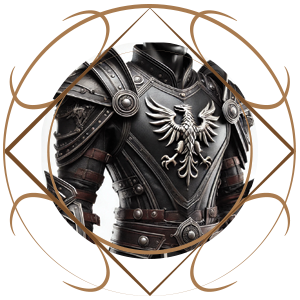
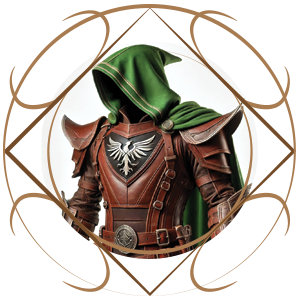
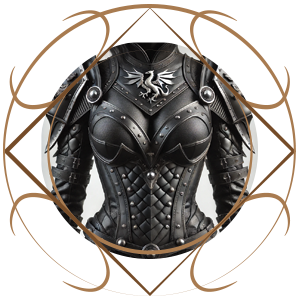
A blade of Kelvor is not made to seek glory. A shield is not crafted to be admired. Armor holds no value because it shines, but because it must endure between life and death.
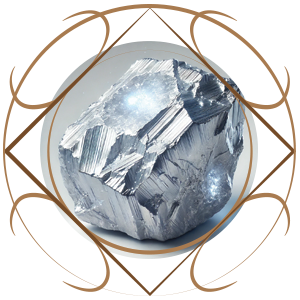
Kelvor steel is known as tough, resilient and reliable. Kelvor oak is used for shields, spear shafts, bows and gate reinforcements. Moonsteel is used only where its strength is truly needed.
For in Kelvor, the first question asked of any crafted piece is not: Is it beautiful?
But: Will it hold?
The smithcraft of Kelvor does not begin at the anvil. It begins in the land itself. From the mountains comes iron. From the forests, oak. From the rivers, water for tempering. From the hands of artisans, form. From the oath of the people, meaning.
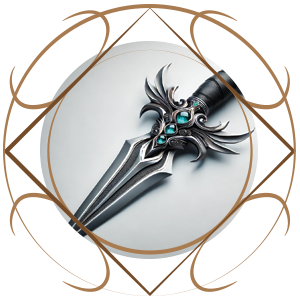
A smith of Kelvor never crafts only for a customer. He crafts for a family waiting. For the guardian standing at the gate in the night. For the rider whose breastplate must turn aside an arrow. For the ranger whose knife must not break at the wrong moment.
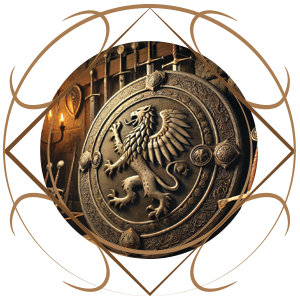
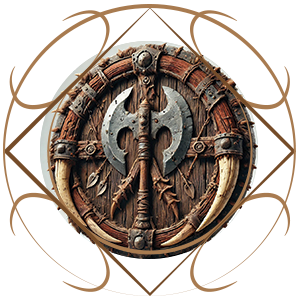
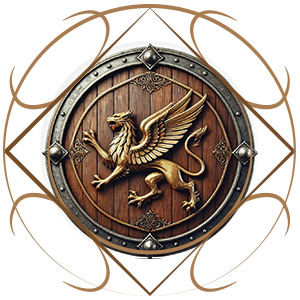
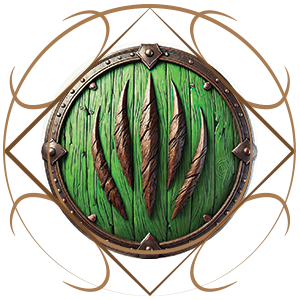
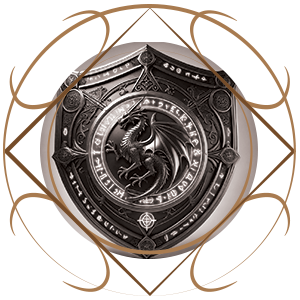
Among all crafted works, the shield holds the deepest meaning. A sword can attack. A spear can halt. But a shield steps between danger and life. An old shield that has endured many battles is regarded in Kelvor almost like a veteran. Its notches are no flaws. They are memories of blows that did not reach someone.
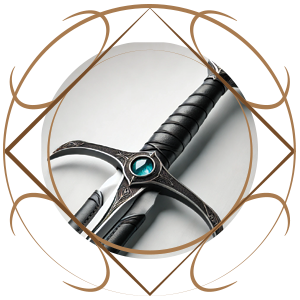
Engravings, too, are not mere ornament. Shields bear family signs, blades bear oaths, armor bears caste symbols. A rune of Aetherion reminds all that protection without conscience becomes mere violence.
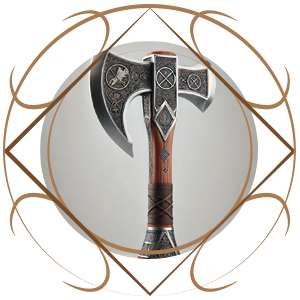
Many families possess heirlooms of steel: old swords, knives, hammers, shield bosses, or helmets. They are not honored because they are old, but because they have served.
An oath from Kelvor must hold when all else breaks.
Kelvor does not wage war to burn its name into foreign lands. It does not march from hunger for conquest, not for gold, not for glory and not for the song of a victor.
Kelvor fights when it must. And when it fights, it fights to protect.
The shield is the soul of its martial art. A sword may bring glory, a lance may halt enemies, a bow may kill from afar. But a shield places itself between danger and life.
That is why the training of many Kelvorian warriors begins not with attack, but with holding: raising the shield, finding one’s stance, controlling the breath, refusing to step back.
For a guardian of Kelvor never fights only for himself. Behind him stand villages, fields, children, families and the realm of Argenon.
In Kelvor, war is not regarded as the highest form of greatness. War is a failure of peace — sometimes unavoidable, sometimes necessary, but never to be sought lightly. Precisely for this reason, Kelvor prepares for it.
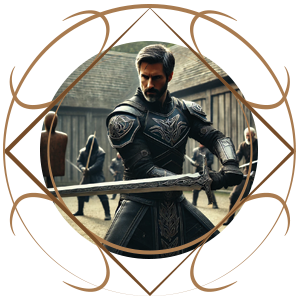
The shieldwall is the heart of Kelvorian warfare. Shoulder to shoulder, the Guardians stand, their shields locked, their weapons ready, their eyes fixed forward. No warrior holds alone. No warrior falls unnoticed. Every step is taken together.
The shieldwall is Kelvor in its purest form: many people, one oath, one line — and behind that line, the life that is meant to continue.
Behind and between the shield-bearers stand the spearfighters. Their spearwall is patience given a point. It holds distance, breaks charges and reminds the enemy that a wall does not merely stand. It can also thrust back.
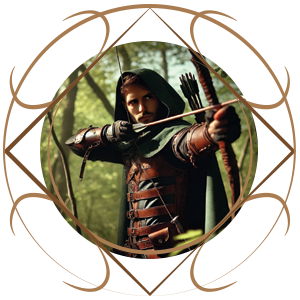
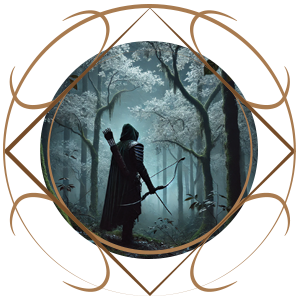
Not all fighters stand openly in formation. Border guardians and rangers know hidden paths, old game trails, misted zones and river crossings. The riders of Kelvor intervene where steadfastness must become motion.
And then there are those of whom Kelvor speaks less openly: scouts, saboteurs, silent fighters and pathfinders. Some call them the Shadows of Kelvor. Their service is difficult, for they protect the realm by means rarely sung of.
The highest form of victory in Kelvor is not the conquered city.
It is a village that did not burn.
A wall that held.
A child that grew up.
In Kelvor, magic is no path to glory. No ornament for scholars. No toy for the ambitious. Magic is responsibility.
For beyond the western mountains lurk not only raiders and beasts. From the Wastelands come dark powers whose attacks cannot always be seen with the eyes and cannot always be intercepted with steel: curses, corruption, spells of fear and dark runes.
Thus, Kelvor learned that a shield is sometimes visible — and sometimes not.
Its magic does not serve conquest, personal ascent, or comfort. It serves protection. Runeguardians, fortress mages and keepers of the warding signs inspect walls, renew protective circles and strengthen gates against dark forces.
Kelvor’s magic is greatest when no one notices it has worked.
Magic in Kelvor is rare, precious and strictly guarded. Crystals, runestones and arcane-reinforced materials are not traded carelessly and are not given to those who merely possess enough gold. They belong to the oath.
Crystals are used where they protect life: in fortress walls, warding signs, protective runes, special armor, gateworks and defensive structures. No ordinary citizen adorns his home with them. No officer wears them out of vanity.
The most important form of Kelvorian magic is fortress magic. Runes are set into walls to weaken siege spells. Gates carry lines of warding meant to prevent them from being opened by foreign powers. Watchtowers bear signs of early warning that can respond to dark forces.
Weapons and armor, too, may be strengthened, but never lightly. Magic replaces no courage, no discipline, no shieldwall and no oath. It can strengthen a wall. But it cannot stand in its place.
Thus, Kelvor mistrusts magic without despising it. Too often has the principality seen what happens when power grows without measure. Whoever uses magic in secret endangers not only himself, but the community.
In Kelvor, a hidden spell is considered more dangerous than a drawn knife.
For a knife can be seen.
A corrupted oath is often seen only when it is too late.
Kelvor is no land of extravagant art. Its cities are not famed for golden palaces or beauty created only to be admired.
In Kelvor, the first question asked of any work is not: Is it beautiful? But: Will it remain? Will it remember? Will it preserve what must not be forgotten?
Its art is found upon fortress walls, archways, shields, weapons, ancestral halls, house beams, banners and memorial tablets. Its music lives in marching songs, watch songs, homecoming songs, steel bells, horns and quiet harp tones.
For in Kelvor, a song is more than sound.
It is a monument made of voice.
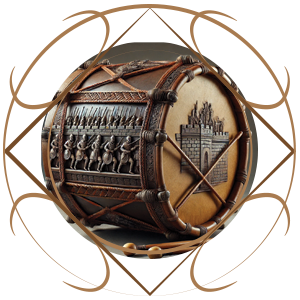
The walls of Kelvor are not mute. To strangers, many old fortresses seem like cold structures of stone. But those born in Kelvor recognize chronicles within them. Here, a garrison held for three days against overwhelming force. There, a captain fell while closing the northern gate. Beneath this stone rest names that must not be forgotten.
In many castles and settlements, there are Halls of Names. There, those are immortalized through whose service something was preserved: not only princes, generals and famous warriors, but also simple guardians, artisans, messengers, healers, scholars, mothers, fathers and children.
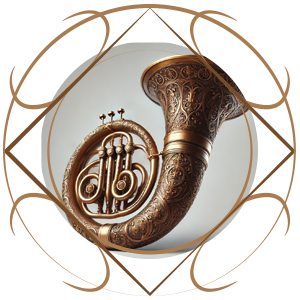
Music serves the same purpose. Deep war drums set the pace of formations. Honor horns carry warning, homecoming, or farewell across valleys and walls. Steel bells do not call to entertainment, but to attention, remembrance and vigilance.
Yet among all songs, the homecoming songs are perhaps the most human. They are not sung after great victories, but at doors, in courtyards, in small halls and at tables where one place has been empty for too long.
A homecoming song says:
You have returned.
You held.
You may be human again before Kelvor calls you once more.
In the end, Kelvor’s art and music fight against a particular form of darkness: against the silence that arises when names are no longer spoken and sacrifice loses its meaning.
In Kelvor, faith is no flight from the world. It is the strength to withstand it.
The people of Kelvor revere Aetherion, Guardian of the Heavens, Shield above Argenon and Lord of Vigilance. He is no god of abundance, no god of effortless joy and no god who promises that life will be easy.
He is the god of those who must remain.
His sacred signs are shield and spear. The shield stands for protection, patience and the willingness to place oneself between danger and life. The spear stands for clarity, judgment and the moment when defense must act.
The shield comes first.
The spear only when it is unavoidable.
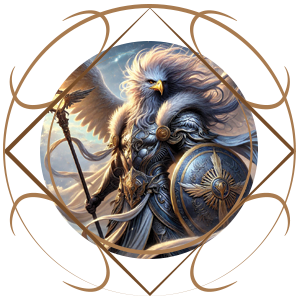
Aetherion is often shown with the head of an eagle. Not because of ferocity, but because of his gaze. The eagle sees what others overlook. So, too, a guardian of Kelvor must be more than strong. He must see: danger before it reaches the gates; lies before they poison trust; suffering before duty becomes hardness without heart.
Kelvor does not ask Aetherion to spare it from every trial. An old prayer says:
Do not take the burden from me.
Let me become worthy of it.
The temples of Aetherion often stand upon hills, cliffs, mountain passes, or near great fortresses. They are not places of escape, but places of open eyes. There, shields are blessed, the names of the fallen are read aloud and young guardians are reminded of their duty.
Death is regarded in Kelvor with solemn dignity. A person does not die honorably merely because he dies. His death receives dignity through what his life preserved.
The people of Kelvor believe that the souls of those who honored their oath enter Aetherion’s Heavenly Watch after death. There, they do not rest in idle peace. They keep watch still: over their families, their castes, the walls of Kelvor and Argenon.
At a burial, the name is spoken aloud so heaven and earth may hear it. The caste names the person’s duty. The family names their origin. The community names what was preserved through them.
For in the end, Aetherion does not ask:
How much did you gain?
He asks:
What did you preserve?
Whom did you protect?
Did you remain when your place needed you?
And if the answer is true, a person of Kelvor passes on to the next watch.