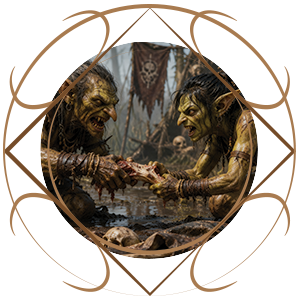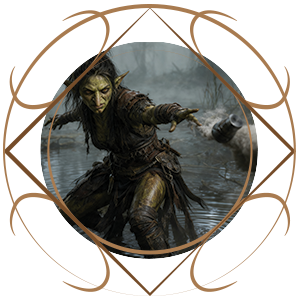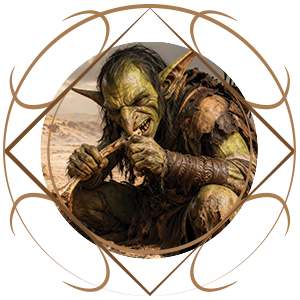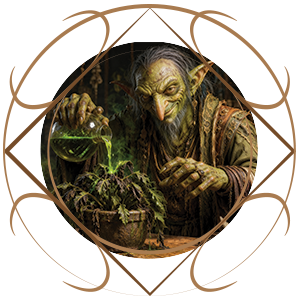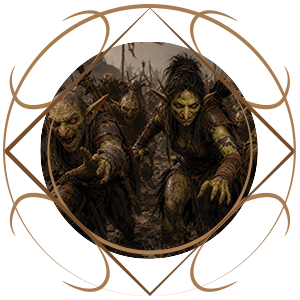




The goblins of Zoznarí are not a noble people. Not beautiful. Not just. Not harmless.
They are children of dust, hunger, smoke, poison, filth and thousands of years of contempt. They crawled into places where others never bothered to look. They devoured what others discarded. They stole what others failed to guard. They poisoned what they could not defeat and set fire to what they could not hold.
And so they became small, swift, vicious, venomous, loud, restless, cruel, inventive – and almost impossible to eradicate entirely.
Not because they were strong.
Not because they were noble.
But because they kept going.
To goblins, it rarely matters whether something was beautiful, clean or sensible. What matters is whether it worked. And if it did not work, what matters is whether someone survived long enough to turn it into something even more dangerous.
For Zoznarí did not give rise to heroes.
It gave rise to survivors who were treated like vermin for so long that they eventually decided to perfect the role.
It would be easy to see goblins as nothing more than monsters. And often, they behave like monsters. They plunder, steal, poison, betray, set fires, unleash beasts upon their enemies and laugh at things no sane people should ever find amusing.
Yet they are not empty.
Beneath all that shrieking lies fear. Not merely the fear of death. Death is an everyday occurrence in Zoznarí. It lurks in serpent bites, fire pits, starvation, cauldrons, wolves, Santhress rituals and terrible plans.
What a goblin truly fears is being alone.
Alone means there is no one to keep watch while you sleep. No one to call your name. No one to retell your lies. No one to laugh when you fall. No one to say that you were ever there.
To goblins, insignificance is a second kind of death.
That is why they live so loudly. That is why they carry trophies, tell lies, invent names, shriek together in swarms and laugh even when something goes horribly wrong – so long as it does not tear them apart completely.
They do not necessarily want to be loved.
That would be suspicious.
They want to be noticed.
By enemies.
By rivals.
By the swarm.
By Zargrath.
For those who are noticed have been there.
And those who were there are not entirely lost.
If you see us as vermin, then we shall become the vermin that devour your walls.
Zoznarí is not a land that protects its children. It does not pick them up when they fall. It does not even bother to look.
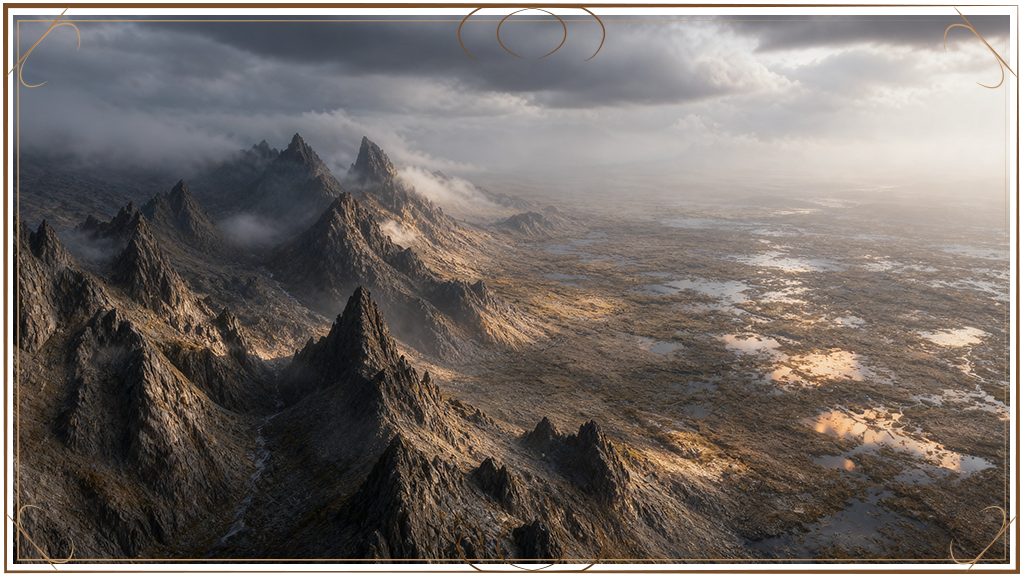
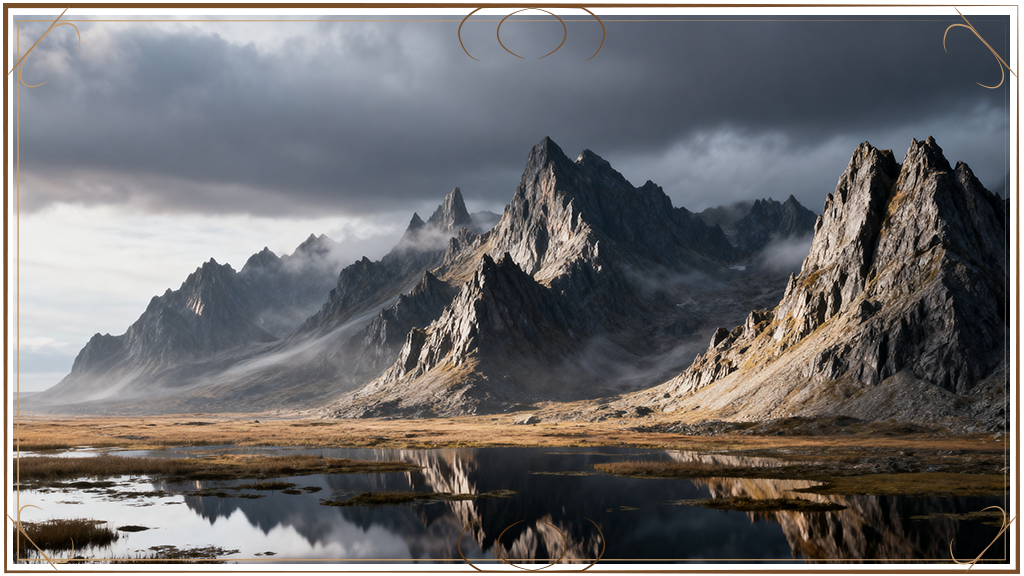
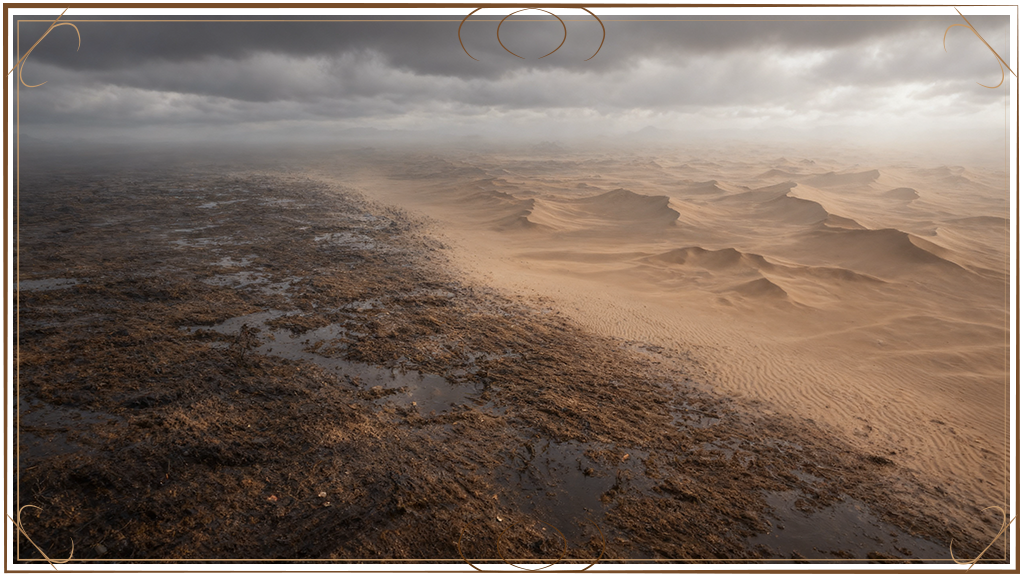
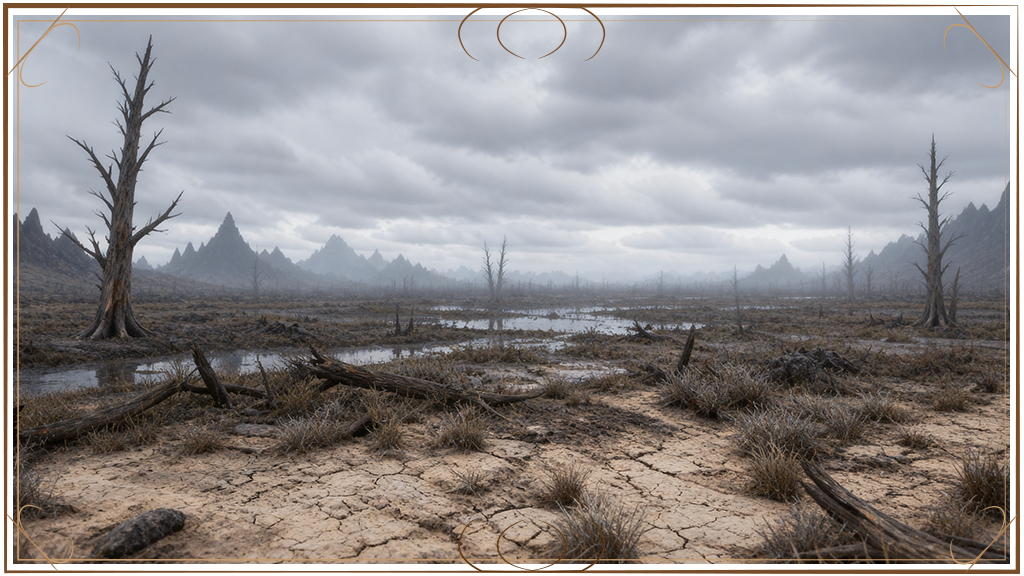
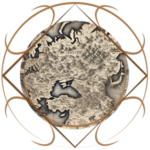
It is dust, stone, heat, hunger, thorns, poisonous roots, shattered ravines, barren plains, tar pits, black plumes of smoke and mountains that look as though Zargrath himself had clawed at them with crooked fingers.
Other realms possess fertile valleys, sacred forests, protective walls and clear rivers.
Zoznarí possesses cracks.
And cracks are pathways.
To the north rise the Hima Mountains, cut through by the treacherous Pass of Rengôr, known to many simply as the Claw. To the west lies Chann’Thrav, the land of the orcs. To the south lurks Phanisses, the realm of the Santhress – an ancient wound in the memory of the goblins.
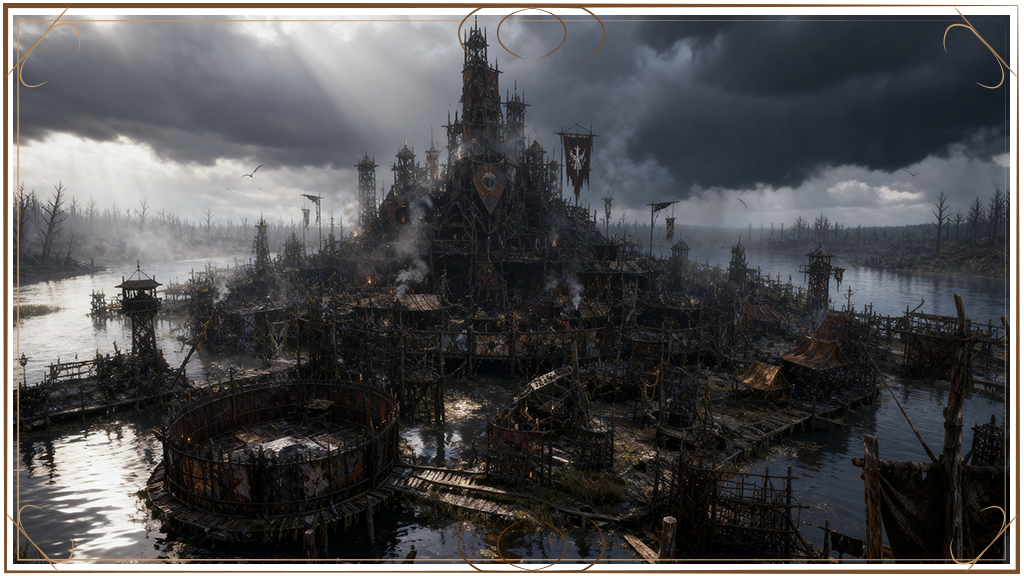
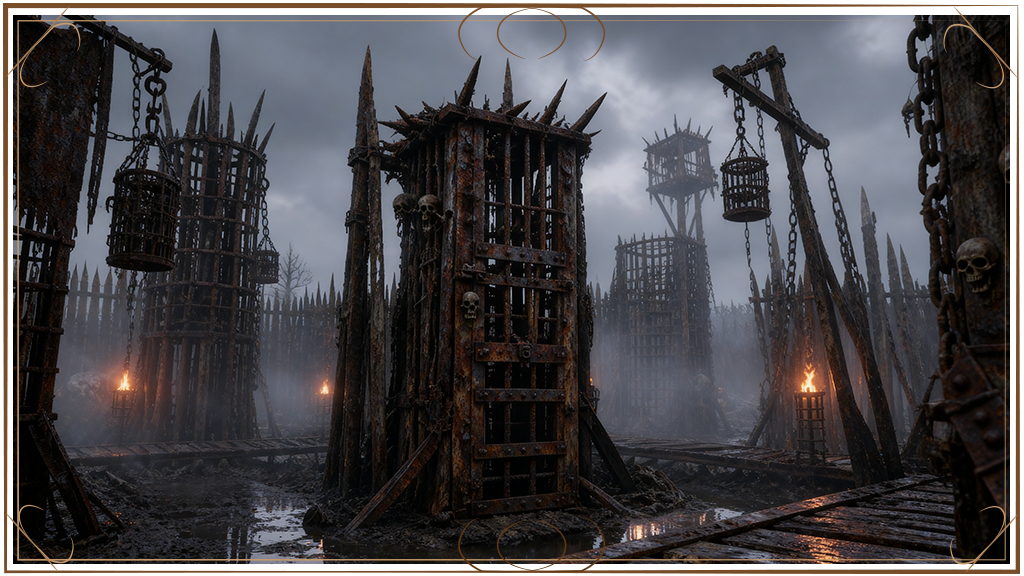
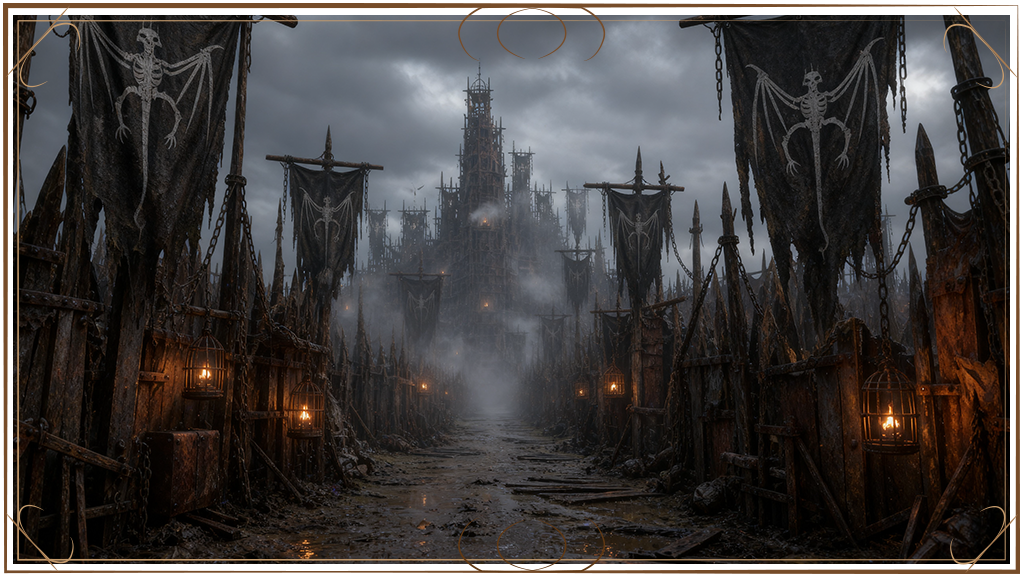
Deep in the inhospitable south sprawls Striduan, the City of Eternal Smoke: neither planned nor properly built, but grown like mold upon rotting flesh.
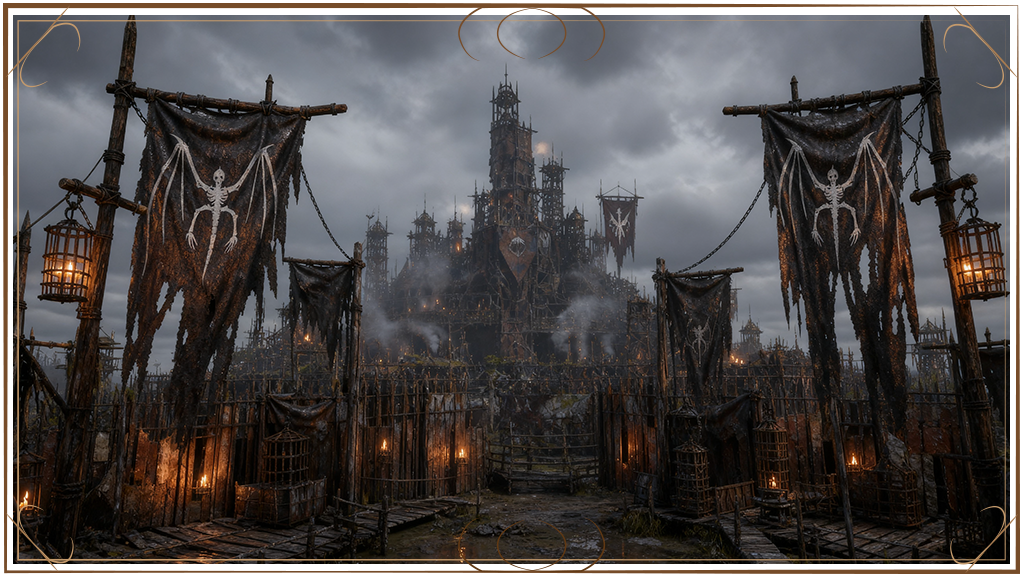
Striduan is not a city in any orderly sense. Its streets exist not because anyone planned them, but because enough feet trampled the same filth into the ground. Houses lean against one another because not a single one could stand alone. Bridges creak, towers lean crookedly, cauldrons boil, fires burn too hot or not hot enough and somewhere, someone is always screaming.
Smoke hangs over the city almost constantly.
Black from the smithing pits.
Yellowish from Sulfurweed.
Greenish from the poisons brewing in cauldrons.
Gray from damp firewood.
Flickering red whenever something catches fire that was never supposed to burn in the first place.
Striduan never sleeps.
When silence falls, it does not mean peace. It means something is being prepared somewhere.
And that is worse.
The city is made from everything goblins could find, steal, drag, dig up or pry from the dead: Shadowwood, clay, beams of bone, old doors torn from human castles, stolen iron plates, charred wagon wheels, shattered shields and things whose origins no one can explain anymore.
Nothing fits together.
And yet, much of it endures for a surprisingly long time.
Not because it was built well, but because goblins are forever patching, propping, nailing, binding, weighing down, wedging into place and piling something new on top whenever the old structure collapses.
Beneath Striduan lie pits. Many pits. Smithing pits, tar pits, refuse pits, cage pits, wolf pits, poison pits, storage pits, sacrificial pits, accidental pits and pits whose purpose no one remembers anymore.
To outsiders, Understriduan is a nightmare.
To goblins, it is home.
Dark.
Cramped.
Stinking.
Dangerous.
But filled with pathways.
And pathways mean survival.
The peoples of the north see the Hima Mountains as a wall.
The goblins see cracks.

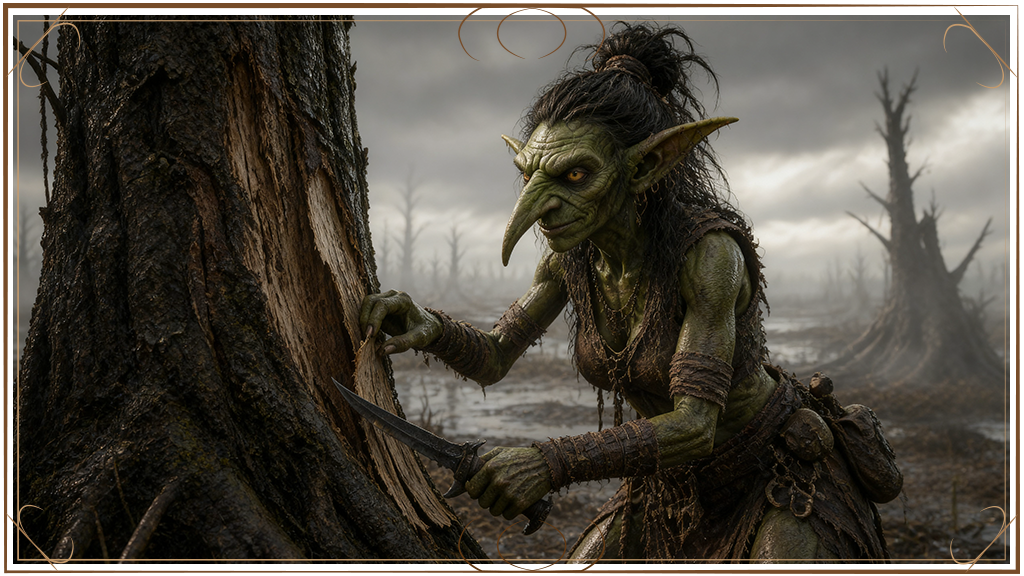
The plants of Zoznarí do not grow to please the eye. They grow because they are too stubborn, too bitter or too poisonous to simply die.
Ashgrass clings to rocky plains, looking as though it has already been half consumed by fire. Shadowwood grows twisted, dark and defiant, its timber burns poorly, withstands considerable punishment and is used for traps, palisades, spear shafts and crooked scaffolding.
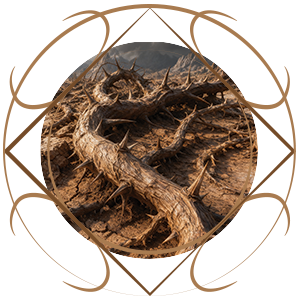
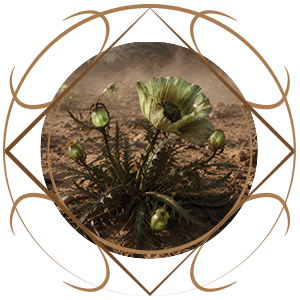
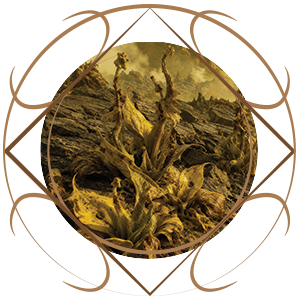
Desert Poppies glow amidst dust and bones, yet their seeds carry poison. Thornroot grows beneath the earth, gnarled, bitter and covered in barbs. Sulfurweed reeks from warm rocky fissures and is turned into smoke powders, foul-smelling clouds and incendiary mixtures.
To other peoples, this flora is repulsive.
To goblins, it is a collection of tools.
For in Zoznarí, what matters is not whether something is beautiful.
What matters is what you can do with it.
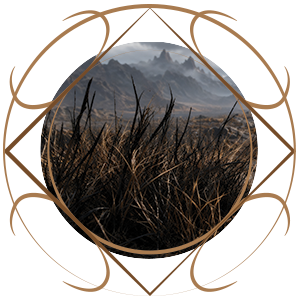
Goblins do not regard nature with reverence. Not like the elves. Not like the high elves. Not like the dwarves, who sense the Mother within the stone. To goblins, nature is first and foremost a tool, a danger or a meal.
A plant is poison, healing salve, smoke powder, porridge or a trap.
A branch is a spear shaft, firewood, a support for a tripwire or a stake.
A root is food, medicine or something to throw into an enemy’s eyes.
Ashgrass is perhaps the most honest plant in all of Zoznarí. It tastes of dust, bitterness and disappointment, yet it endures. Dried and ground, it becomes flatbread, porridge or travel rations. War beasts eat it when nothing better is available.
So do goblins.
Shadowwood is crooked and tough. It is used for palisades, trap covers, spears, totem poles and lopsided structures. An ancient Shadowwood tree may be regarded as a place sacred to Zargrath – not because it is beautiful, but because it has survived long enough to become suspicious.
The Desert Poppy is considered a plant of patience, which is a rather strange concept for goblins. Its poison often takes effect much later, festering wounds, clouding the mind and weakening enemies long after the goblin responsible has fled.
Thornroot wounds those who harvest it, burns against the skin and yet sometimes helps heal injuries. This makes it almost endearing to goblins.
Sulfurweed, finally, reveals one simple truth of Zoznarí:
What stinks can be useful.
What burns, even more so.
In Zoznarí, a flower only becomes interesting when it can kill, heal, blind or set someone on fire.
The creatures of Zoznarí are no gentle beings of a kindly world. They are predators, scavengers, mounts, components of traps, omens, food, terrors and sometimes all of these at once.
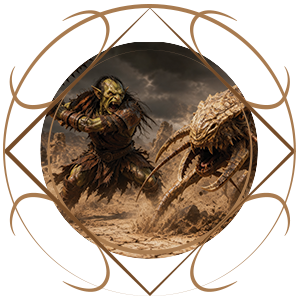
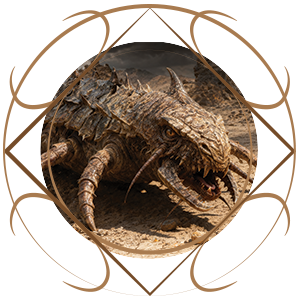
Cave Wolves are muscular, pale-eyed predators that serve as mounts, guard beasts and hunting companions – insofar as a goblin can ever truly tame anything. Steppe Crawlers conceal themselves beneath sand and rubble until the very ground becomes the enemy.
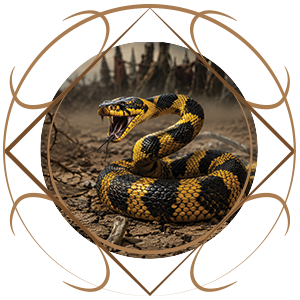
Racer Snakes are small, swift and highly venomous. To goblins, they are almost sacred teachers: small, underestimated and dangerous enough to bring down creatures far larger than themselves.
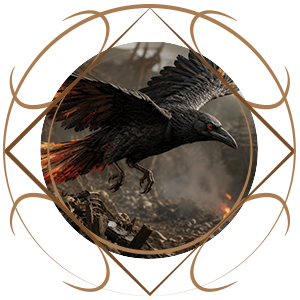
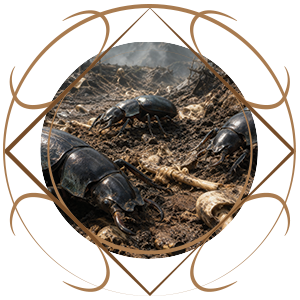
Fire Crows circle above refuse pits, battlefields and burning encampments. Bone Scrapers strip carcasses bare in the pits of Striduan, serving to clean up, punish or entertain, depending on who throws them into which pit.
Nothing in Zoznarí lives because the world is kind.
Everything lives because it has teeth – or because it can flee from them fast enough.
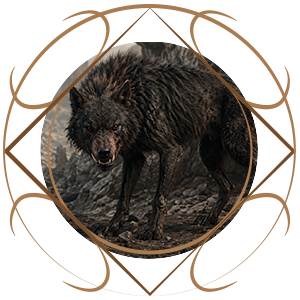
Cave Wolves have more in common with goblins than many would care to admit. They understand hunger, the pack, teeth and the simple truth that weakness often gets eaten. A goblin riding a Cave Wolf appears larger, faster and braver than he ever would on foot. The wolf probably knows this and despises him for it.
Nevertheless, these unlikely pairs sometimes work surprisingly well together.
Steppe Crawlers teach a different truth: danger need not be loud. Often, it is only noticed when the ground begins to move. Their scales become armor plates, their bones become hooks and their flesh provides tough, chewy sustenance. Young goblins hunt them as a test of courage – or as a terrible idea, though in Zoznarí, the distinction is often made only afterward.
Racer Snakes are almost the perfect embodiment of goblin power. They are small, nimble, venomous and underestimated. Their poison finds its way into vials, onto needles, onto arrows, into traps and occasionally into places where no sensible creature would ever think to keep a snake.
Fire Crows are regarded as omens of death. They follow battlefields, smoke and refuse. Goblins do not particularly like them, but they respect them. A creature that thrives upon death and can still take to the skies commands a certain reputation in Zoznarí.
Bone Scrapers, finally, are revolting, useful, difficult to eradicate and remarkably sociable when food is involved.
In short: thoroughly Zoznarían.
Goblins do not romanticize animals. A creature is a mount, leather, meat, teeth, poison, a warning or a weapon. Yet in their brutal practicality, goblins recognize something familiar.
For they, too, were never loved by the world.
Merely left behind.
And what is left behind learns to bite.

Goblin society possesses no noble tablets of law and no quiet halls of wise councils. Whoever seeks order in Zoznarí will first encounter noise, smoke, quarrels, cauldrons, markets, knives, wolves, lies, shamans and children fighting over bones.
Yet beneath the chaos lies more than mere lawlessness.
Four forces hold Zoznarí together: survival, cunning, change and the swarm.
Survival comes before all else. Cunning is the weapon of the small. Change is the ability to turn every shattered plan into a new problem for someone else. And the swarm is the answer to the deepest fear of all goblins: vanishing alone.
A single goblin is easy to kill.
The swarm is not.
Within the swarm, fear becomes noise.
Weakness becomes numbers.
Numbers become power.
Survival is the first pillar. Not as some solemn virtue, but as a raw instinct. A goblin does not first ask whether an action is right. He asks whether it will get him through the day, bring food to the swarm, weaken an enemy or at least leave behind a good story.
The second pillar is cunning. For the world is larger than a goblin. A stronger enemy is not defeated head-on. You cut through his belt, fill his helmet with Racer Snakes, lead him down the wrong path, poison his well and laugh from the darkness.
The third pillar is change. Zoznarí rarely remains the same. Encampments burn. Kings die. Markets vanish. Names change. Poisons behave differently than expected. Cauldrons explode. Whoever fails to adapt will be eaten, sold, robbed or forgotten.
The fourth pillar is the swarm. Not as some noble brotherhood, but as an answer to being small. A single goblin may vanish.
The swarm keeps screaming.
Yet every pillar casts a shadow.
Survival can breed cowardice. Cunning destroys trust. Change prevents anything from lasting. The swarm protects – but it also consumes the individual.
That is why Zoznarí is alive, yet rarely whole.
Its greatest weakness is not chaos.
Chaos often saves goblins.
Their greatest weakness is that they scarcely know what should come after survival.
They can build weapons from scrap, brew poisons from plants, conjure smoke from filth, devise plans from panic and spin legends from lies.
But peace?
Peace demands trust. Patience. Care. Restraint. The willingness not to immediately steal, sell, burn or turn something against your neighbor.
Goblins are rarely capable of that.
They can survive almost anything.
But they often have no idea what they are surviving for.
Zoznarí has a king.
This surprises many. Not because goblins could never have a ruler, but because everything about them seems to defy the very notion of a kingdom.
And yet, there is a crown.
Not a gleaming crown of gold, worn above an orderly court. The crown of Zoznarí is a Blood Crown: fashioned from bones, rusted iron, teeth, ancient gold, scorched symbols and stories that change every time a shaman tells them.
The Goblin King does not rule as a father to his people. Not as a protector. Not as a just judge.
He rules as the loudest scream within the swarm.
As the greatest distributor of plunder.
As the knife that has managed to stay out of its owner’s back long enough.
As living proof that bloodline, violence, cunning, cruelty and good timing are sometimes enough to claim a throne.
The royal bloodline is considered sacred. At least, that is what those who benefit from it claim. It is said that Zargrath himself marked the bloodline – on a night of storms, fire, poisonous rain and a betrayal so successful that it simply must have been divine.
Yet blood alone is not enough.
Blood opens the path to the throne.
Knives, poison, plunder and fear determine whether you remain seated upon it.
Around the king gathers the Court of Knives: warlords, shamans, whispermakers, beastmasters, cauldron masters, clan chiefs, merchants, guards, scouts, poison bearers, wolf breeders, bone judges, market criers and at least three goblins who insist they just happened to be passing by.
Nobody believes them.
The Thrag-Marr is the Tyrant of Battles, the supreme warlord. He gathers swarms, drives clans into raids and ensures that Zoznarí never remains quiet for too long.
The Sshraak-Thiss, the High Shaman, interprets smoke, blood, fire, ash, dreams, storms, cauldron accidents and anything else that can somehow be passed off as the will of Zargrath.
The Griz’Larr, the Whispermaker, rules over spies, assassins, eavesdroppers, blackmailers, rumors and those pieces of information that become far more dangerous when kept secret.
The Groll’Zha commands the war beasts: Cave Wolves, Steppe Crawlers, Racer Snakes, Bone Scrapers and larger things that are better left inside their cages.
The Kharz-Gorr is the master of poisons, incendiary oils, smoke mixtures, tinctures, acids and cauldrons that no one in their right mind should touch without good reason.
They all uphold the king.
And wait for him to fall.
For in Zoznarí, betrayal is no accident.
It is part of the system.
A goblin does not despise a traitor.
He despises a traitor who gets caught before his betrayal proves useful.
This makes Zoznarí unstable. But remarkably difficult to behead. Kill one king and heirs, rivals, warlords and swarms immediately begin fighting for his place. The kingdom staggers, but it does not die.
Zoznarí is not stable like a structure of stone.
It is stable like a weed.
Cut off one stalk and three more sprout from the cracks.
Chaos in Words – A Language of Noise and Savagery
The goblins of Zoznarí possess a language as unruly, unpredictable and chaotic as the people themselves: Znar’Gazz. It is no carefully structured tongue governed by rigid rules, but a raw, raging jumble of clipped sounds, shrieking commands and guttural growls.
Znar’Gazz is a language of haste – spoken as though every sentence must be crammed into a single breath. Words are swallowed, sounds twisted, entire parts of sentences omitted or replaced by frantic gestures. Even among goblins, misunderstandings are common, for each speaks differently – and often, being loud matters far more than being understood.
To outsiders, Znar’Gazz sounds like a merciless cacophony of grunts, shrieks and hisses, a storm of tempers and bellowing that seems to follow no discernible structure. Yet those who dwell among goblins long enough begin to recognize a dark logic within their madness… a logic as unpredictable as the creatures who speak it.
Characteristic Sounds and Features
Examples of Znar’Gazz Sounds
The grammar of Znar’Gazz is a nightmare for any scholar. Where other languages possess established structures, Znar’Gazz follows only one rule: Say it before someone interrupts you!
Basic Principles:
Special Rules (If Any Exist):
General Terms:
Common Phrases:
Since goblins often speak faster than their own thoughts can follow, their body language is just as important as their words.
Typical Gestures:
A wild, raw tongue that knows no rules and often consists of little more than half-finished words.
Body language and volume are just as important as the words themselves.
A non-goblin will scarcely ever speak it fluently – and even among goblins, misunderstandings are inevitable.
| Word (Znar’Gazz) | Translation | Meaning |
|---|---|---|
| Grrnak | Eat / Devour | Refers to any form of consuming food. |
| Brak | Kill / Destroy | Used as a command or threat. |
| Zrr | Move / Run | A short, sharp word used to urge someone to hurry. |
| Dzznak | Want / Take | Used to express claims of ownership or greed. |
| Flak | Stupid / Fool | A common insult among goblins. |
| Brrz’lak | Blood / Battle | Symbolizes violence, war and strength. |
| Znar’rrak | King | The title given to the ruler of the goblins. |
| Rr’thak | Shaman / Madman | A combination of sorcerer and prophet. |
| Skrakk | Lie / Deception | Refers to tricks and acts of deceit. |
| Dzz’gash | Fire | Often used in battle cries or as a symbol of chaos. |
| Zrr’goth | Night / Shadow | A term associated with stealth and ambushes. |
| Gzz’thak | Poison | Refers to actual poisons or treacherous schemes. |
| Krakk | Rage / Frenzy | A state in which a goblin fights without restraint. |
| Grrzz | Fast / Quickly | A command to hurry or an expression of nervousness. |
| Thrag | Warlord | A goblin who commands a horde. |
| Sshraak | Dark Spell | Magic associated with rituals and sacrifices. |
| Dzz’gor | Pain | Used to describe injuries or torture. |
| Rzz’kaar | Spear / Stab | Refers to pointed weapons and piercing attacks. |
| Blagg | Explosion / Chaos | A common word in the goblin language, especially among alchemists. |
| Znar | Ruler / Boss | A general term for a leader. |
| Grak | Stink / Unclean | An insult directed at filthy goblins or enemies. |
| Thruk | Iron | A material used for weapons and armor. |
| Zz’flak | Coward | Used to criticize a lack of fighting spirit. |
| Drr’znak | Noise / Screaming | An important element of goblin communication. |
| Grr’baz | Smith | A term for a craftsman who produces weapons. |
| Zrr’maz | Darkness | Refers to dangerous or concealed places. |
| Gzz’raak | Mount | Cave Wolves or other war beasts. |
| Dzz’korr | Spy | A goblin who gathers and passes on information. |
| Thrak’zz | Skull / Head | A symbol of victory and trophies. |
| Grrzzak | Flesh / Meat | Refers to food or potential prey. |
| Word (English) | Znar’Gazz |
|---|---|
| I | Grr’mak |
| You | Dzz’thurr |
| He / She / It | Rr’garr |
| We | Zrr’kurr |
| They | Ssh’tharr |
| This | Gzz’brak |
| That | Dzz’drak |
| Who | Rr’gharr? |
| What | Thzz’throk? |
| Where | Gzz’marrk? |
| Why | Zhh’zorr? |
| How | Grr’khuur? |
| Not | Dzz’nurr |
| Yes | Ssh’urgh |
| No | Rzz’brukh |
| And | Gzz’thrak |
| Or | Zrr’zrak |
| With | Grr’marr |
| For | Thzz’gorr |
| In | Rr’rukh |
| On | Dzz’thruk |
| A / An | Gzz’grash |
| Good | Thzz’kraal |
| Bad | Grr’brath |
| Love | Dzz’varrk |
| Life | Grr’zurrk |
| Death | Zrr’drog |
| Time | Rr’harrk |
| Food / Eating | Gzz’marr’khaar |
| To Drink | Dzz’ruk’marr |
| Phrase (English) | Znar’Gazz |
|---|---|
| Hello! | Gzz’urgh! |
| How are you? | Grr’khuur dzz’thurr? |
| I’m fine. | Grr’mak thzz’kraal. |
| Thank you! | Thzz’thorr! |
| Please. | Gzz’rukh’tharr. |
| Excuse me! | Rzz’brukh’marr! |
| No problem. | Dzz’nurr thzz’throk. |
| I don’t understand. | Grr’mak dzz’nurr thzz’throk. |
| Can you repeat that? | Dzz’thurr marrk dzz’drak? |
| Where is …? | Gzz’marrk …? |
| What time is it? | Grr’khuur harrk? |
| What are you doing? | Thzz’throk dzz’thurr? |
| I’m hungry. | Grr’mak gzz’marr’khaar. |
| I’m thirsty. | Grr’mak dzz’ruk’marr. |
| I’m tired. | Grr’mak dzz’brath. |
| I love you. | Grr’mak dzz’varrk dzz’thurr. |
| Watch out! | Gzz’thruk’gharr! |
| See you later! | Grr’harrk’tharr! |
| I don’t know. | Grr’mak dzz’nurr thzz’throk. |
| Good luck! | Grr’drak’kraal! |
| Good night. | Grr’harrk’brukh. |
| Welcome! | Thzz’thorr’gharr! |
| I need help. | Grr’mak dzz’throk’brukh. |
| I’m sorry. | Rzz’brukh’marr grr’mak. |
| Nice to meet you. | Grr’kraal dzz’thurr thzz’thorr. |
| What’s your name? | Grr’khuur dzz’thurr marrk? |
| My name is … | Grr’mak dzz’gharr … |
| I come from … | Grr’mak dzz’marrk’urr … |
| I like that. | Grr’mak thzz’kraal dzz’drak. |
| I don’t like that. | Grr’mak dzz’nurr thzz’kraal dzz’drak. |
The goblins of Zoznarí are a people of noise, survival and unpredictability – and their names echo this very nature. Their language, Znar’Gazz, is characterized by sharp, clipped sounds, guttural growls and shrieking syllables that sound as though they have been spat from a throat filled with razor-sharp teeth. Goblin names are no harmonious compositions – they are short, striking sounds filled with force, mockery or madness.
Among goblins, a name is no tender gift bestowed by loving parents, but often a spontaneous invention. Some names imitate the noises made during a battle or an explosion. Others describe a goblin’s personality or a particularly chaotic moment. Nor is it unusual for goblins to change their names throughout their lives – whether by personal choice or through an unfortunate encounter with a horde of their own kind who decided that “Gzz’rak” sounded far too boring.
Below is a collection of male and female goblin names, together with their translations and meanings.
| Name | Gender | Translation | Meaning |
|---|---|---|---|
| Gzz’rak | Male | Bloodfist | A goblin who fights with his fists and rarely bothers to think. |
| Zrr’gash | Male | Screechclaw | An agile fighter who attacks with swift strikes. |
| Drr’zak | Male | Bonebiter | A goblin who has no qualms about using his teeth in battle. |
| Blagg’thr | Male | The Blaster | Notorious for his fondness for explosions and chaos. |
| Rzz’karr | Male | Shadowstab | A treacherous assassin who prefers to strike from the darkness. |
| Ghr’zzak | Male | The Frenzied One | A goblin who descends into a bloodthirsty frenzy during battle. |
| Zrag’thul | Male | Firetongue | A skilled liar and manipulator. |
| Bragg’nash | Male | Thunderfist | A goblin possessing an unusual degree of brute strength for his kind. |
| Skrakk’lor | Male | Splinterblade | His weapons are often broken, but he keeps fighting anyway. |
| Tzz’rokk | Male | The Greedy One | A plunderer who leaves absolutely nothing behind. |
| Krr’thak | Male | The Ripper | A merciless warrior who throws himself recklessly into battle. |
| Drizz’maz | Male | Poisongaze | An alchemist who favors poisons above all else. |
| Thrak’zor | Male | Skullsplitter | A brutal warlord with a fondness for heavy weapons. |
| Rzz’lor | Male | Spiketail | A goblin who always carries a dagger or concealed blade. |
| Gzarr’bosh | Male | The Indestructible | A survivor of countless battles. |
| Zagg’rath | Male | Fireeater | A deranged goblin who stands far too close to his own explosions. |
| Ghr’baz | Male | Ironlung | A smith or tinkerer who feels perfectly at home amid the fumes of his workshop. |
| Drakk’zar | Male | Bloodwing | A rider of Cave Wolves, forever on the hunt. |
| Zarr’kesh | Male | The Nimble One | A thief faster than the eye can follow. |
| Griz’thrak | Male | Riftbiter | A warlord with teeth far too large for his own good. |
| Name | Gender | Translation | Meaning |
|---|---|---|---|
| Zrr’kana | Female | Sparkclaw | An alchemist with a talent for explosive concoctions. |
| Blizz’ra | Female | Frostbite | A goblin known for her coldness and merciless nature. |
| Dzz’nari | Female | Splinterfang | A warrior who favors improvised weapons. |
| Grakk’za | Female | Stormcleaver | A goblin who charges straight into the thick of battle. |
| Krizz’la | Female | Screechmaw | A goblin with a thunderous voice and far too many curses. |
| Razz’phi | Female | Smokehands | A goblin who is forever rummaging through machinery with soot-covered hands. |
| Zrr’vani | Female | Flamesong | A bard who bellows war chants at the top of her lungs. |
| Skizz’rah | Female | Boneknife | An assassin who is never seen without her daggers. |
| Tzz’gira | Female | Ironclaw | A goblin who uses her own nails as weapons. |
| Drak’vi | Female | Shadowcurse | A witch who terrifies other goblins with her curses. |
| Thizz’ora | Female | Bloodpool | A goblin notorious for her brutal hunting methods. |
| Zarr’gith | Female | Spearfang | A warrior who throws spears and rarely misses her mark. |
| Rizz’kha | Female | Bonebreaker | A goblin who prefers to fight with her bare fists. |
| Brizz’za | Female | Charging Skull | A goblin who hurls herself headfirst into battle. |
| Dzz’karna | Female | The Cruel One | A goblin infamous for her merciless ways. |
| Skarr’za | Female | The Splinter | A swift and agile warrior. |
| Zrag’vani | Female | Mistclaw | An alchemist with a fondness for poisonous fumes. |
| Krr’thari | Female | Thundervoice | A goblin whose battle cries spread fear among her enemies. |
| Grizz’li | Female | Sootheart | A smith who would rather speak through fire than words. |
Goblin names are wild, untamed and often the very embodiment of their bearers given voice. They may change over time, be replaced by titles or be expanded with additional epithets. No goblin remains the same for long and so it is only fitting that their names change alongside them – a shriek in the night, a mocking laugh upon the battlefield, an echo of the chaos they unleash upon the world.
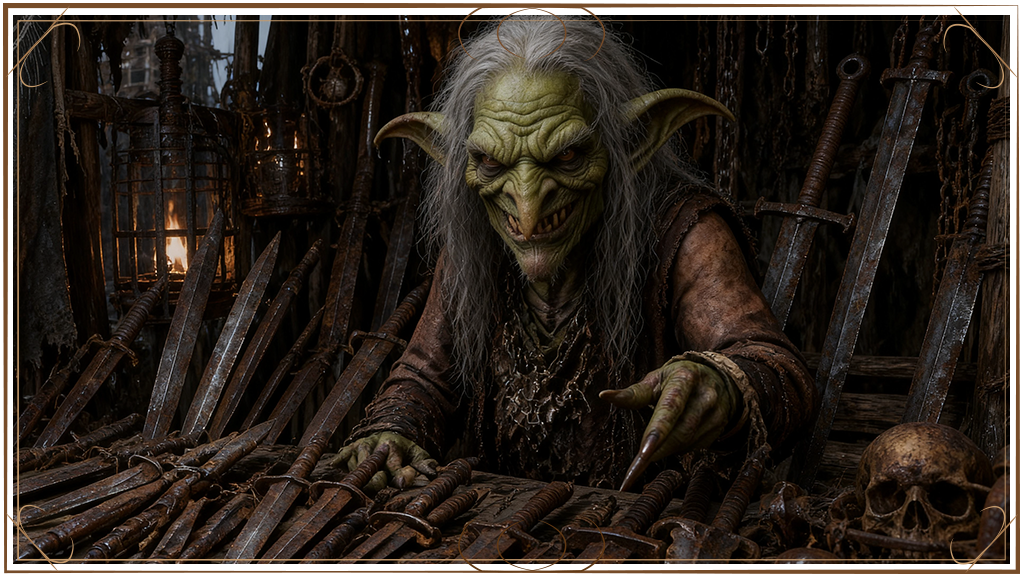
The goblins of Zoznarí are no master smiths in the dwarven sense. They do not create works meant to endure for centuries, blades forged with honor, gates for ancestral halls or masterpieces designed to withstand the weight of time.
They make weapons from whatever happens to be lying around.
A broken sword becomes a dagger, a hook, a spearhead or part of a trap. An old helmet becomes a cooking pot. A cooking pot becomes a fire jar. A stolen door becomes a shield, a wall, a pit cover or part of a hut that already looks offended before anyone has finished building it.
Goblins do not look at a workpiece and ask: Is it perfect?
They ask:
Does it cut?
Does it burn?
Will it hold together long enough?
Can you throw it?
Can you sell it?
Does it hurt?
If the answer is yes, it cannot be all that bad.
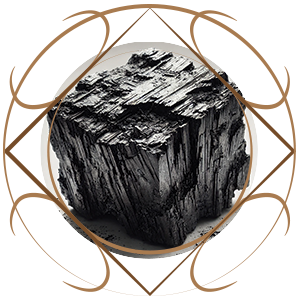
Zoznarí thrives on salvaging plunder. Raiding takes. Salvaging transforms.
A raid does not end when the goblins return with overflowing sacks. That is when the real work begins. Everything is sorted, fought over, stolen, rediscovered, dismantled, renamed, sold, hidden, poisoned, reforged, eaten or worn as a trophy.
Nothing remains what it once was if a goblin discovers a more dangerous purpose for it.
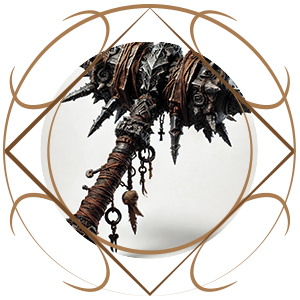
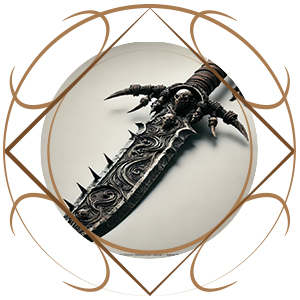
Goblin weapons are often crooked, rusty, patched together, improvised and assembled from things that were never meant to become weapons. Crooked daggers, scrap swords, spiked clubs, hooked knives, thorn-covered throwing nets, poisoned arrows, short spears, scrap shields, fire jars, powder pouches, bones, stones and teeth.
A workpiece does not have to be beautiful. It has to hurt someone today.
If it breaks tomorrow, tomorrow it will become something else.
This approach makes their weapons unreliable, but unpredictable. An enemy never knows whether a goblin’s club is merely a club – or whether Racer Snake venom clings to the nails embedded in it. Whether a shield merely offers protection – or is covered in pouches of explosive powder. Whether a dagger is rusty – or deliberately rusted so that the wound will fester afterward.
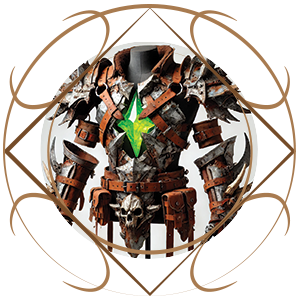
Their armor, too, is a jumble of leather, Steppe Crawler scales, bone plates, old chainmail rings, scraps of metal, Shadowwood and things held together by sinew, wire, straps and hope.
Nothing fits quite right.
This is often a problem.
Sometimes, it is an advantage.
Uneven armor deflects blows at strange angles, scrapes against hands, catches on weapons and appears to the enemy like a heap of scrap that has suddenly decided to move and bite.
Goblins rarely build things to last.
But they build things from everything.
And that is precisely what makes their craftsmanship so dangerous: they see possibility in every piece of wreckage.
Not for a better tomorrow.
But for a useful attack today.
The goblins of Zoznarí do not wage war like other peoples. They do not march solemnly in orderly ranks, challenge their opponents or wait until both sides are ready.
To goblins, combat is no sacred contest of strength.
It is a matter of survival.
A goblin does not ask whether an attack is honorable. He asks where the weakness lies. Whether the enemy can be blinded. Whether his well is guarded. Whether his horse is asleep. Whether his camp is burning. Whether he is looking down.
And if he is not – how deep the pit happens to be.
Their most infamous form of warfare is the Swarm Assault: Zrr’Gazz, the Swarming of Knives. A single goblin is easily driven back. Ten are dangerous. A hundred are a nightmare of smoke, teeth, spears, hooks, fire jars, throwing nets, feigned retreats and small bodies attacking from far too many directions at once.
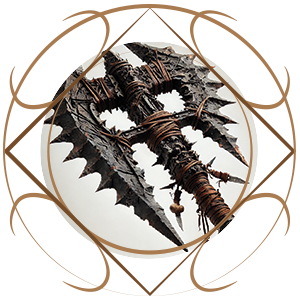
Goblins regard fairness as a gift to the enemy. And goblins rarely give anything away unless it has been poisoned.
A large opponent needs space. So you take away his space.
An armored opponent needs sight. So you take away his sight.
A rider needs his horse and saddle straps. So you cut the straps and frighten the horse.
A mage needs concentration. So you throw smoke, scream, bite his hand or set his robes on fire.
The Swarm Assault does not seek to strike with honor. It seeks to overwhelm. A spear from the left. A stone from above. A burning jar from behind. A knife to the knee. A rope across the feet. A burst of smoke into the eyes.
The enemy must never know where the real attack is coming from.
Because there is no single real attack.
There are countless little ones.
Far too many.
Traps are more than mere tools to goblins. They are a way of thinking. A good trap is rarely just a mechanism. It is a sequence of cruelties: a tripwire, a clay sphere, smoke, a spear-filled pit, loose stones, arrows and a goblin laughing somewhere because the enemy did precisely the wrong thing.
Even retreat is not always retreat. A feigned withdrawal lures the enemy into ravines, pits, scree slopes or clouds of smoke. Goblins excel at this because genuine panic and carefully performed panic are remarkably difficult to distinguish among them.
Sabotage often begins long before the battle: wells are poisoned, supplies set ablaze, horses released, gates damaged, watch horns stolen and false maps left behind.
A goblin does not need to defeat an army immediately.
He merely needs to make it tired, distrustful, hungry, blind, sick and angry enough to start making mistakes.
Yet this way of warfare comes at a price.
Goblins die in droves. Traps catch the wrong victims. Fire turns against its makers. Smoke confuses their own ranks. Cauldrons explode too soon. And bad plans do not become good ones simply because someone loudly proclaims their faith in Zargrath.
And still, they return.
From smoke.
From pits.
From cracks.
From battles long lost.
For a goblin dies easily.
The swarm keeps crawling.

The goblins of Zoznarí possess little magic as other peoples understand it. They do not chant incantations of light like the high elves, bind runes like the dwarves or shape shadows with the precision of the dark elves.
They lack too many things for that.
Patience.
Silence.
Focus.
Order.
Trust.
Yet this did not give rise to weakness, but to something uglier, more practical and far more unpredictable.
Others call it alchemy, poisoncraft, firecraft, smoke brewing, plague concoctions or sheer madness.
At the heart of this false magic stand the Cauldron Masters, the Kharz-Gorr: masters of tinctures, poisons, incendiary oils, smoke powders, tar, sulfur, herbs, animal secretions, blood, fungi, ash, bile, bone dust and ingredients whose names even goblins speak only in whispers.
A Cauldron Master is no mage.
But he should be taken just as seriously.
Perhaps even more so.
Goblins distrust anything they cannot smell, taste, throw, ignite, sell or leave in precisely the wrong place.
A spell that works invisibly makes them uneasy. A poison that reeks of rotten snake juice, they understand. A fire oil that clings to wood, they understand. A smoke bomb that makes eyes burn, they understand.
To goblins, power must be physical.
It must stink.
Burn.
Stick.
Bite.
Make people cough.
Make people scream.
The cauldron is therefore an almost sacred tool. Within it, things that have no business being together are brought into a bubbling union: poisonous plants, blood, fat, sulfur, ash, fungi, bile, bone dust, snake extract, rotting meat, fire, impatience and hope, should the goblins happen to have any lying around.
The cauldron transforms. Not gently. Not reliably. But visibly.
It boils, foams, hisses, stinks, overflows, burns its contents, eats through the ground, occasionally explodes and sometimes produces something that works so remarkably well that everyone involved insists it was entirely intentional.
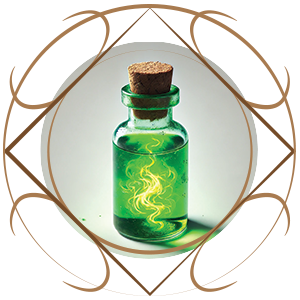
The concoctions of the Cauldron Masters are many and varied.
Woundbiter, a healing salve that burns more than it soothes.
Madness Elixir, capable of turning fear into frenzy.
Ironstomach, supposedly a protection against poison, though sometimes it merely proves that a body can take greater offense than its owner.
Glimmersight, an eye tincture for darkness, pain and occasional blindness.
Smoke Powder, Fire Oil, Stinking Mist, Racer Snake Extract, Desert Poppy Sap, Rotting-Flesh Tincture, Thornroot Powder, Fire Jars and Acids.
To other peoples, all of this is abhorrent.
To goblins, it levels the odds.
The world is bigger than they are.
So they make the world sick.
Yet even this false magic has its limits. It can poison enemies, set gates ablaze, create clouds of smoke, close wounds, provoke beasts and spread fear.
But it cannot brew peace.
No Kharz-Gorr can uncork a vial and declare: Drink this and now you can trust one another.
Or if he does, no one should drink it.
Cauldrons, smoke and poison make small goblins dangerous enough to be noticed – if only for a moment.
The goblins of Zoznarí do not create art to honor beauty. Not in the way other peoples understand it.
They do not paint to make a room feel more peaceful. They do not sing to find harmony. They do not build statues so that future generations may stand before them in reverent silence.
Goblins create art so that something will not disappear.
A name.
A deed.
A victory.
A particularly successful betrayal.
A particularly amusing death.
A cauldron that exploded and somehow still proved useful.
Their art is crude, crooked, loud, ugly, exaggerated, bloody, smeared with soot and often filled with mockery.
It does not say: Look how beautiful we are.
It says:
Look at us.
We were here.
We survived.
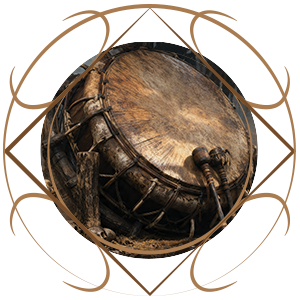
The Tog-Gorr, the great drums, are the heart of many rituals and war marches. They are fashioned from animal hides, wooden frames, metal rings, Shadowwood, bone reinforcements and anything else with enough tension to withstand a beating without immediately falling apart.
They are not played gently.
They are beaten mercilessly.
A good Tog-Gorr does not sound clean.
It sounds as though something is approaching.
Something small.
Something numerous.
Something you would rather not count.
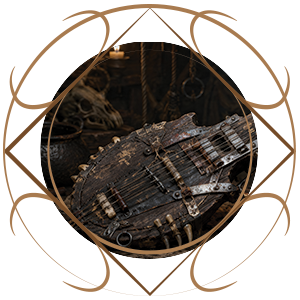
The Skrak’Darr, the Scratcher of the Ancestors, is a crude stringed instrument fashioned from gut, sinew, wire or thin strips of metal. Its sound is scraping and unpleasant – perfect for mocking songs, funeral cries and crooked ballads in which goblins explain why they were actually much bigger than everyone claims.
The Bragg-Math, the Thunderhorn, summons swarms and ensures that everyone within earshot knows one thing: someone important is about to start screaming.
The Zrrag-Nash, the Bone Rattle, is perhaps the most goblin-like instrument of all. It is made from bone splinters, teeth, claws, small metal plates, dried snake skulls and anything else that makes an unpleasant noise when shaken.
A Zrrag-Nash declares:
Something died.
I kept it.
Now it makes noise for me.
War paint, skull stakes, soot markings, bone necklaces, trophies, mocking songs and names scratched into surfaces are all part of Zoznarí’s culture.
A goblin does not need a beautiful monument.
He needs an echo.
For a name that others curse lives longer than a name no one remembers.
It is crude.
Ugly.
Often cruel.
But it also runs deep.
For a people who were regarded by the world as vermin must find ways to prove to themselves that they leave something behind.
A goblin fears silence more than mockery.
Mockery hurts.
Silence erases.

The goblins of Zoznarí do not pray for peace. Peace is foreign to them: too quiet, too clean, too much like a trap that has yet to spring.
They do not pray for wisdom, justice, pure hearts, order or a life without danger.
They ask for simpler things.
That the enemy stumbles.
That the smoke drifts in the right direction.
That the cauldron explodes only when it is close enough to the enemy.
That the poison does not strike its own bearer first this time.
That a terrible idea works long enough to be remembered later as a stroke of genius.
That Zargrath is watching.
For Zargrath, the Wandering Storm, is no god of the worthy. He is mocking chaos, the gaze within the smoke, the laughter in a burning encampment and the sudden inspiration so utterly foolish that no one expects it – and precisely for that reason, it succeeds.
Zargrath has no fixed form. To impose one upon him would be an insult.
At times, he appears as a shadow of smoke, ash and storm. At others, as a grotesque creature of bone, fire, slag and tattered banners. Sometimes as a laughing skull with poisonous green flames burning within its eye sockets. Sometimes merely as the scent of sulfur, rain upon heated stone and burning fat.
Zargrath is not simply chaos.
He is mocking chaos.
He does not offer help reliably. He does not judge fairly. He does not always punish the guilty. He does not reward the good.
He notices what is interesting.
A goblin who suffers in silence may escape his attention. A goblin who hurls a knife while falling and screams all the way down might just catch his eye.
That is why, in Zoznarí, few things are more sacred than a bad idea that actually works.
A burning wagon rolls straight into a gate.
A cauldron explodes and tears open a wall.
A wounded goblin bites through a horse’s saddle strap and throws an entire troop of riders into chaos.
A child hides a Racer Snake inside a Santhress sacrificial basket.
Then the goblins say:
Zargrath lau