

The mountain dwarves of Mnalimber are not a people upon whom the world bestowed its gifts freely. Their homeland did not welcome them with golden fields, gentle valleys or temperate winds. The mountain yielded nothing willingly: no ore, no water, no shelter, no warmth.



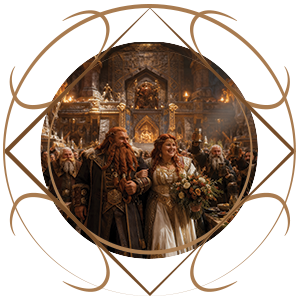
Everything had to be found, broken from the stone, supported, channeled, tempered and defended.
From this truth, their very nature was forged. Their sternness does not spring from a lack of compassion. Their distrust is not born of mere contempt. Their pride does not arise from vanity. They became what they are because their world demanded it of them.
A poorly placed pillar could bring down an entire hall. A misjudged formation of stone could bury a tunnel. A carelessly handled tool could cost a life. Those who dwell beneath mountains learn early that negligence is no minor failing, but a danger.
Thus, the dwarves place no trust in what merely glitters.
They trust what endures beneath the weight.
The mountain dwarves of Mnalimber do not live to be admired. They live so that something will still stand when they themselves are gone.
A word.
A work.
A clan that did not break.
A hall that still bears its burden.
A fire that never fades.
This is the heart of their people. A dwarf does not first ask whether something sounds beautiful. He asks whether it will hold. Will your word hold? Will your work endure? Will your loyalty stand firm? Will your courage remain steadfast when the stone itself trembles?
For the dwarves, honor is no courtly ornament. It is the weight carried within a name. It reveals itself when no one is watching: in an oath upheld despite its burden, in a work that does not break, in a truth spoken even when it is unwelcome.
Yet this strength casts shadows of its own. Mnalimber is slow to forgive and quick to distrust. Its people too often mistake yielding for weakness and sometimes confuse a fracture of the heart with a fracture in the stone. The disgrace of a clan may fall upon the innocent. A name may come to weigh more heavily than a life.
And yet, beneath all that stone, there is warmth.
The warmth of long feasting tables where clans gather despite their quarrels. The warmth of a master who finally permits his apprentice to carve his own name into a work. The warmth of a father who speaks little, yet forges a tool that fits perfectly into his child’s hand.
A dwarf is not easily won over.
Not easily swayed.
Not easily changed.
But those who earn a dwarf’s loyalty gain something rare: someone who will not walk away when the road grows difficult.
A dwarf is not measured by his words.
But by what he leaves behind.
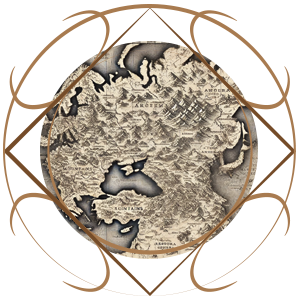
Mnalimber lies at the heart of the Lhanes Mountains, amidst jagged peaks, icy heights, narrow valleys and deep chasms. Other peoples see these mountains as a boundary. The dwarves see in them their first teacher.
Their homeland does not rest upon the stone, but within it. They carved halls from the rock, raised bridges above abysses, guided water through underground channels and kindled forgefires in chambers that had never known the light of the sun.
Thus Fernagat came into being, the great capital of the mountain dwarves: not merely a place, but a legacy of labor, patience and unbroken will.
The Candrian River rises from hidden chambers beneath Fernagat and nourishes the few fertile valleys. Yet the dwarves do not truly feel at home beneath the open sky.
Their homeland is the echo of hammers ringing through the halls.
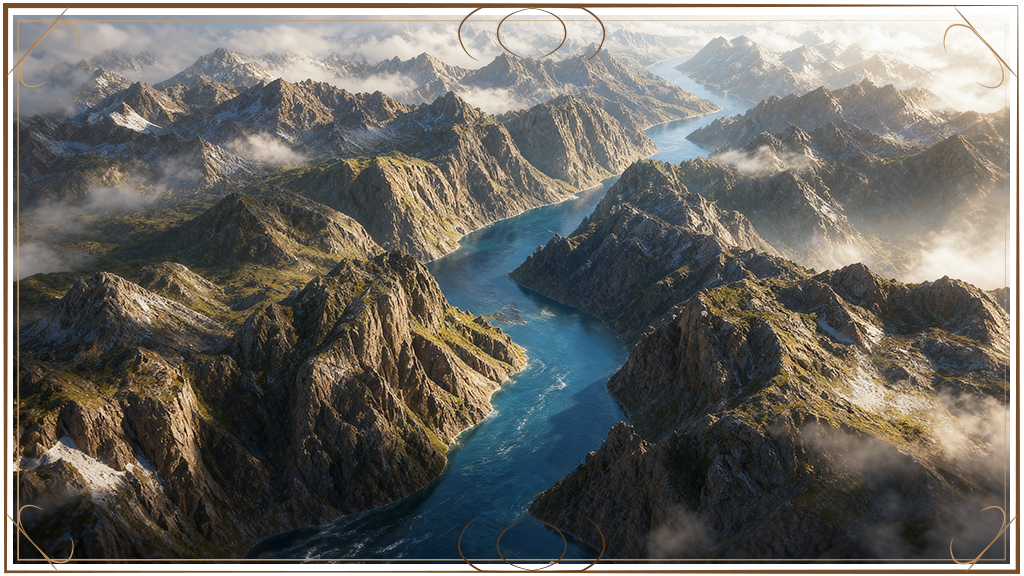
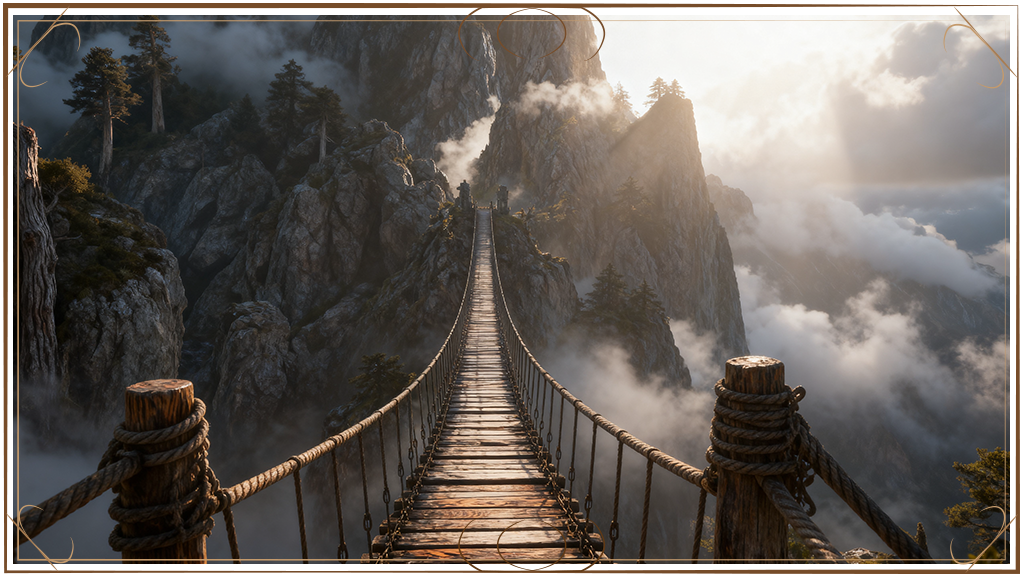
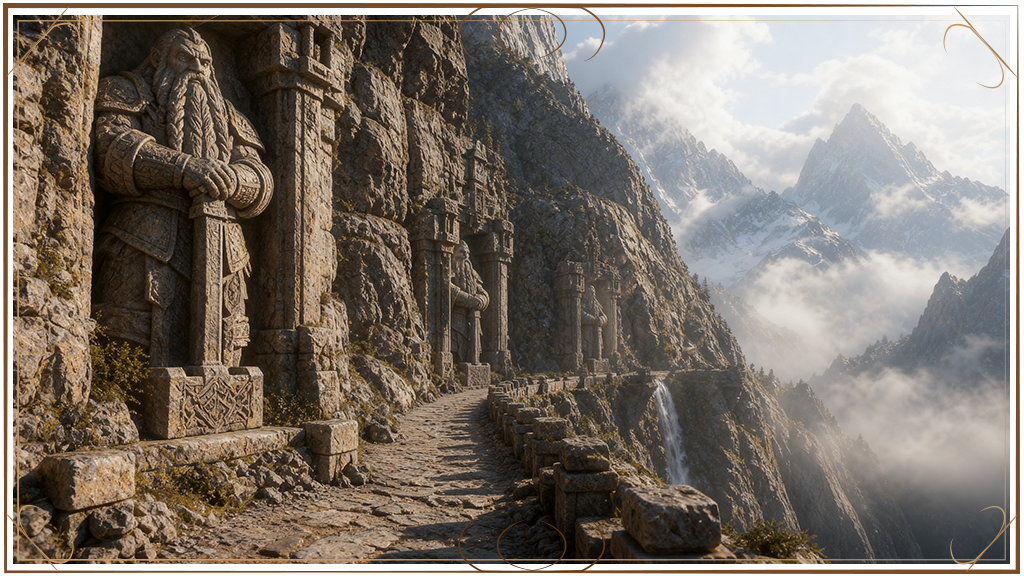
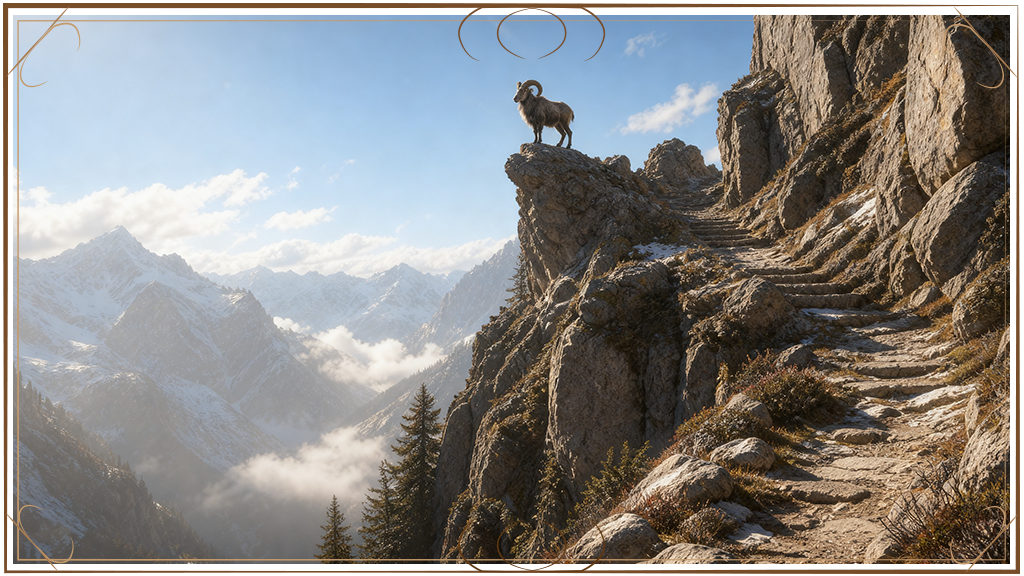
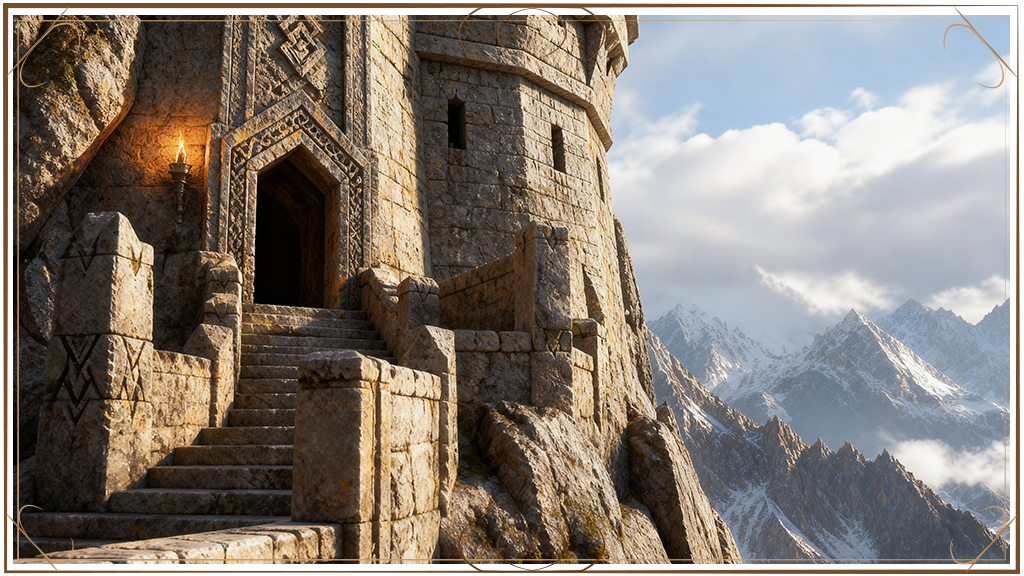
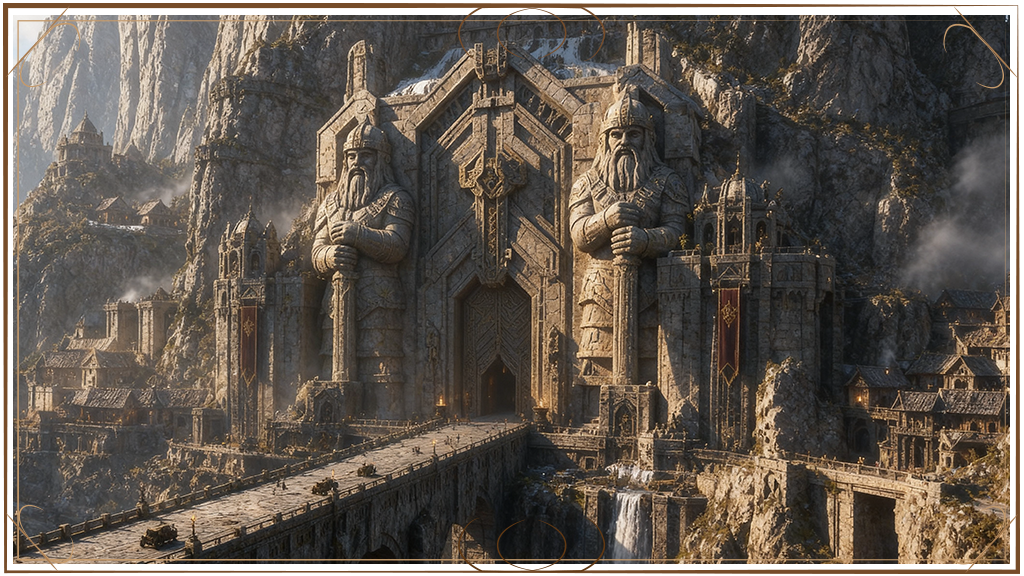
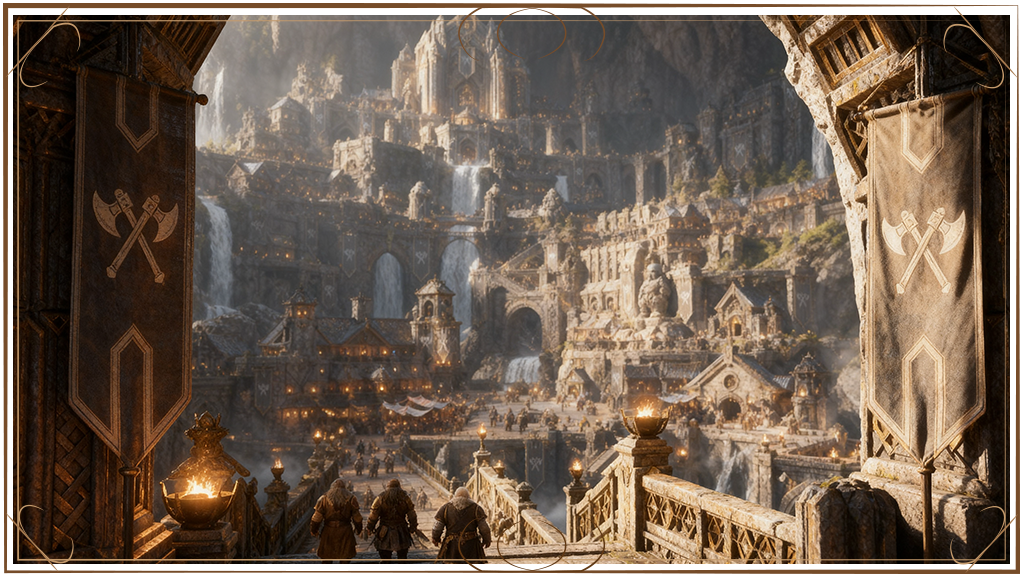
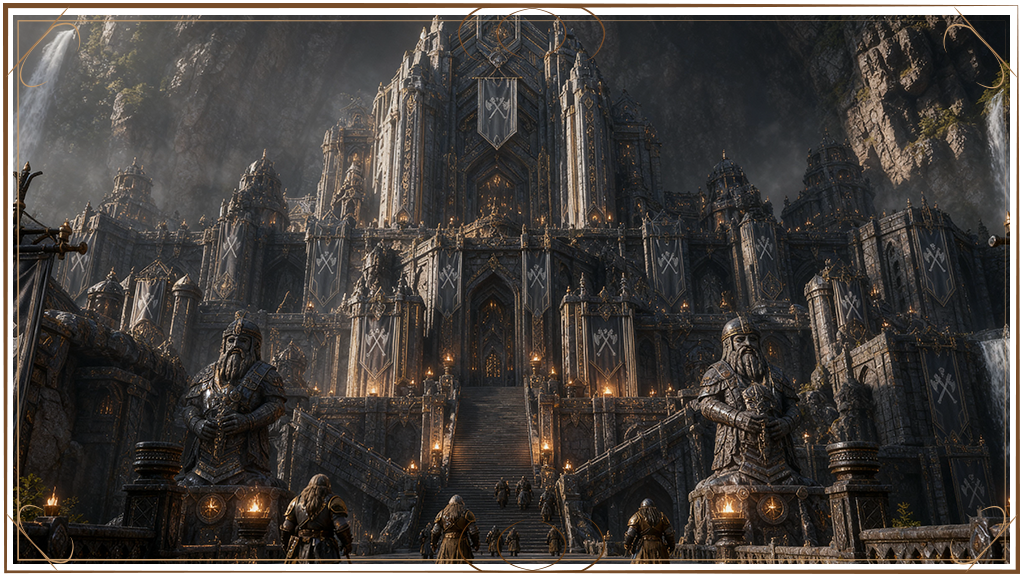
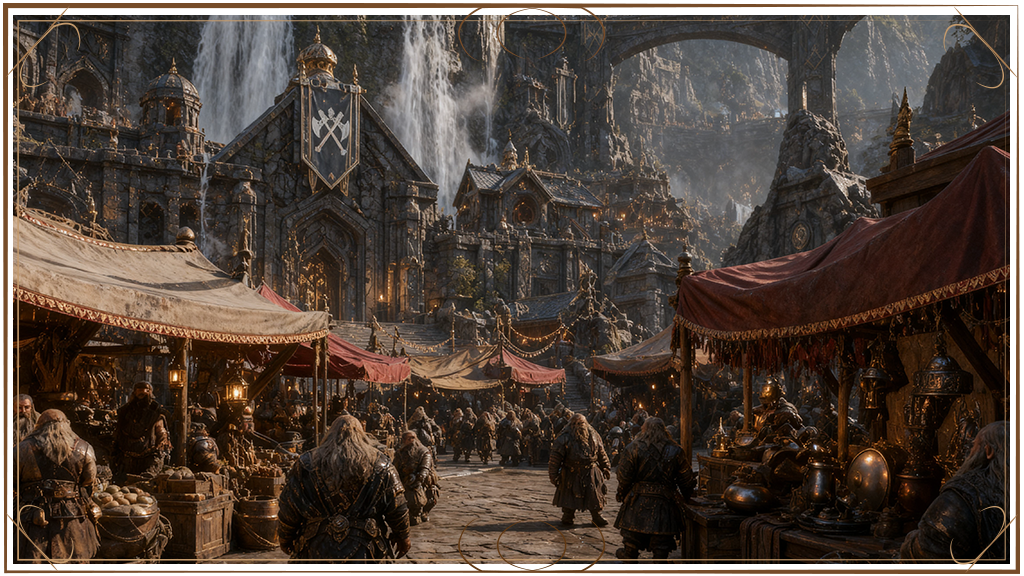
Mnalimber does not welcome the traveler with gentle beauty. Its peaks bear snow like crowns of ice and its valleys lie sparse and hard-won between rock, wind and shadow. Whoever would live here must understand that the mountain knows no comfort.
Fernagat is the heart of this realm. A city of stone, steel, water, fire, runes and memory. Its halls did not grow by chance. Every pillar, every bridge, every channel and every gate serves a purpose. In a world beneath stone, an error cannot simply be overlooked. Sooner or later, it will bear weight – and perhaps break.
To the mountain dwarves, Fernagat is more than a capital. It is proof. Proof that the mountain need not be conquered, but understood. Proof that a home can be forged out of darkness. Proof that a people need not tower high to be great.
The Candrian River is more than water to Mnalimber. It is a reminder that even a people of stone cannot live without a river. Its waters sustain valleys, settlements, watchposts and trading stations along the borders of Bonhydor, Hylundér and Lohiras.
Yet the true Mnalimber lies deeper: in the green glow of cave lichen, in the scent of ore, smoke and hot metal, in long tables beneath the earth, in the names of ancestors carved into stone and in gates that do not ask, but test.
Whoever descends may come to understand why its people need not tower high to be great.
They are great because they are founded deep.
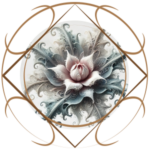
At first glance, Mnalimber appears barren: rock, ice, scree, narrow valleys and dark ravines. No lush forests, no gentle meadows, no extravagant seas of blossoms.
Yet this does not mean that Mnalimber is devoid of life.
It simply means that life grows differently here.
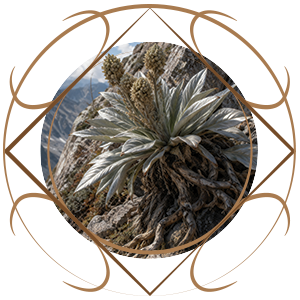
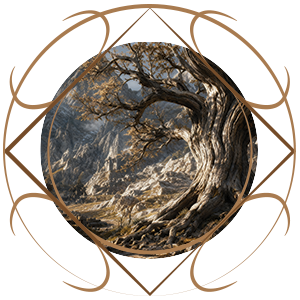
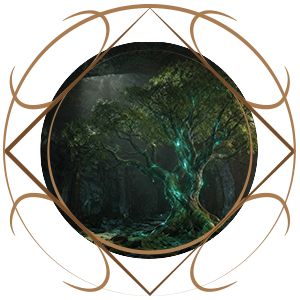
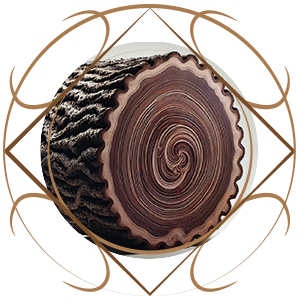
Stone Root clings to cracks and rocky crevices, as though determined to prove that unyielding stone does not mark the end of life. Ironwood trees grow slowly in sheltered valleys, yielding timber that bears weight, provides support and serves for generations. Deep beneath the earth, cave lichens glow in shades of green, blue or silver, revealing moisture, gases and changes within the stone to the miners.
And upon the high plateaus grows Mountain Grain: hardy, undemanding and worth more than any delicate beauty that perishes with the first frost.
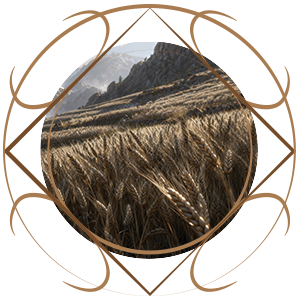
Everything that lives in Mnalimber must learn to hold fast. Frost, wind, scarce soil and hidden moisture shape plants that are neither soft, nor delicate, nor wasteful.
Perhaps this is why the dwarves hold them in greater esteem than outsiders might expect. Not with the gentle reverence for nature found among the elves, but with a rugged respect. For these plants, too, do not beg the mountain for mercy. They endure.
Stone Root is the clearest testament to this truth. Its roots reach deep into rocky fissures, seeking moisture and surviving cold, drought and storm. From it, the dwarves prepare ointments, fortifying draughts and remedies for weary muscles, cracked hands, bruises and wounds inflicted by the cold. Yet its true worth lies deeper: it does not grow because the land is kind. It grows because it refuses to let go.
Ironwood trees are regarded as the ancient laborers of the valleys. Their timber is hard, slow-grown and resilient. From it come tool handles, reinforced door cores, supports, wagon axles, shields and scaffolding for the mines. No dwarf fells such a tree lightly. What grows slowly deserves patience. What bears weight for generations deserves respect.
The cave lichens, in turn, are a part of home itself. Many children of Mnalimber fall asleep beneath their greenish glow, while hammers ring in the distance and water flows through underground channels. They are proof that life can flourish even where sunlight never reaches.
Mountain Grain, finally, does not glitter. It nourishes. From it come bread, porridge and dwarven ale. It fills a miner’s stomach, strengthens a warrior before the shield wall and sustains a smith through long hours at the forge.
To Mnalimber, that is worth more than beauty.
What wishes to endure must take root, even when the ground is hard.
The creatures of Mnalimber, too, carry the spirit of the mountains within them. Those who dwell among the heights, ravines, tunnels and caverns must be sure-footed, resilient, undemanding, watchful or dangerous enough that even the mountain grants them room to live.
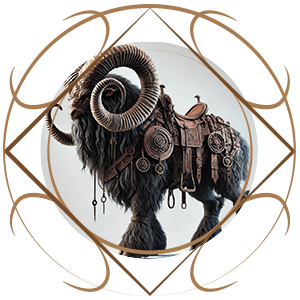
The Rock Rams are stocky, stubborn and sure-footed. They provide wool, meat, leather and horns – and some bloodlines even serve as mounts along narrow mountain passes. Cave Pigs may appear unremarkable, yet they help keep entire underground cities alive.
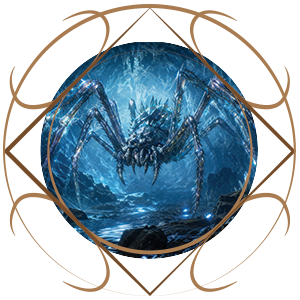
In remote ravines dwell the Rift Bears: enormous creatures that command the respect of even the dwarves. And in the deepest shafts lurk Crystal Spiders, whose silken threads refract light, carry vibrations and respond to currents of magic.
The wildlife of Mnalimber is no mere ornament to its landscape. It is part of the realm itself.


A Rock Ram is no elegant creature. It is powerful, stoic and difficult to impress. Perhaps that is precisely why the dwarves are so fond of them. Between dwarf and Rock Ram exists a rugged mutual respect: both are stocky, unwavering and can only be persuaded with patience.
Among certain clans, it is jokingly said that anyone capable of guiding a Rock Ram might, one day, stand a chance of convincing a dwarf.
Though no one would wager on it.
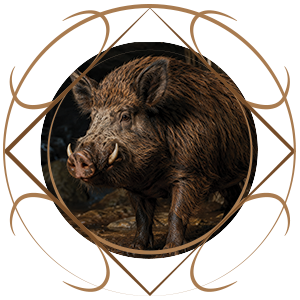
Cave Pigs, by contrast, possess no romantic charm whatsoever. They are noisy, foul-smelling and remarkably undemanding. Yet they provide meat, fat for lamps and candles, bristles for brushes and leather for everyday work. Mnalimber understands the worth of usefulness, however unsightly. Not everything of importance bears golden engravings. Some things grunt, devour refuse – and keep a city alive.
Rift Bears offer a different kind of lesson. They are neither pets, nor companions, nor mere quarry for hunters. They are a boundary not to be crossed lightly. To slay a Rift Bear is not considered an ordinary hunt, but a trial. The elders warn young warriors against arrogance, for the mountain has a way of punishing boastfulness through its own children.
A Rift Bear is not evil.
It is simply stronger than your vanity.
The Crystal Spiders of the deep are the most mysterious of all. Their threads shimmer like stolen starlight and can be woven into protective fabrics, magical filters, measuring instruments or runic threads. Yet no one plunders a nest carelessly.
For the depths conceal more than ore.
They conceal wonders.
And wonders are seldom convenient.

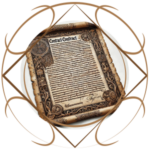
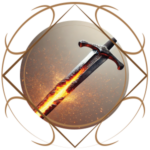
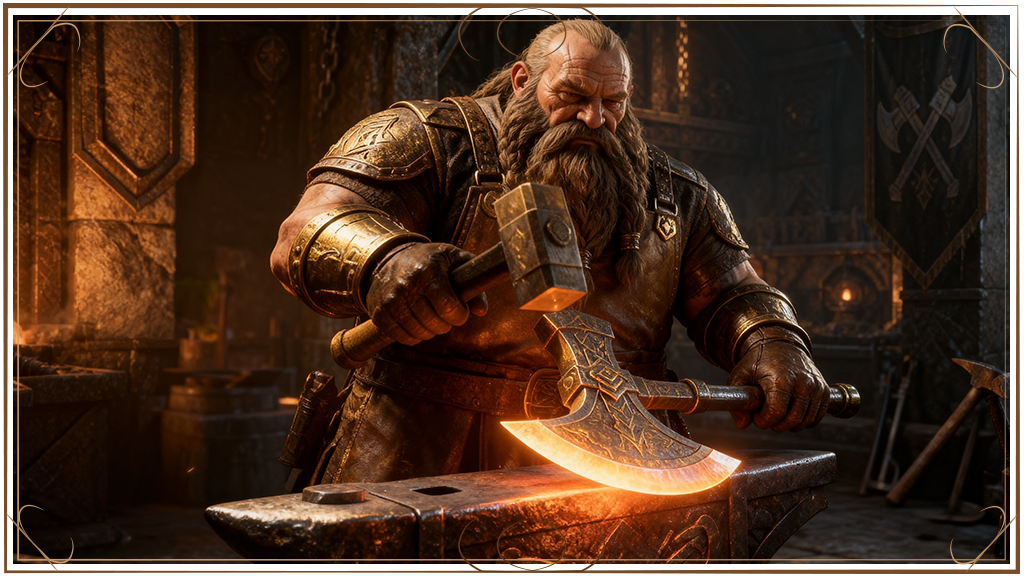
The art of smithing among the mountain dwarves of Mnalimber is no mere profession. It is a legacy.
In Mnalimber, steel is not merely shaped. Character is put to the test. Patience is forged into blades, responsibility into gates, love into rings and honor into works meant to endure long after the dwarf who created them has passed.
A dwarf does not believe that a work belongs to him simply because his hands gave it form.
He, too, belongs to the work.
What he creates speaks of him: of his clan, his ancestors, his master and the very essence of his being. That is why the art of smithing in Mnalimber does not begin with fire.
It begins with respect.
For the ore.
For the stone.
For the tool.
For the purpose.
For the name the work shall one day bear.
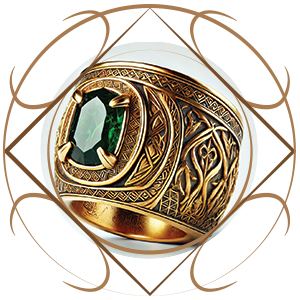
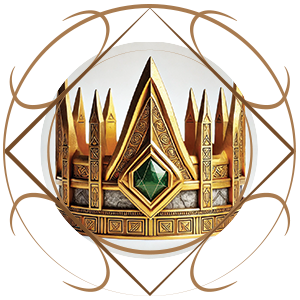
The forges of Mnalimber are schools, temples, courts of judgment and sanctuaries of the heart all at once. Within them burn fires that have not been extinguished for centuries. There hang tools whose handles have been shaped by generations of hands. There, children learn what Mnalimber truly means, not through lengthy speeches, but through sound: hammer striking metal, air rushing through bellows, the hiss of oil and the silence of a master.
The anvil does not lie.
A poor strike rings false. Improperly heated metal answers in kind. A flawed tempering may not reveal its weakness immediately – but one day, it will. And often at the worst possible moment.
That is why shoddy craftsmanship in Mnalimber is more than a failure of skill. It is a moral wound.
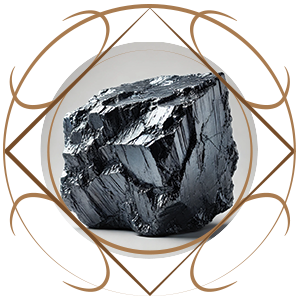
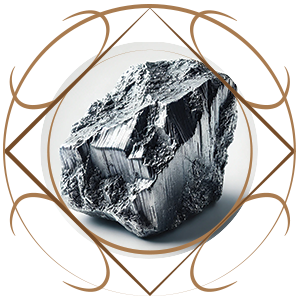
The materials of Mnalimber embody this very spirit. King’s Steel demands weight. Dwarven Silver demands dignity. Adamantite demands humility. Mithril demands a delicate hand. Runic Crystals demand restraint and caution.
A poor smith sees material.
A good smith sees possibility.
A master sees responsibility.
Especially sacred is the Consecration of Fire. A weapon of great significance is passed through the flames of the Forge Altar, not because fire can transform inferior steel into worthy metal, but so that the work may be affirmed before Karindra, the ancestors and the clan.
The Oath of the Anvil, too, binds a smith for life: never knowingly to pass off inferior craftsmanship as worthy work, never to conceal flaws within metal, never to inscribe runes whose meaning one does not understand and never to bestow a name upon a work unworthy of bearing it.
Will you endure?
If the answer is yes, then it is more than steel.
Then it is honor given form.
The mountain dwarves of Mnalimber do not seek war. Yet they prepare for it as though it might stand before their gates with every new dawn.
Their art of warfare is no art of lightness or grace. It is an art of weight, positioning, endurance and knowing the precise moment when defense must give way to devastating force.
The most renowned expression of this philosophy is the shield wall. Shoulder to shoulder, the warriors stand, shields interlocked, feet firmly planted, breathing in unison. The individual dwarf does not disappear. But he becomes part of a wall.
His shield protects not only himself, but the one standing beside him.
That is why the shield wall is sacred.
Not as a ritual of worship.
But as a way of life.
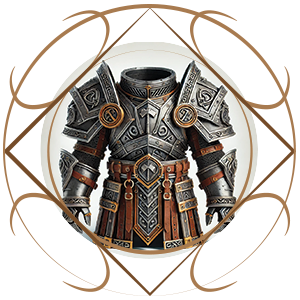
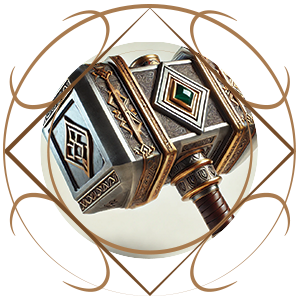
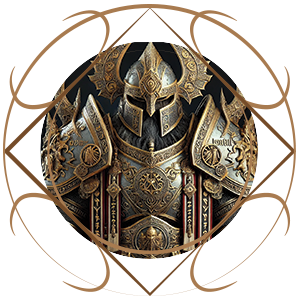
Within the shield wall, there is no room for vanity. Whoever steps forward to prove himself opens a gap. Whoever retreats in fear breaks the bond of trust. Whoever strikes too soon weakens the defense. Whoever strikes too late grants the enemy a moment to recover.
A well-formed shield wall is like a mighty structure.
Every dwarf a stone.
Every shield a gate.
Every breath a rhythm.
Every hammer a judgment.
The front rank forms the wall. Massive shields lock together. Behind them stands the second rank, armed with hammers, axes, short spears or hooked weapons. A third rank replaces the wounded, passes forward crossbow bolts, lends support, pulls back fallen comrades and closes every breach.
When the enemy charges, they do not meet individual warriors.
They meet a gate that strikes back.
Yet Mnalimber does more than hold its ground. It can come crashing down – upon the enemy. The Crushing Wave is the moment when the shield wall transforms from defense into assault. Not wildly, not chaotically, not in blind fury, but precisely when the enemy has grown weary, become trapped or stretched their formation too thin.
It is no tempest like those unleashed by the orcs.
It is an avalanche that knows exactly where it is going.
Within tunnels, the dwarves are particularly fearsome. Narrow passages strip larger enemies of their advantages. Darkness swallows the inexperienced. Echoes bewilder unfamiliar ears. Trapdoors, waterways, low ceilings and carefully prepared chokepoints become weapons.
An invader sees a passage.
A dwarf sees a battlefield that has been prepared for centuries.
Will your shield hold?
Will your courage hold?
Will your line hold?
Will your oath hold when the enemy is greater than you had hoped?


The art of the mountain dwarves does not seek to be light. It does not strive to float, to enchant or to drift delicately across the world.
Dwarven art stands firm.
It rings like hammer upon anvil, rests like a pillar beneath its burden and carries weight, memory and names. It is not created to adorn a fleeting moment, but to ensure that something remains long after that moment has passed.
Music in Mnalimber was born of labor: from the rhythm of hammers, the hauling of heavy burdens, the marching of the shield wall and the need to share the weight of courage rather than bear it alone.
Other peoples write their chronicles upon parchment.
The dwarves carve theirs into stone.
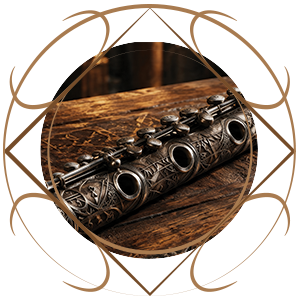
Whoever enters Mnalimber hears it long before they understand it: hammer blows, wagons rolling over stone, chains, flowing water, miners, forge choirs and the deep rune organs of the great halls.
The Hammer Drums, Khaz’Drum, are among the mightiest instruments of Mnalimber. Their sound is deep, thunderous and felt throughout the body. When they resound, the entire hall trembles. Even the stone listens.
The Forge Choirs, Thûm’Kor, roll through the halls like thunder beneath the earth. When they sing an ancestral hymn, the names of the departed are not adorned with pretty words. They are called forth. Each name falls into the hall like a hammer blow and, for the span of a single breath, stands once more among the living.
Ore Flutes, Dur’Flin, possess a gentler voice. Deep, warm and unexpectedly tender. Among a people who often struggle to give voice to their sorrow, an Ore Flute can offer more comfort than countless speeches.
Rune Organs, Thra’Dûn, are immense constructions of stone, metal, air shafts, crystal chambers and resonance pipes. When they sound, it is not a musician who speaks.
It is the mountain itself.
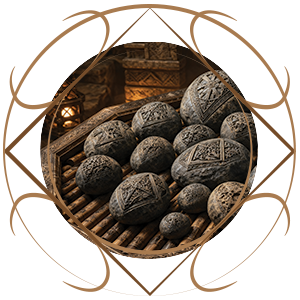
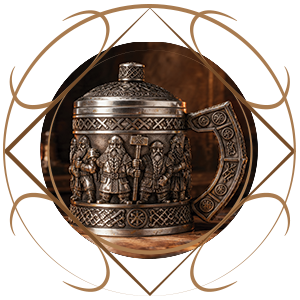
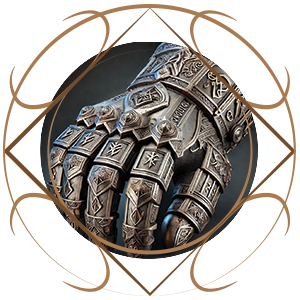
The visual arts follow this same principle. Engravings, ancestral stones, gates, halls, jewelry and weapons are no mere decorations. They bear clan, oath, protection, memory and warning.
An ancestral stone is no mere monument.
It is a conversation between generations.
Yet endurance does not automatically make something true. An error carved into stone is more dangerous than a false word spoken aloud, for it appears more venerable simply because it is harder to erase.
That is why an artist of Mnalimber bears a great responsibility. Whoever works in stone must first examine their own soul.
A song carries a name.
A gate carries an oath.
A ring carries love.
An ancestral stone carries the question of whether you are worthy to pass your name on to those who follow.