
Lohiras is a land of light.

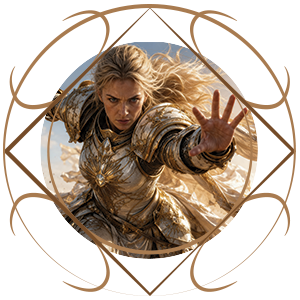
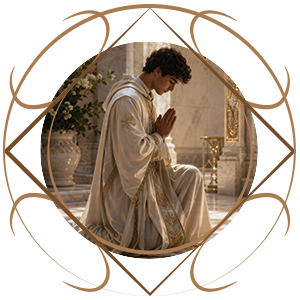
So say the pilgrims when they behold the white towers of the Circle for the first time. So say the sick when, after weeks of fever, they open their eyes and feel the morning light falling through tall windows upon their faces. So say the paladins when they lower their blades before battle because an enemy has repented.
Yet this light was not born of innocence.
Lohiras emerged from an age of chaos – a time when power spoke louder than truth, lies governed kingdoms, oaths were broken, knowledge was sold, healing was denied and faith was twisted into a tool of those who ruled.
From this wound arose its greatest resolve:
Never again would power alone stand above justice.
Never again would truth fall silent because a throne, an army or a name carried greater weight.
Never again would healing be the privilege of the wealthy, the strong or the influential.
Thus, Lohiras became a realm without a crown.
A realm devoted to the light because it had once witnessed how dark the human heart could become when no one was forced to confront their own reflection.
The people of Lohiras do not revere truth because they wish to pass cold judgment. They revere truth because without it, healing cannot begin.
A body cannot be healed while its wounds remain hidden. Guilt cannot be absolved while it is denied. Hatred cannot fade while it mistakes itself for justice. A realm cannot remain pure while its leaders conceal their failures behind sacred words.
Yet within this very belief lies the danger of Lohiras.
For truth can become a blade when spoken without mercy. Light can blind when it no longer offers warmth. Healing can become an act of control when the healer ceases to ask and begins only to command.
That is why Lohiras holds to a saying taught alike in temples, schools, healing halls and paladin academies:
Mercy without truth is weakness.
Truth without mercy is cruelty.
Lohiras is at its greatest when it holds fast to both.
Truth and warmth.
Clarity and compassion.
Judgment and the path to redemption.
Duty and heart.
Its greatest moments are not victories over enemies.
They are the sick who awaken once more.
The family that finally lets go of hatred.
The child who reads their first verse.
The paladin who lowers their sword.
The guilty soul who finds the path back through penance.
Lohiras says:
Only that which stands in the light can be healed.
Yet if it is to remain truly great, it must remind itself, time and again:
Not everything that stands in shadow is lost.
Some things are merely waiting for the light to come, not as judgment.
But as warmth.
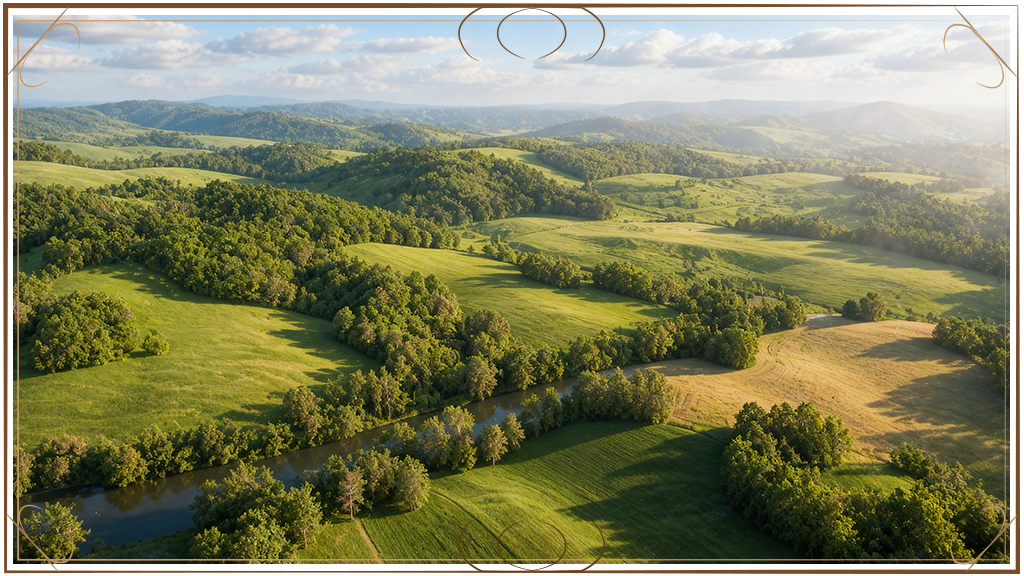
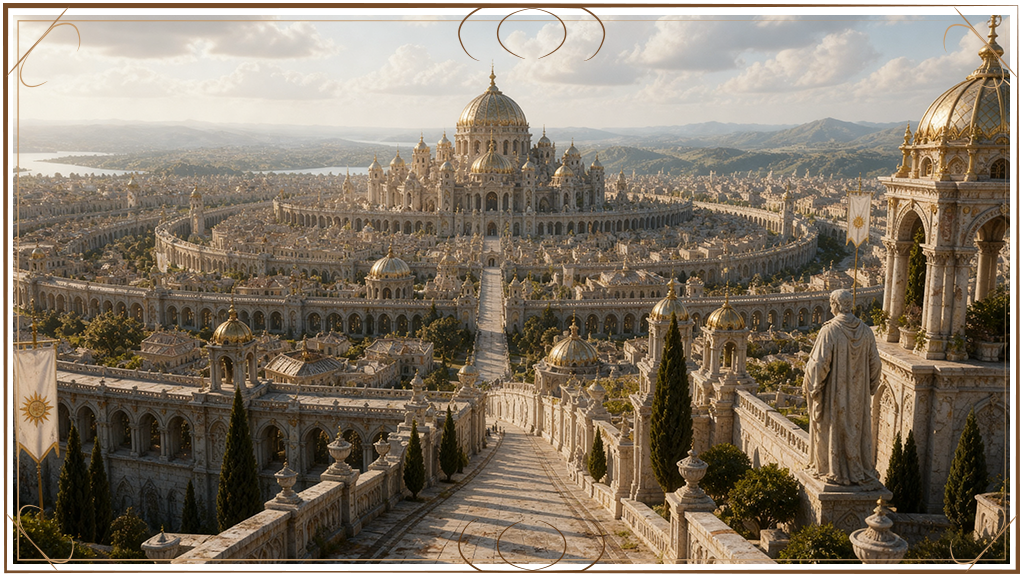
At first glance, Lohiras seems like a land that has never learned to fear. Gentle hills stretch beneath vast skies. Fields of wheat sway in the wind like golden prayers. Small forests bathed in sunlight lie scattered among villages, temple paths and crystal-clear streams.
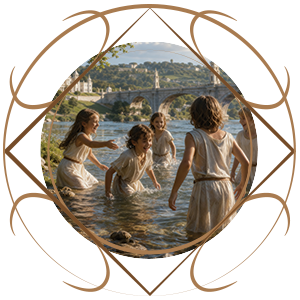
The Candrian River winds through the land like a silver lifeline. It nourishes fields, healing gardens, monastery courtyards, villages and pilgrim sanctuaries. Where its waters flow close to the white stone of the Circle, even the light itself seems to grow more tranquil.
To the north rise the rugged peaks of the Lhanes Mountains. To the east lies Ghârdyran, the great grain-producing power. To the southwest begins the Hyrathelar Desert, a constant reminder to Lohiras that water must never be taken for granted.
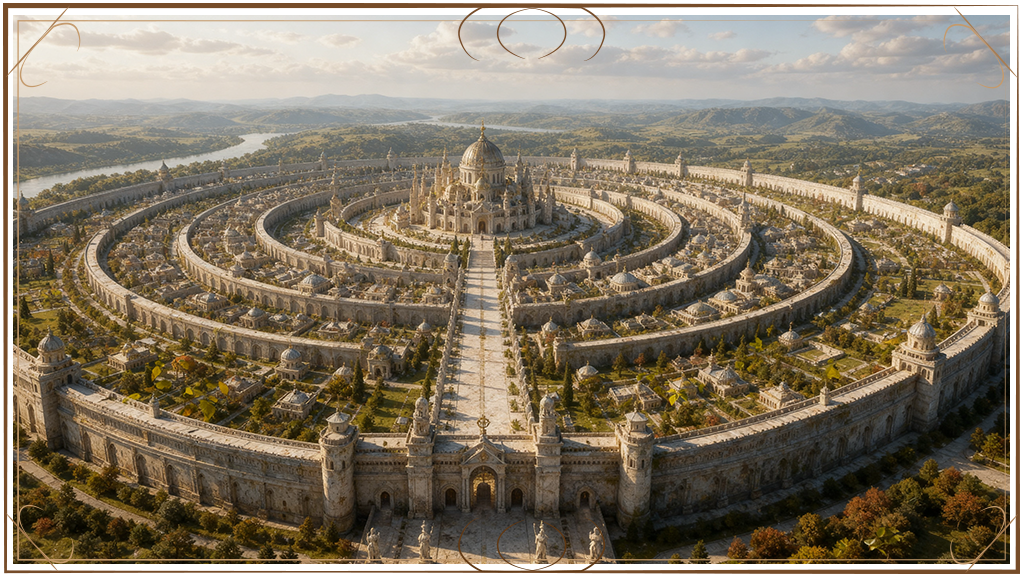
And to the south rises the Circle.
Not as a fortress of dominion.
Not as the palace of a crowned ruler.
But as an answer carved from white stone.
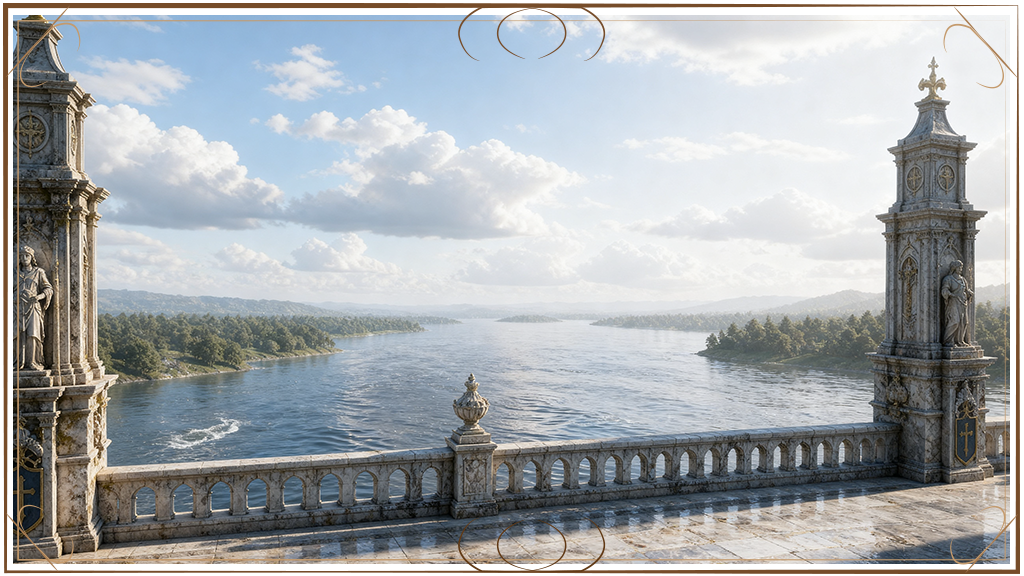
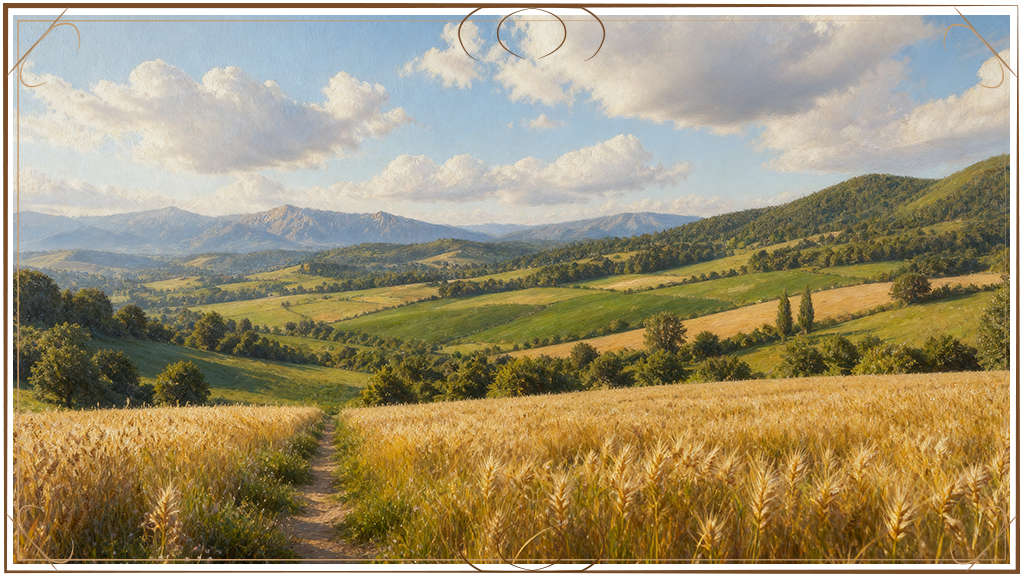
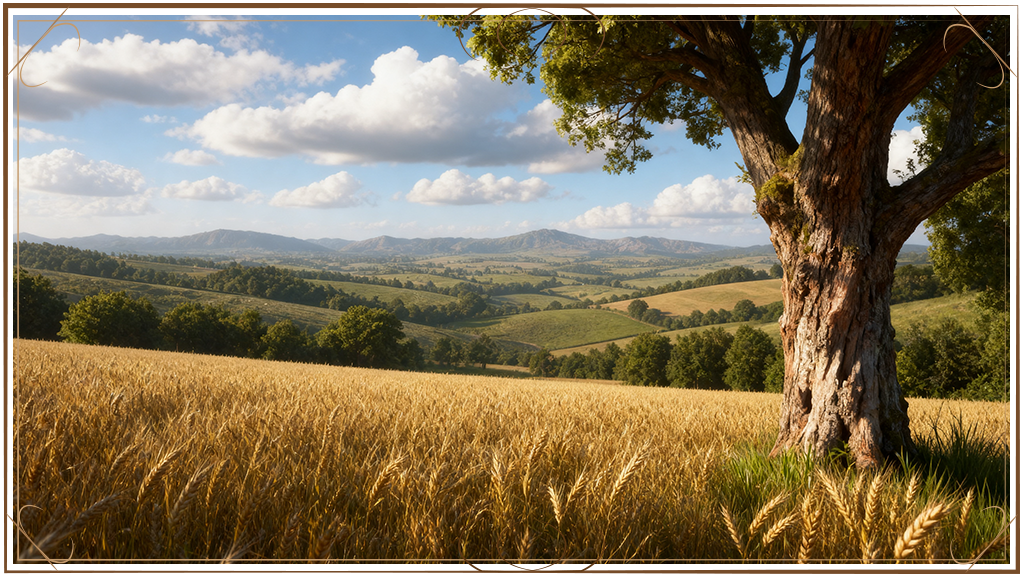
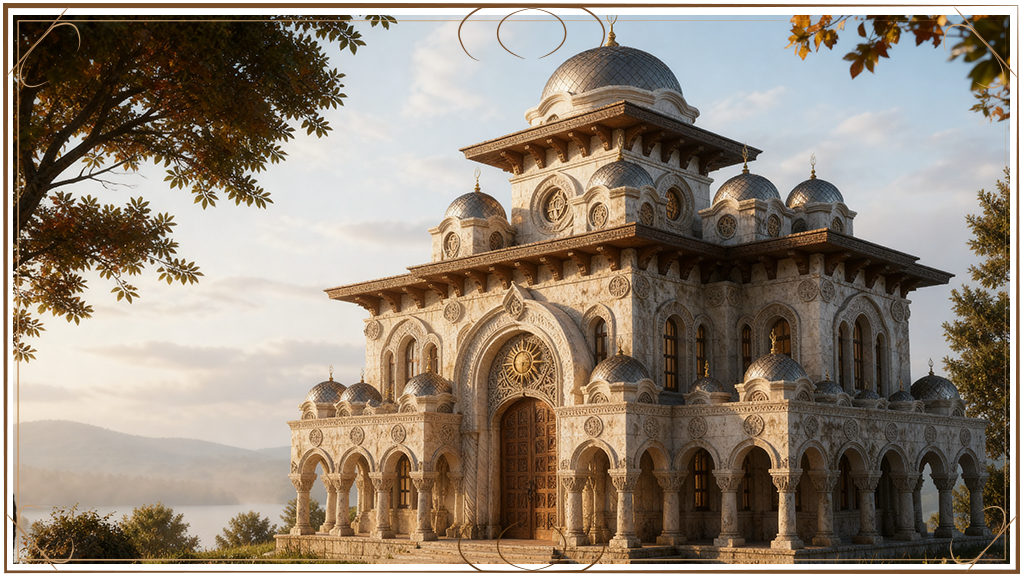
To Lohiras, the Candrian is more than water.
It is a symbol.
Water purifies, yet does not command. It finds its way without losing its nature. It reflects the light without being light itself. It carries life onward, so long as it is neither dammed, poisoned, nor abused.
That is why the Candrian holds a central place in rituals, healing ceremonies, weddings, blessings of newborn children and funerals. Children are anointed with its waters. Hands are cleansed before sacred vows are spoken. The sick drink consecrated drops, not because water alone can work miracles, but because it is meant to remind the body that healing, too, must flow.
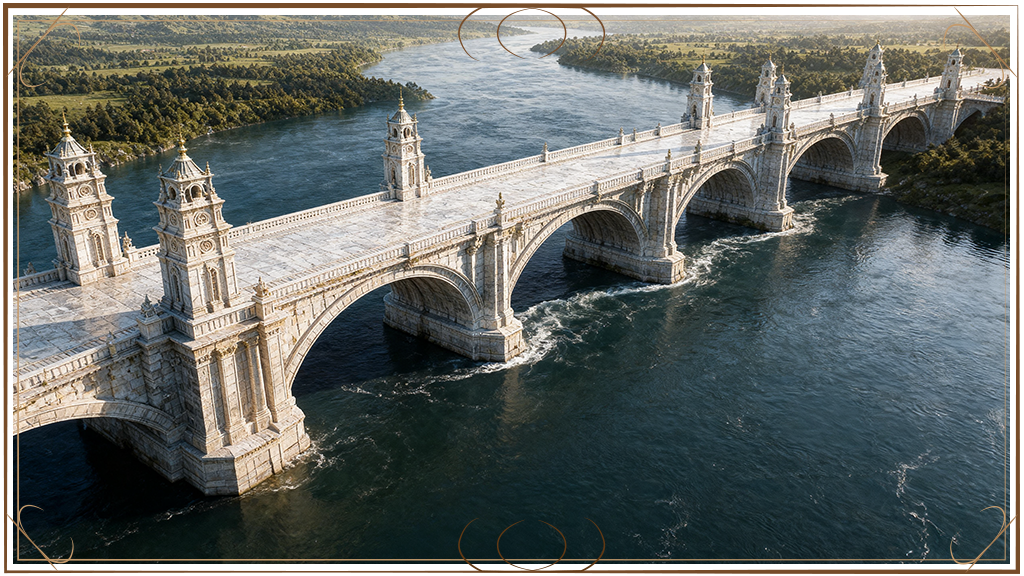
Across the Candrian stretches the Pantiras Bridge, one of the great symbols of Lohiras. Built of white marble, elegant and gracefully sweeping, it blends so perfectly with the river’s course that it seems not an act of humanity’s dominion over nature, but a vow between stone and water.
It connects more than two shores.
Across it pass merchants, paladins, pilgrims, the sick, scholars, messengers, refugees, diplomats, doubters and those who do not yet know whether they seek forgiveness or judgment.
The Pantiras Bridge is no bastion.
It is a promise.
It embodies what Lohiras aspires to be: not a wall, but a passage. Not a boundary that divides, but a threshold that tests those who cross it.
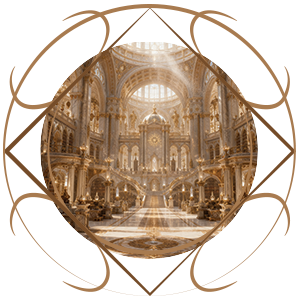
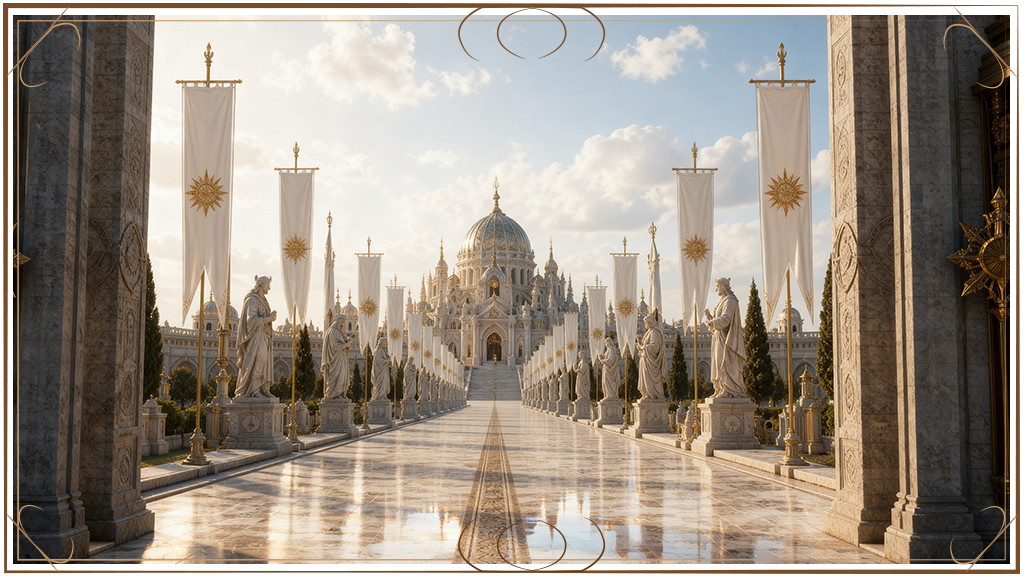
The Circle itself is the heart of this land. Its towers rise toward the heavens, yet not like threatening spears. They resemble fingers of stone reaching to touch the light. Within its halls, paladins are trained, the sick are healed, disputing voices are heard, ancient writings are preserved and the great decisions of the land are made.
Here, Lohiras reminds itself, time and again, why it exists:
Not to rule.
Not to conquer.
Not to force other peoples beneath its light.
But to preserve a place where truth carries greater weight than power.
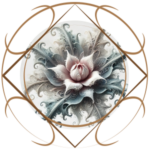
The plants of Lohiras are more than mere vegetation. They are symbols.
Not because every blade of grass holds a miracle, but because its people have learned to see a question in every living thing: What carries the light? What brings healing? What preserves memory? What teaches restraint?
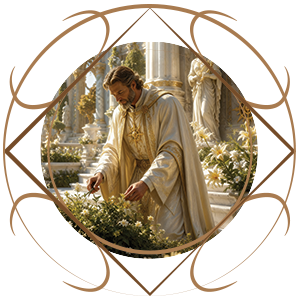
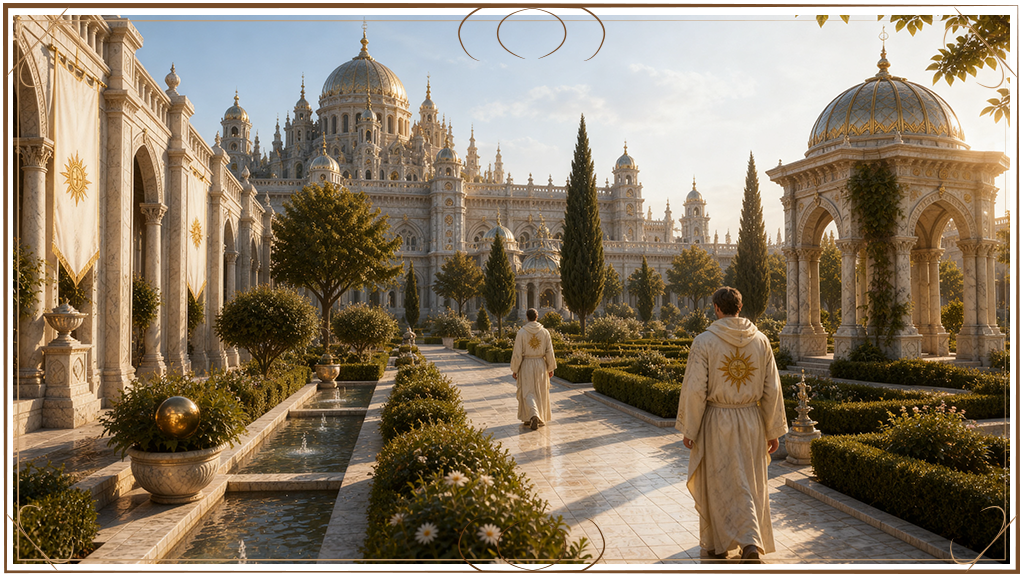
Light Lilies grow along the Candrian, at the edges of fields and in the tranquil gardens of the Circle. By day, they appear delicate and almost unremarkable. Yet when night falls, they begin to glow faintly – not with dazzling brilliance, but like a quiet promise.
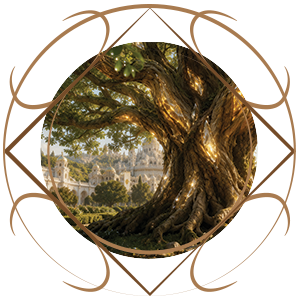
Near the Circle grows the sacred Circle Tree. Its roots reach deep into the earth, its crown spreads wide and veins of crystal shimmer among its branches, as though light itself had sought refuge within its wood.
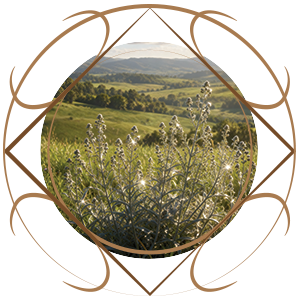
Across the meadows thrives Myrtlewort, an unassuming, silvery herb, yet one possessing remarkable healing properties.
Thus, the flora of Lohiras teaches:
Not every miracle shines brightly.
Some heal in silence.
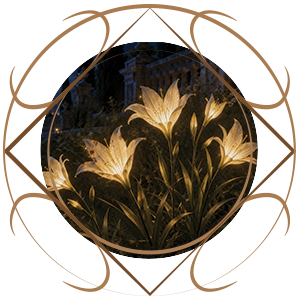
The Light Lily is one of the most profoundly human symbols of Lohiras.
It is not strong like a tree. Not useful like wheat. Not rare enough to seem precious. Yet it glows when the world grows dark.
It is used in blessings of newborn children. In healing rituals. In ceremonies of reconciliation. At the bedsides of the gravely ill. Its blossoms are placed in bowls of water, woven into wreaths, embroidered upon garments or pressed between the pages of prayer books.
Many soul healers use it as a symbol:
One need not be the sun to stand against the night.
Sometimes, it is enough simply not to fade.
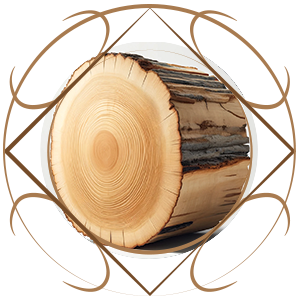
The Circle Tree offers a different lesson. It is never felled, never pruned without prayer and its wood is used only in the rarest of sacred circumstances. Its leaves are regarded as symbols of wisdom – not because they bestow knowledge like some magical elixir, but because they remind those who behold them that true understanding must grow.
Slowly.
Deeply rooted.
Reaching toward the light, yet born of the earth.
This matters.
For Lohiras is forever in danger of revering the light so deeply that it forgets the earth beneath it.
The Circle Tree unites both.
No light without roots.
No heights without depths.
No wisdom without patience.
Myrtlewort, finally, represents the quiet work of healing. It does not shine like the Light Lilies. It does not tower like the Circle Tree. It does not feed villages like wheat. And yet, it is among the most precious gifts the land has to offer.
Its leaves are used to prepare salves, teas, tinctures and soothing poultices. It eases inflammation, strengthens weakened bodies and is burned during rituals of spiritual healing, for its fragrance is believed to bring clarity to the mind and soul.
Myrtlewort reminds Lohiras:
Healing does not always take place within grand halls.
Sometimes, it is an elderly healer crushing herbs at precisely the right moment.

The animals of Lohiras are not regarded as possessions, but as free-spirited symbols of the land.
Golden Foxes are considered bearers of good fortune. Their fur shimmers warmly in the sunlight and countless tales speak of wanderers who followed such a creature and found their way out of mist, forest or the depths of their own despair.
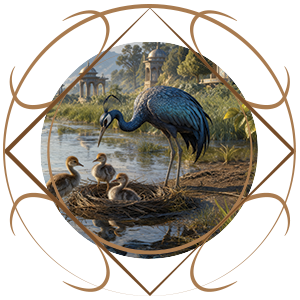
Candrian Cranes nest along the river. Their graceful movements and their stillness between water and reflection make them sacred birds of patience.
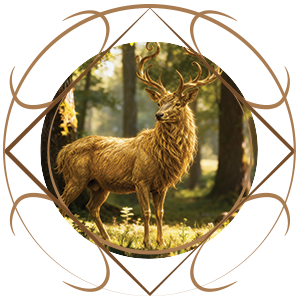
Shepherd Stags roam the fields, meadows and sunlit woodlands. They are regarded as symbols of peace and prosperity.
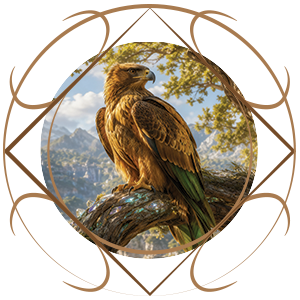
Healing Falcons nest upon the soaring towers of the Circle and among the rocky ledges near the Lhanes Mountains. Their circling flight above the white halls is considered a sign of protection.
These creatures are not tame.
And that matters.
Lohiras does not revere them because it possesses them.
But because they live freely in the light.

In Lohiras, the Golden Fox is a symbol of gentle guidance. It forces no one to follow. It appears, vanishes, perhaps waits at the edge of a forest and leaves each person to decide for themselves whether to continue onward.
Many soul healers cherish this image.
For healing, too, does not lead through force. It reveals a path. But the wounded must walk it themselves.
The Candrian Crane teaches patience. Those who watch it standing motionless in shallow waters may come to understand a truth Lohiras often needs to remember: Not every movement is progress. Sometimes, waiting in stillness is not weakness, but a gathering of strength. Yet when the crane takes flight, it does so with purpose and clarity.
Shepherd Stags are considered a blessing upon the fields. A land where gentle creatures can wander across meadows without fear has not yet fallen entirely into corruption. Thus, they are respected, never hunted merely for pride.
The Healing Falcon, by contrast, embodies watchful clarity. It is a bird of prey, certainly. Yet Lohiras sees in it not cruelty, but protection born of vigilance and far-reaching sight. Its flight above the Circle serves as a reminder that peace must never be blind.
The animals of Lohiras are not obedient symbols.
And therein lies their dignity.
They reveal that the light need not possess something for it to hold meaning.

A sword is never merely a sword. A shield is never merely a shield. A stained-glass window is more than decoration. A book is more than parchment. A ring is more than an ornament. A garment is more than cloth.
Every object fashioned by Lohiran hands carries a question within it:
What purpose do you serve?
In Lohiras, craftsmanship is born of the belief that matter itself can bear the light. Not because stone, steel, glass or gold are inherently sacred, but because the hand that shapes them dedicates itself to a greater purpose.
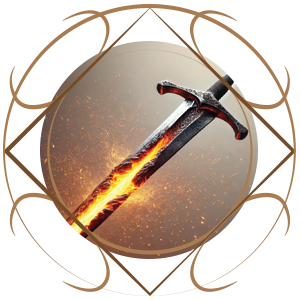
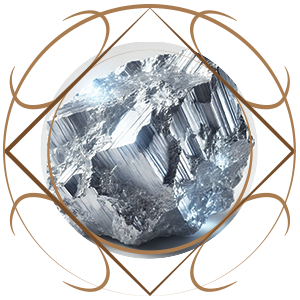
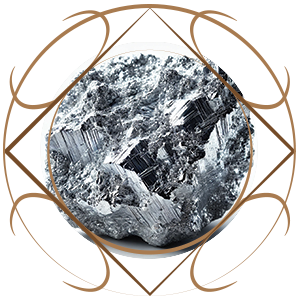
Lightsteel is among the most renowned materials of Lohiras: shimmering silver, lightweight, resilient and capable of absorbing and reflecting light as though a tranquil dawn rested within its depths.
A work of lightsteel must do more than endure.
It must be worthy of bearing a blessing.

In Lohiras, craftsmanship often begins in silence. Before undertaking an important work, the master artisan speaks a brief prayer:
May this serve before it shines.
Within these words lies much of the spirit of Lohiras.
An object may be beautiful. Beauty is not despised. Yet beauty must never become hollow. A gleaming sword wielded out of vanity is worth less than a simple blade raised in defense of the helpless.
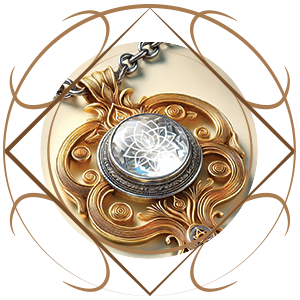
Lightsteel is used to forge paladin blades, shields, armor and sacred insignia. Silver represents clarity, protection and purity of spirit. Gold symbolizes Luxarion’s radiance rather than worldly wealth, yet Lohiras must remain vigilant, for gold has always spoken the language of power as well.
Precious metal does not sanctify the hand.
The hand must dedicate itself to the purpose the metal is meant to serve.
Glass, too, holds a revered place among the great arts of Lohiras. Within the white halls of the Circle, vast windows scatter sunlight into gold, blue, silver and warm white. Mosaics tell stories of healing, penance, truth, the building of bridges, lowered swords and the first rays of Luxarion’s light.
A stained-glass window is not mere decoration.
It is a teaching written in light.
Yet even art can blind. A window may be so beautiful that a poor man standing before it forgets to voice his grievances. A temple may appear so flawless that a guilty soul comes to believe there is no place for them within its walls.
That is why every creation of Lohiras must serve the light.
Never seek to replace it.
And so the most important question a master artisan must ask is not:
Is it perfect?
But rather:
Does it serve the truth?
Does it serve healing?
Does it serve mercy?
Does it serve duty?
Or does it serve only the desire to appear pure?
The paladins of Lohiras carry swords, lightsteel armor, blessed shields, sacred runes and crystals embedded in their blades and breastplates.
Yet none of these is the true measure of their worth.
Not the blade.
Not the shield.
Not the radiance.
Not the number of enemies they have slain.
The true measure of a paladin lies in a single moment that, to many warriors, scarcely resembles glory:
When they lower their sword.
Not out of fear.
Not out of weakness.
Not because they shy away from battle.
But because they recognize that an enemy has repented, that a life may yet be redeemed and that justice need not demand blood merely because blood would be so easily spilled.
In Lohiras, it is said:
True strength lies not in the sword, but in the hand that lowers it.
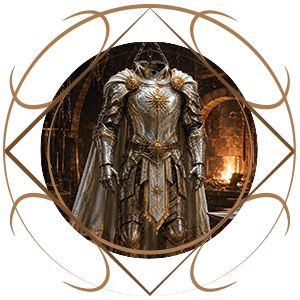
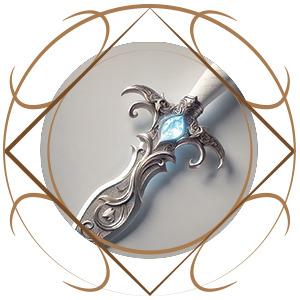

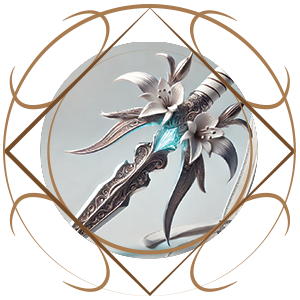
The paladins exist so that the light may have room to work. They protect roads, temples, crystal sanctuaries, pilgrims, healers, diplomatic delegations, border settlements and those who suffer beneath the weight of violence. Their sword is meant to be their last resort. Their shield, their first act of service.
Their fighting styles reflect this very spirit.
Lux Ferio, the Style of the Sunblade, is the art of precise clarity. No strike should be wasted. No movement should exist merely for show. No blow should be born of anger. A blade wielded in Lux Ferio should move like a ray of sunlight: direct, unwavering and striking only where it must.
Custodia Lux, the Style of the Eternal Shield, is the art of defense. A shield wielded in Custodia Lux is more than a means of protection. It is a declaration.
Here, your reach ends.
Here stands someone between you and the defenseless.
Here, violence shall go no further.
Veritas Ultima, the Style of Radiant Mercy, is the most difficult and perhaps the most distinctly Lohiran of all fighting styles. It is not designed to kill an enemy, but to end the threat without needlessly destroying the one who poses it: to disarm, incapacitate, subdue, sever a dark bond or grant an opponent the chance to surrender.
Many outsiders mistake this style for weakness.
They are wrong.
It is easier to kill a person than to bring them under control without breaking them.
Yet even paladins can fall.
Not only through death.
But through self-righteousness. Through holy wrath. Through blind duty. Through truth without mercy. Through protection twisted into control.
And so their greatest trial is not the enemy standing before them.
But the judge within.
A true paladin is not one who never doubts.
But one who brings their doubts into the light.

The culture of Lohiras is one of words, sounds, images, rituals and sacred forms. Music is not mere entertainment, but prayer. Art is not simply representation, but teaching made visible. Every window, every statue, every mosaic, every book and every hymn is meant not only to be beautiful, but to bring something within the human soul into harmony.
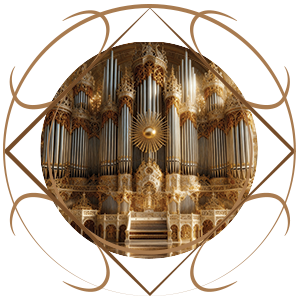
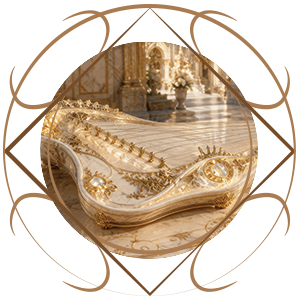
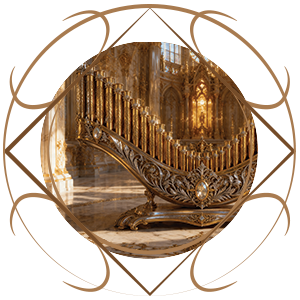
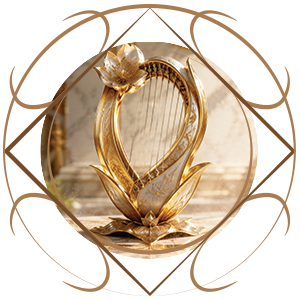
The celestial organ Lyrath fills great temples with long, almost otherworldly breaths of sound. The light zither Elyssar seems to resonate with a gentle radiance. The angelic flute Aurelian sings with crystalline clarity. The divine harp Sirilion soothes the spirit. Floating bells, known as Or’Thalir, respond to the wind, to movement and to that peculiar stillness that precedes a confession.
Yet music in Lohiras must do more than sound beautiful.
It must be true.
A choral song that conceals grief rather than carrying it offers no healing.
A hymn that sings of guilt so beautifully that no one feels compelled to act is an act of betrayal.
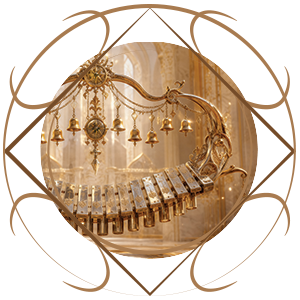
The language of Lohiras is called Liréth: the language of knowledge, unity and the Circle. Yet even these descriptions fall short of its true meaning.
To Lohiras, language is a sacred responsibility.
A word can open or close. Heal or wound. Bring truth into the light or conceal it beneath beautiful expressions.
Liréth sounds gentle, but never weak. A sentence spoken in Liréth should not strike. It should carry. Its central concepts are teachings in themselves: Valéon, the Gathering of Voices. Solûn, understanding and wisdom. Séraviel, an open heart for all peoples. Athuér, harmony in words. Thirian, Listener of Wisdom.
One detail is especially significant: Thirian does not primarily honor the one who speaks.
But the one who listens.
For in Lohiras, true understanding is regarded as a virtue that must be actively practiced.
Yet even Liréth can fall. Not by becoming ugly, but by becoming too beautiful to remain truthful. It falls when it cloaks power in sacred phrases, diminishes the voices of ordinary people, softens the weight of guilt, disguises judgment as purity or speaks of healing while seeking control.
Then the language of knowledge becomes a language of certainty.
And certainty is not the same as truth.
The festivals of Lohiras embody this same spirit. The Festival of the First Light takes place after the longest darkness. In the deepest hours of the night, the cities fall silent. Then the first flame is lit.
Not many.
One.
Then a second.
Then thousands.
As the sun rises and its first rays touch the stained-glass windows of the Circle, colors flood the halls.
Gold.
Silver.
Blue.
White.
Warm red.
The festival is more than a celebration of the sun.
It is the annual declaration of Lohiras:
We have witnessed darkness.
And still, we choose the dawn.