


The Santhress were not born to be cruel.
They were saved.
And their salvation demanded blood.

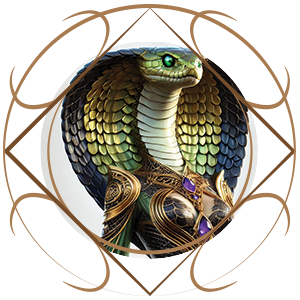
So it is told in the oldest whispered chants beneath the pyramids of Thissa, where the air hangs heavy with gold, heated stone, parched sand and that faint metallic scent which no wind can ever quite carry from the temples.
Once, their people stood upon the brink of extinction. Springs ran dry, crystals lost their power, brood chambers perished and Phanisses began to devour its own children rather than sustain them.
In that hour, the first blood priestesses called upon Sethira.
Or perhaps Sethira called upon them.
The truth depends on who tells the tale.
They offered blood. And blood magic awakened. It saved the brood chambers, prolonged lives, opened visions and transformed pain into energy, sacrifice into power and blood into memory.
Their people survived.
But from the moment that first pact was sealed, nothing remained free.
The Santhress do not call the pact a curse.
Not publicly.
Not before the altars.
Not before the High Priestess.
Not before the young within the brood chambers.
There, they call it grace. Divine favor. Heritage. Bloodright.
Yet within the oldest chambers, in the cryptic songs of the Keepers and in the silent gazes of those who have lived far too long, another truth remains:
The Santhress survived because they sacrificed something of themselves.
And ever since, they have no longer known whether they were truly saved – or merely lost in another way.
For blood magic works.
That is the terrible truth.
It heals wounds, prolongs life, grants visions, binds enemies, strengthens crystals and bestows upon the priestesses a power that other peoples rightly fear. Had it not worked, Phanisses might have freed itself from its grasp long ago.
Yet every successful ritual declares: It was necessary.
Every crystal restored to power declares: The blood was not shed in vain.
Every prophecy fulfilled declares: Sethira sees.
And so a people who once pleaded for salvation find themselves bound ever more tightly to the very means by which they were saved.
The Santhress are not hollow.
They are not cruel without reason.
They are not merely monsters of sand and blood.
They are a people who yearned so desperately to survive that they began to see life itself as a price to be paid.
Their very essence is control.
Their deepest longing is eternity.
Their greatest danger is that they may forget why life was ever worth preserving.
Perhaps the Santhress are not lost because they dwell in darkness.
Perhaps they are lost because they were once saved – and have believed ever since that every salvation must demand blood.

Phanisses is not a land one merely inhabits.
It is a body within which one must endure.
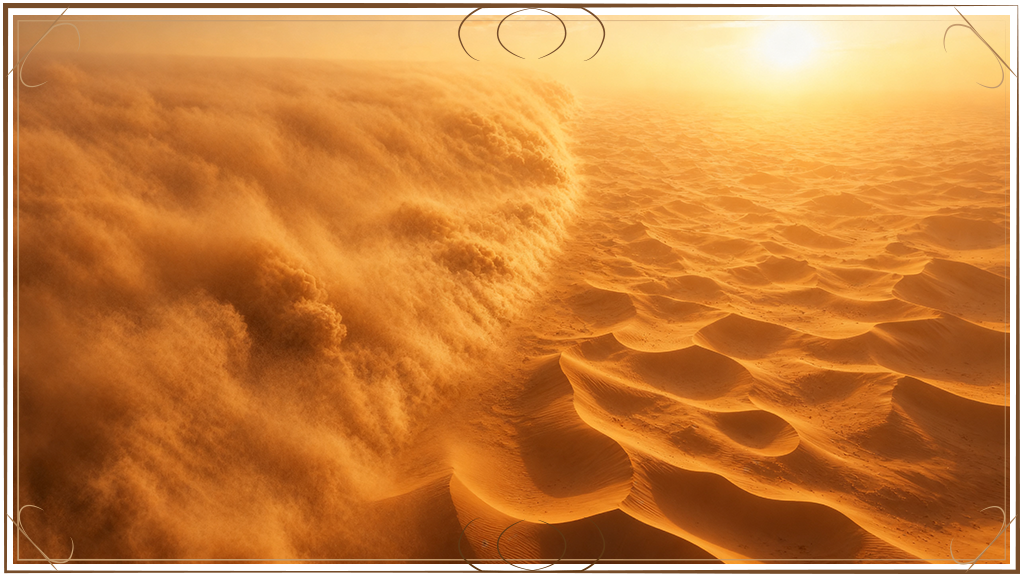
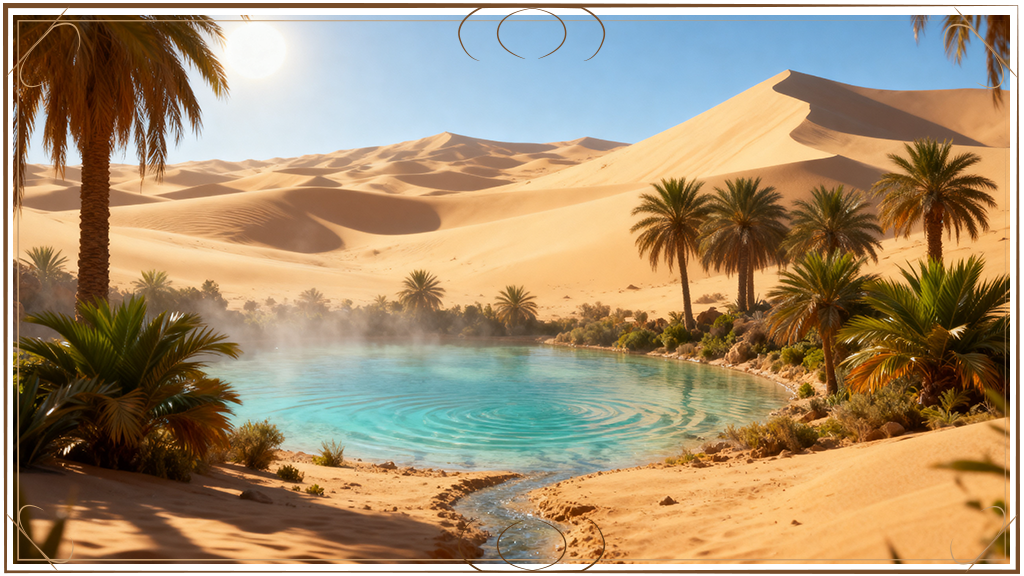
To the Santhress, the desert is no empty place, no wasteland, nor a punishment inflicted by nature. It is Sethira’s body. Every dune is a movement of her skin. Every underground stream a hidden current of blood. Every sandstorm her breath. Every ruin a bone from an age long past. Every oasis a wound from which life emerges.
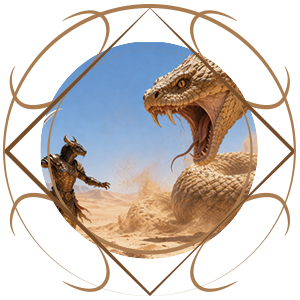
Phanisses spares no one. The sun burns without mercy, storms bury tracks and names alike, sand vipers lurk beneath the dunes and within ancient ruins lie dormant signs that none should dare disturb unless they understand the language of serpents.
Yet Phanisses is not dead.
Its life lies hidden.
In oases.
In crystal blossoms.
In night-blooming flowers.
In underground streams beneath the stone.
And in Thissa, the golden city of pyramids.
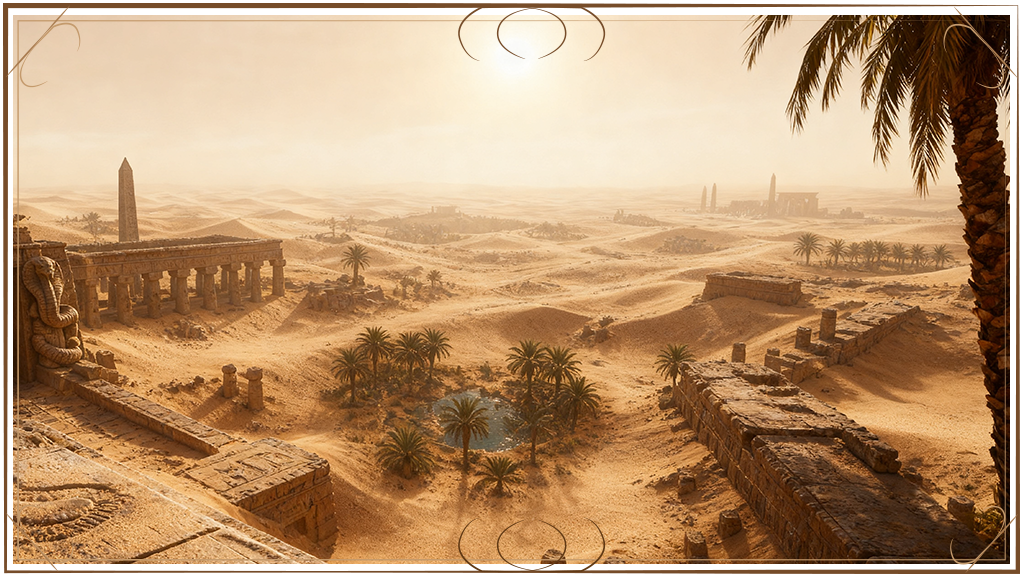
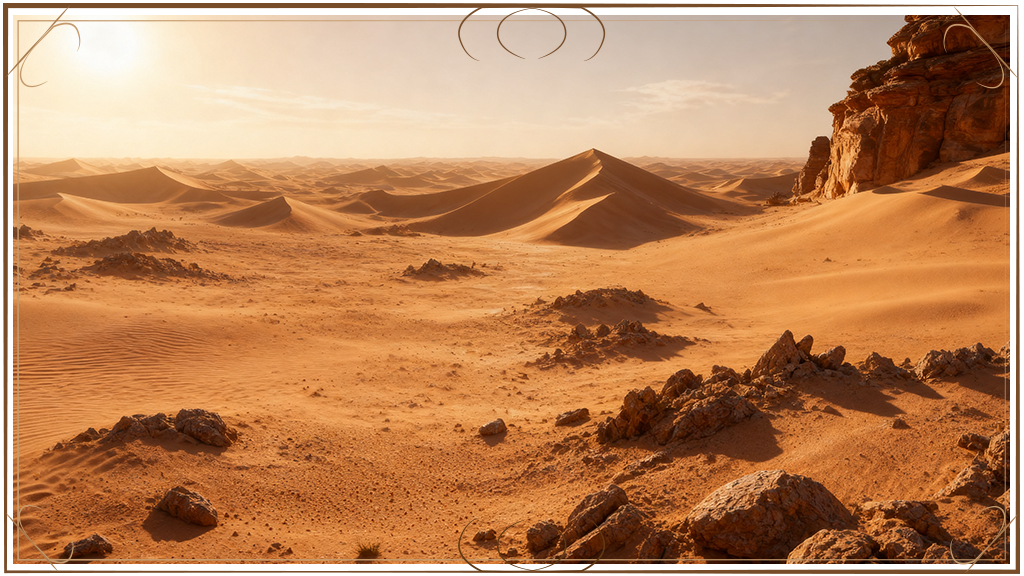
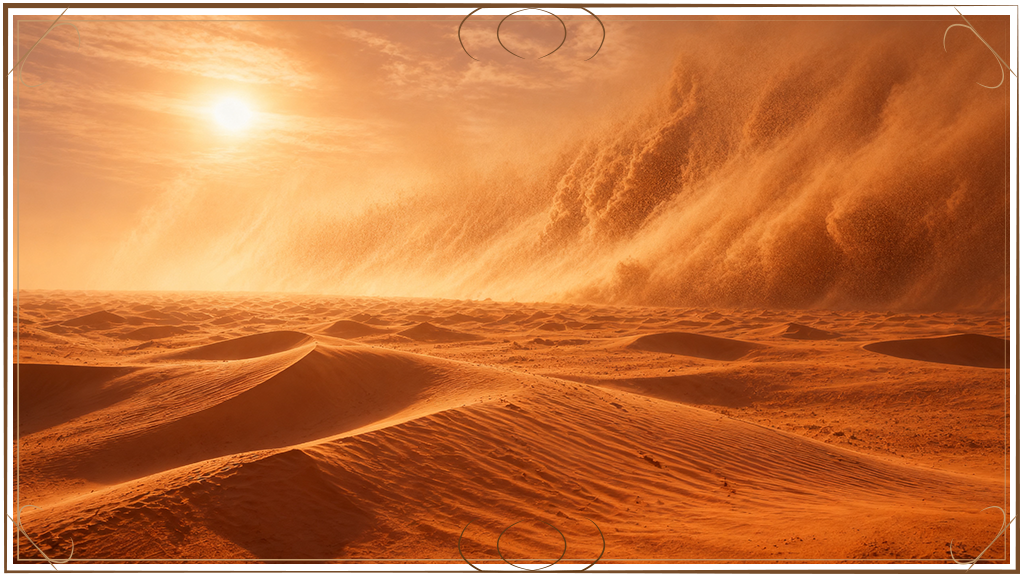
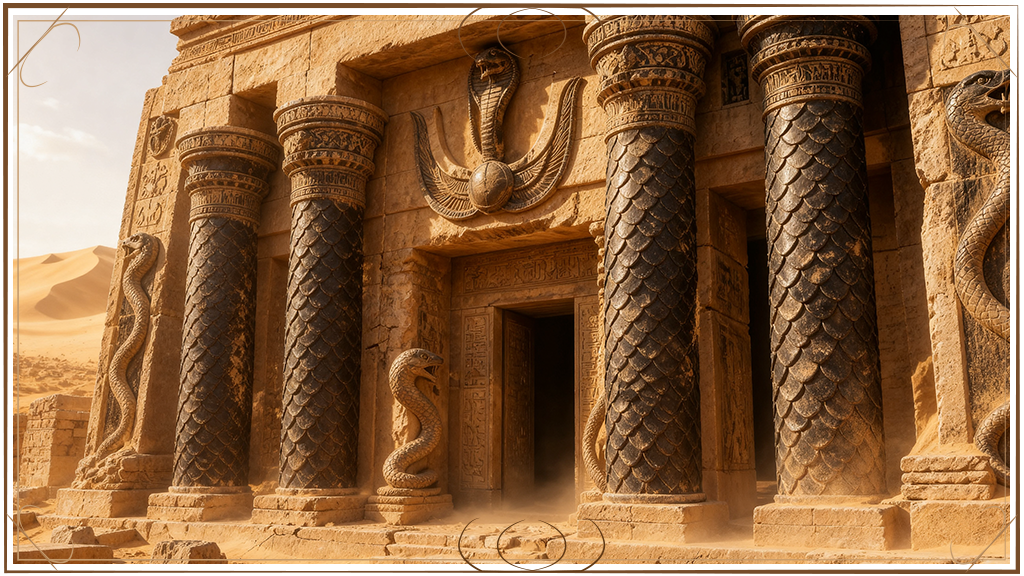
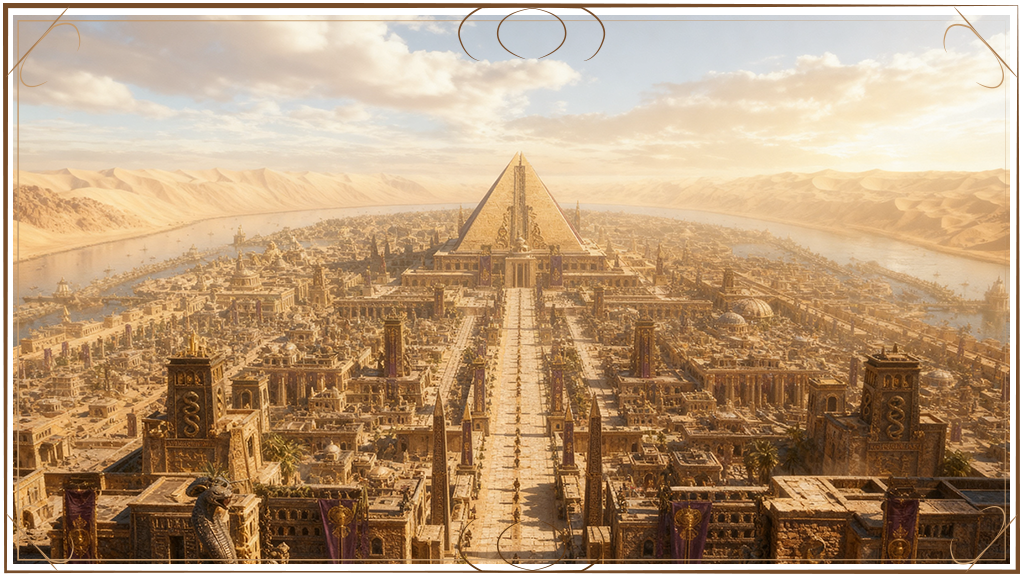
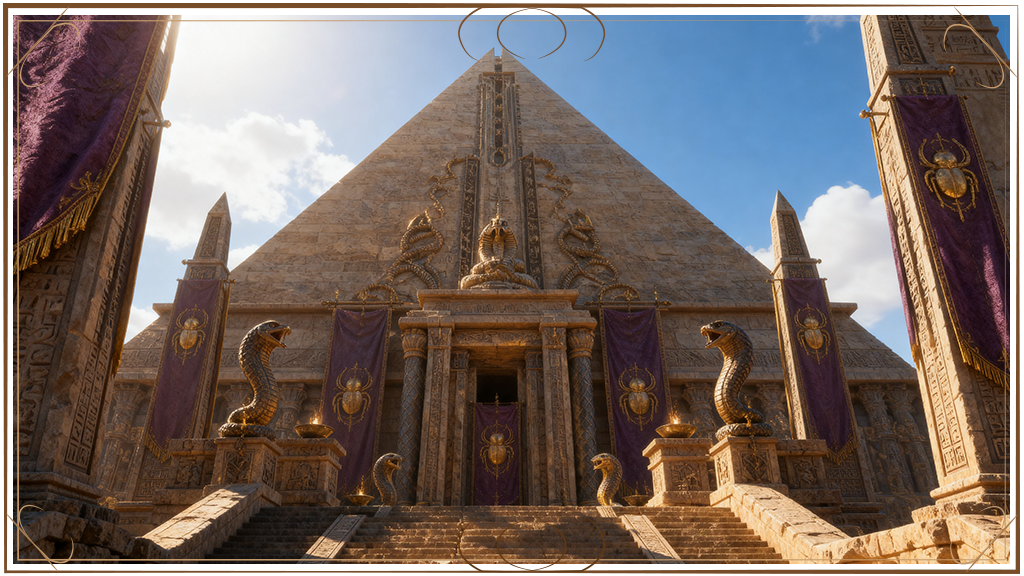
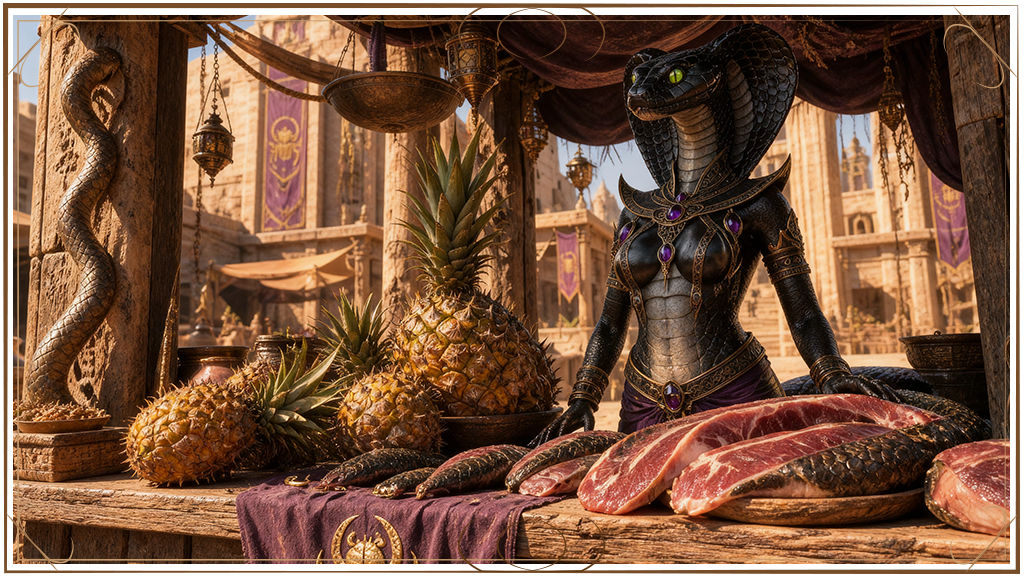
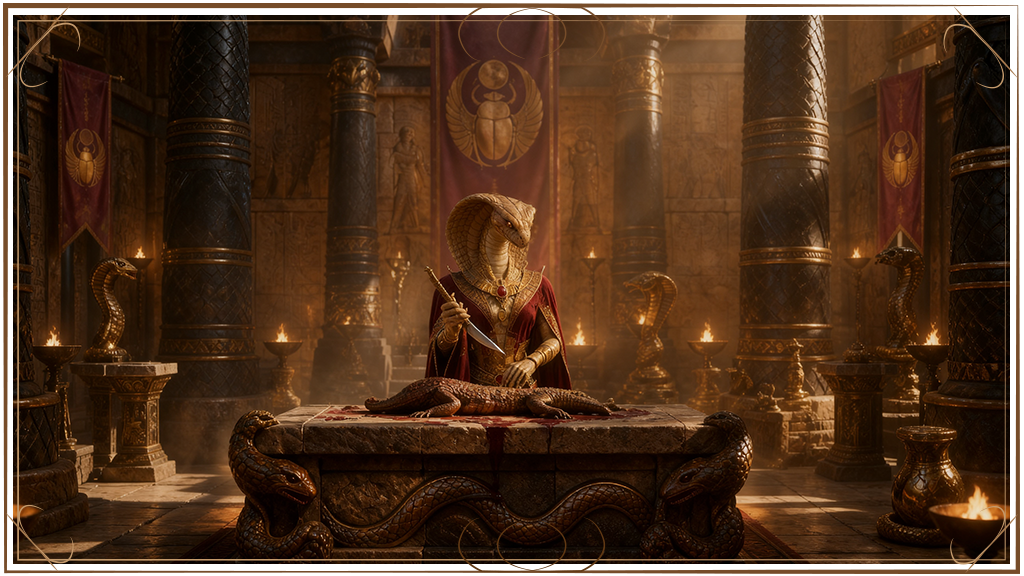
At the heart of this deadly expanse rises Thissa, the capital of the Santhress: a monument of pyramids, obelisks, golden facades, black altars, serpentine pillars, bloodstones, subterranean crystal chambers and spiraling temple passages.
Thissa was not built for legs.
It was created for bodies that glide.
Its ramps sweep in broad curves through courtyards and halls. Its ascending passages wind like the trails of serpents. Its plazas are smooth, warm and spacious, allowing the Santhress to raise themselves in displays of rank and dignity.
The city is not loud.
Not like the markets of men.
Not like the camps of orcs.
Not like the workshops of goblins.
Thissa whispers.
Chains chime softly against wrists and rings adorning serpentine tails. Scales glide across stone. Golden bells sway in the wind. Voices hiss in long, gentle syllables. Music drifts from the temples, scarcely more than a breath, yet settles within the mind like a command one does not immediately recognize as such.
Beneath Thissa lie the true chambers of power. There rest the few remaining crystals of Phanisses. There, vessels of blood are sealed. There, bloodlines are nurtured within brood chambers under the watchful eyes of the priestesses. There, forbidden scriptures are sealed away with gold and dark magic. There, seeresses listen to the whispers of Sethira.
Thissa is no city in the ordinary sense.
It is a temple.
An archive.
A breeding sanctuary.
A court of judgment.
A place of sacrifice.
A serpent of stone.
And everyone who enters its gates comes to realize, sooner or later, that they are not merely walking through streets.
They are moving through the body of a power that has long since become aware of their presence.
Nothing grows in Phanisses without reason.
No plant in this land is wasteful, delicate or careless. Everything that lives beneath this sun has had to learn to conserve its strength, conceal its water and awaken at the appointed hour.
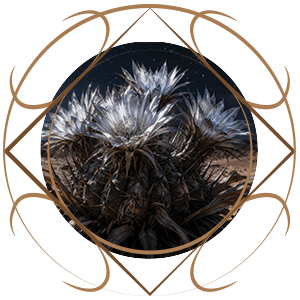
The Moon Cactus blooms only at night. Its silvery blossoms unfold beneath the cold light and close again before the sun can scorch them.
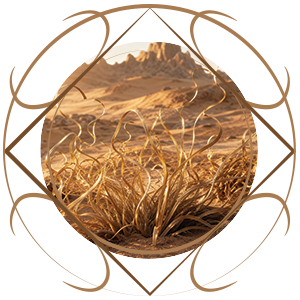
Serpentgrass grows thin, golden and twisting. Its sap is used in potions, poisons, salves and magical preparations.
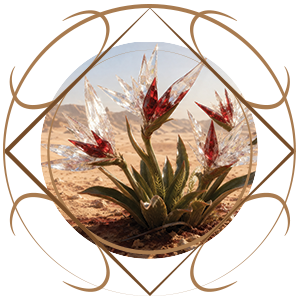
Crystal Blossoms flourish only in the presence of ancient energies. Their glasslike petals preserve faint magical resonances, revealing to the Santhress where ancient chambers or forgotten powers might lie buried beneath the sand.
Through its plants, Phanisses teaches the same lesson as through its desert:
Never reveal where you draw your water.
The Santhress do not revere plants as the High Elves do. They do not regard them as gentle kin, nor as sacred voices of a greater balance.
They read them as signs.
A plant that survives in Phanisses proves its worth. Not through beauty, but through adaptation. Not through openness, but through roots concealed beneath the earth.
The Moon Cactus is regarded as a symbol of truths that do not reveal themselves in the harsh glare of daylight. It blooms only when the sun has vanished, when the desert grows cool, when the stars and moon rise above the dunes and when the temples of Thissa rest in silver silence. Its fruits are rare and are often presented as offerings.
Serpentgrass is humbler, more practical and more dangerous. It twists even when the air is still, as though its slender blades carried memories within them. Its sap can numb, strengthen, purify or poison – depending on who prepares it and the purpose for which it is intended.
Crystal Blossoms are the most mysterious plants of Phanisses. They grow wherever ancient magic lies dormant beneath the sands. To priestesses and Keepers, they are clues. To alchemists, precious ingredients. To seeresses, omens. To outsiders, a beautiful mistake best left untouched.
These plants do not teach gentleness.
They teach patience.
Concealment.
Restraint.
Dangerous beauty.
And perhaps the darkest truth of Phanisses:
Not everything that lies hidden is dead.
Some things are merely waiting for the right hand to uncover them.

The creatures of Phanisses are more than mere inhabitants of the desert.
They are reflections of Sethira.
Above them all stand the Sand Vipers: enormous, silent, lurking beneath the sands, both revered and feared. They embody patience, venom, sudden strikes and absolute control over movement.
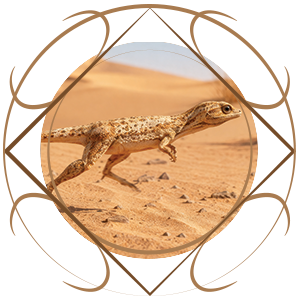
Dune Runners, swift desert lizards, teach the art of survival without the need for size or strength. Nightshade Bats dwell among ancient ruins, disorienting enemies with their piercing cries. Sea Serpents of the southern coasts provide resilient hides used in armor and rituals.
The Santhress do not love animals as companions.
They respect them as embodiments of deeper meaning.
A creature may be useful, sacred, dangerous, edible, worthy of sacrifice or a source of wisdom.
Sometimes all at once.
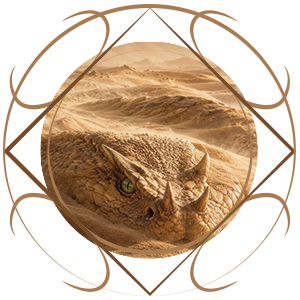

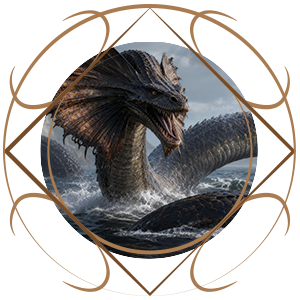
The Sand Viper is the most sacred creature of Phanisses.
Not because it is tame. Not because it serves the Santhress. But because it comes closest to embodying the very nature of their land. It waits beneath the surface, wastes no movement, strikes not out of anger and kills only when the moment is right.
Warriors learn from it.
Priestesses commune with it through sacred rituals.
High Priestesses bear its symbol not as an ornament, but as a declaration of what is expected of them: Those who rule must know how to wait until their prey brings itself within reach.
Dune Runners offer a humbler lesson, though one no less valuable. They are swift, watchful and difficult to catch. Not every life worthy of respect is mighty. Sometimes dignity lies in instinct, in knowing when to flee and in surviving without grandeur.
Nightshade Bats are creatures of the ruins. Their cries can disorient wanderers and even warn the Santhress of ancient chambers. They are regarded as messengers of forgotten places – creatures that hear in the darkness what others see only when it is too late.
Sea Serpents remind the Santhress that Sethira’s body does not end where the desert meets the horizon. In the south, where Phanisses touches the sea, these creatures glide through dark currents. Their hides are used to craft armor, their movements inspire ceremonial dances and the depths they inhabit serve as a reminder that even water can be dangerous when left uncontrolled.
The creatures of Phanisses offer no comfort.
They teach.
Wait.
Conserve your strength.
Remain hidden.
Strike when the other still believes they have a choice.


The Santhress do not shape metal merely into weapons.
They shape meaning.
Their art of smithing is an alchemical fusion of magic, symbolism and deadly precision. Every blade, every suit of armor, every artifact is at once a tool, a mark of rank, a ritual object and a tribute to Sethira.
In Phanisses, metal is more than ore given shape.
It is a vessel for power.
Gilded steel serves as a symbol of rank and an amplifier of ritual magic. Serpent Silver is light, flexible and ideally suited for delicate, flowing weapons. Violet crystals store energy. Dune Crystals lend certain artifacts an almost living quality, as though the sand itself carried memories within them.
Before the creation of particularly significant works, a sacrifice is made.
Not always a life.
Sometimes blood.
Sometimes a wound.
Sometimes an oath.
Sometimes an ancient name.
For a blade destined to wield power must first know the price.

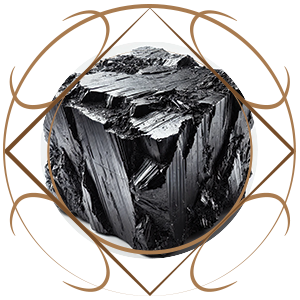
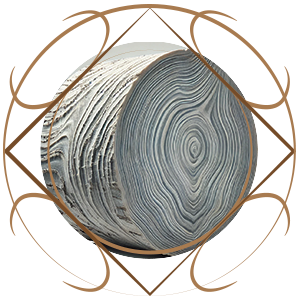
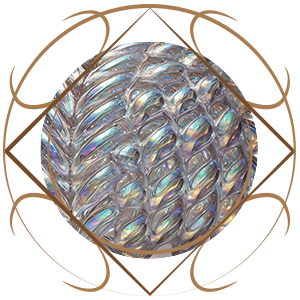
In Glyphsmithing, every creation is adorned with intricate magical engravings capable of strengthening protective enchantments, curses, healing magic or offensive spells. Through Sand Hardening, the Santhress use scorching desert sand instead of water to temper their metals. In the forging of Moon-Imbued Alloys, weapons are crafted beneath specific lunar phases, allowing them to retain hidden magical energies.
Their weapons are both deadly and beautiful.
Spears of gilded steel and violet crystals can unleash clouds of poison or channel currents of magical energy. Scimitars bear serpentine engravings that refract light into hypnotic patterns. Ritual daggers serve equally in battle and upon the altar. The crystal staffs of the High Priestesses channel blood magic and the power of foresight.
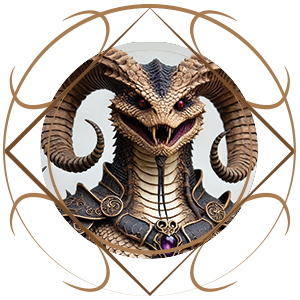
Santhress armor is lightweight, flexible and magnificent. Golden scale armor, crafted from hardened Sand Viper hide and magically reinforced metal, offers protection without hindering the fluid movements of their serpentine bodies. Helmets are often fashioned in the likeness of serpent heads, adorned with gemstones that gleam within their eye sockets.
Jewelry is never merely jewelry.
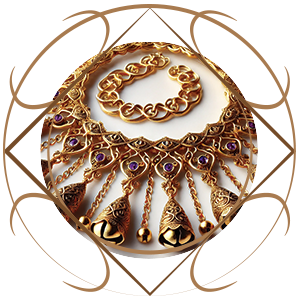
Rings, necklaces, bracelets and chains adorning their tails signify rank, bloodline, protective enchantments, curses and guilt.
An outsider sees decadence.
A Santhress reads order.
Gold is power.
Violet is hidden magic.
Dark red is blood.
Black is shadow.
Bronze and dark green belong to hunters, assassins and those who become one with the desert.
Too much gold without the rank to justify it is arrogance.
The wrong shade of violet is blasphemy.
A broken serpent symbol is treason.
In Phanisses, clothing is not an expression of individuality.
It is a hierarchy made visible.
Those who dress incorrectly lie with their very bodies.
And deception without artistry is merely foolishness.
The Santhress do not fight with brute force.
They do not charge into battle with roaring battle cries, seek open exchanges of blows or celebrate rage as a sign of strength.
To them, combat is a dance.
A ritual of control, deception and merciless efficiency.
Their movements resemble the silent passage of a serpent through the sand: always deliberate, always guided by perfect timing, always waiting to strike when the enemy least expects it.
Their martial arts follow three fundamental principles:
Deception surpasses strength.
Speed overcomes resistance.
Magic is an extension of the body.
An opponent should not be defeated when they are prepared.
They should be maneuvered until their readiness no longer matters.
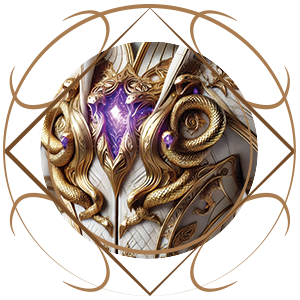
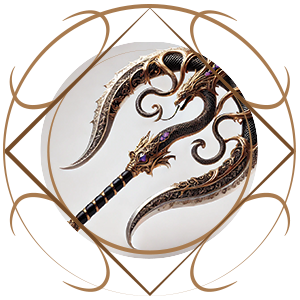
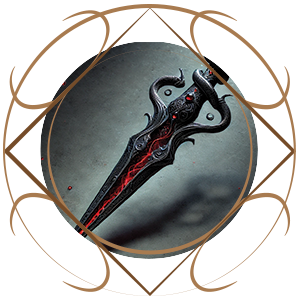
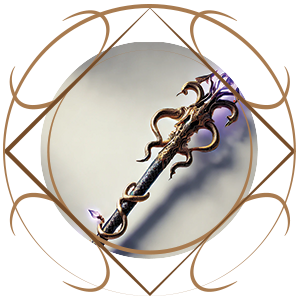
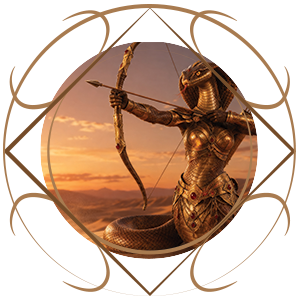
The Santhress favor lightweight, curved blades, ritual daggers, throwing knives and slender, venom-tipped spears. Scimitars sweep in arcs that mirror the movements of their serpentine bodies. Daggers vanish within sleeves, chains or bracers. Spears keep opponents at a distance until venom, curses or relentless movement begin to weaken them.
The Dance of Blades, Zhh’Vaari, is an art of elegance and precision. Whirling movements create openings, curved blades strike where armor offers no protection and every attack seems part of a greater, continuous motion.
The Dance of Shadows employs concealment, illusion and silent approach. A Santhress who masters this style strikes only when their target has already lost any real chance to react.
The Dance of Blood combines combat with blood magic. A single drop of one’s own blood can heighten speed. A cursed sigil inscribed upon a blade can drain an enemy’s life force. A hypnotic movement can hold an opponent captive for one breath too long.
And one breath is enough.
Santhress battle magic is subtle. They rarely unleash devastating firestorms or blinding bolts of lightning. Such crude displays of power are considered inelegant, wasteful and tactically foolish. Their magic works through the body, venom, movement, illusion, blood, voice and the perfect moment.
A Santhress does not seek to appear stronger than their enemy.
They seek to place their enemy in a position where strength no longer matters.
And so seasoned warriors do not fear the Santhress because of their size.
They fear them because of their patience.


The culture of the Santhress is one of sound, movement, gold, blood, glyphs and carefully controlled beauty.
Their language is called Ss’Thariss.
It is not merely spoken. It is breathed, hissed, drawn out and deliberately shaped. It slips from the mouth like a serpent gliding across warm stone: quiet enough not to be perceived as an attack, gentle enough to nestle into a stranger’s ear and precise enough to leave a wound before the mind even realizes it has been struck.
Other peoples possess languages to communicate their thoughts.
The Santhress possess a language to shape the thoughts of others.
Music, too, is more than an art form in Phanisses.
It is control.
A rhythm can guide the breath.
A flute can open the mind.
A dance can take the place of an incantation.
An entire hall can fall into a trance without a single sword being drawn.
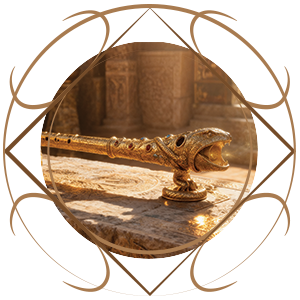
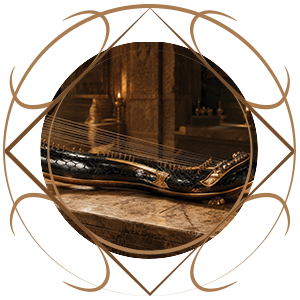
Ss’Thariss is at once a mark of rank, a ritual form, an art of deception, a conduit for magic, a weapon of the court, a threat, a seduction and a prayer to Sethira.
Those who have not mastered Ss’Thariss betray themselves.
A sound too harsh reveals impatience.
A breath too brief betrays uncertainty.
A misplaced hiss exposes lowly origins.
An unintended elongation reveals fear.
A break in the breath betrays weakness.
Thus, the Santhress do not learn this language merely with tongue and mind.
They learn it with their entire bodies.
With chest, throat, teeth, tongue, gaze, tail, posture, breath and silence.
For Ss’Thariss is control made audible.
Their music, too, follows no human structure. It coils like a serpent, flowing and encircling, slowly gathering strength until it holds the listener captive.
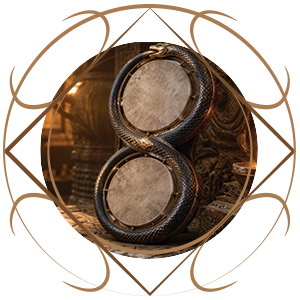
Golden flutes, known as Thiss’Kra, send breathlike notes drifting through the air. Serpent zithers, Zalithara, produce trembling tones that resonate through mind and body. Chains of bells, Ssath’Dril, accompany every movement of high-ranking dancers. Dune harps, Seth’Nai, create deep tones that can be felt throughout the body. Serpent drums, Niss’Tara, beat monotonous rhythms that guide heartbeat and breath.
The Serpent Dance is more than movement.
It is prayer.
Incantation.
Language.
Rank.
Seduction.
Dominion.
Every coil, every lowering of the body, every rising movement, every chime of golden chains may form part of a ritual sentence. Some sacred texts are not spoken in their entirety, but danced. A movement may signify an ancient incantation. A circle, a bloodline. A spiral, a future yet to unfold. A sudden stillness, a demand for sacrifice.
Outsiders see a dance.
The Santhress read a liturgy.
And thus arises the terrible beauty that permeates Phanisses: golden symmetry, flowing curves, serpentine reliefs, dark altars, violet crystals, crimson light, black shadows, flawless movements and hypnotic music.
Beauty in Phanisses offers no comfort.
It demands.