

The Santhress were not born to be cruel.
They were saved.
And their salvation demanded blood.
So it is told in the oldest whispered chants beneath the pyramids of Thissa, where the air hangs heavy with gold, heated stone, parched sand and that faint metallic scent which no wind can ever quite carry from the temples.
Once, their people stood upon the brink of extinction. Springs ran dry, crystals lost their power, brood chambers perished and Phanisses began to devour its own children rather than sustain them.
In that hour, the first blood priestesses called upon Sethira.
Or perhaps Sethira called upon them.
The truth depends on who tells the tale.
They offered blood. And blood magic awakened. It saved the brood chambers, prolonged lives, opened visions and transformed pain into energy, sacrifice into power and blood into memory.
Their people survived.
But from the moment that first pact was sealed, nothing remained free.
The Santhress do not call the pact a curse.
Not publicly.
Not before the altars.
Not before the High Priestess.
Not before the young within the brood chambers.
There, they call it grace. Divine favor. Heritage. Bloodright.
Yet within the oldest chambers, in the cryptic songs of the Keepers and in the silent gazes of those who have lived far too long, another truth remains:
The Santhress survived because they sacrificed something of themselves.
And ever since, they have no longer known whether they were truly saved – or merely lost in another way.
For blood magic works.
That is the terrible truth.
It heals wounds, prolongs life, grants visions, binds enemies, strengthens crystals and bestows upon the priestesses a power that other peoples rightly fear. Had it not worked, Phanisses might have freed itself from its grasp long ago.
Yet every successful ritual declares: It was necessary.
Every crystal restored to power declares: The blood was not shed in vain.
Every prophecy fulfilled declares: Sethira sees.
And so a people who once pleaded for salvation find themselves bound ever more tightly to the very means by which they were saved.
The Santhress are not hollow.
They are not cruel without reason.
They are not merely monsters of sand and blood.
They are a people who yearned so desperately to survive that they began to see life itself as a price to be paid.
Their very essence is control.
Their deepest longing is eternity.
Their greatest danger is that they may forget why life was ever worth preserving.
Perhaps the Santhress are not lost because they dwell in darkness.
Perhaps they are lost because they were once saved – and have believed ever since that every salvation must demand blood.

Phanisses is not a land one merely inhabits.
It is a body within which one must endure.
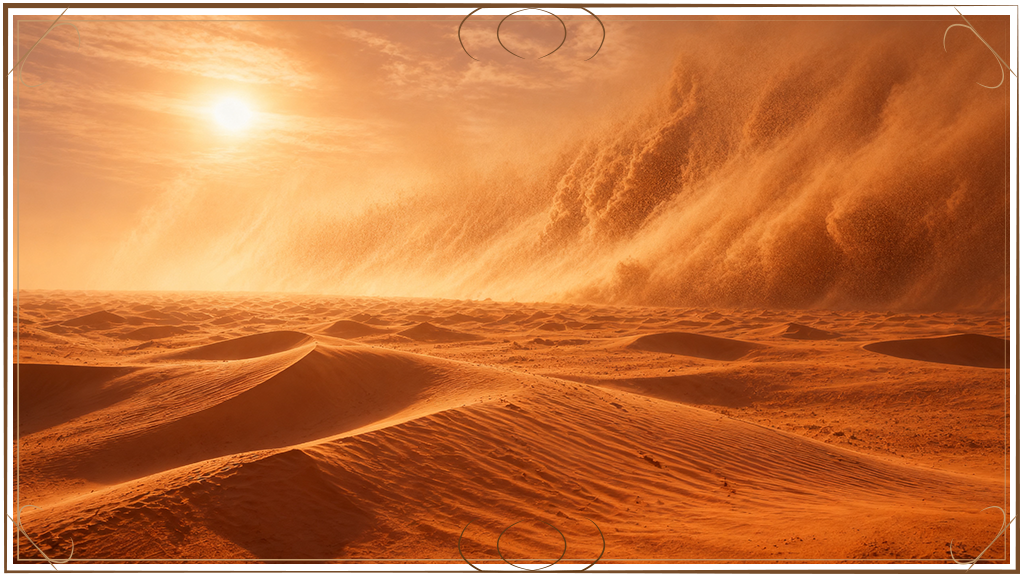
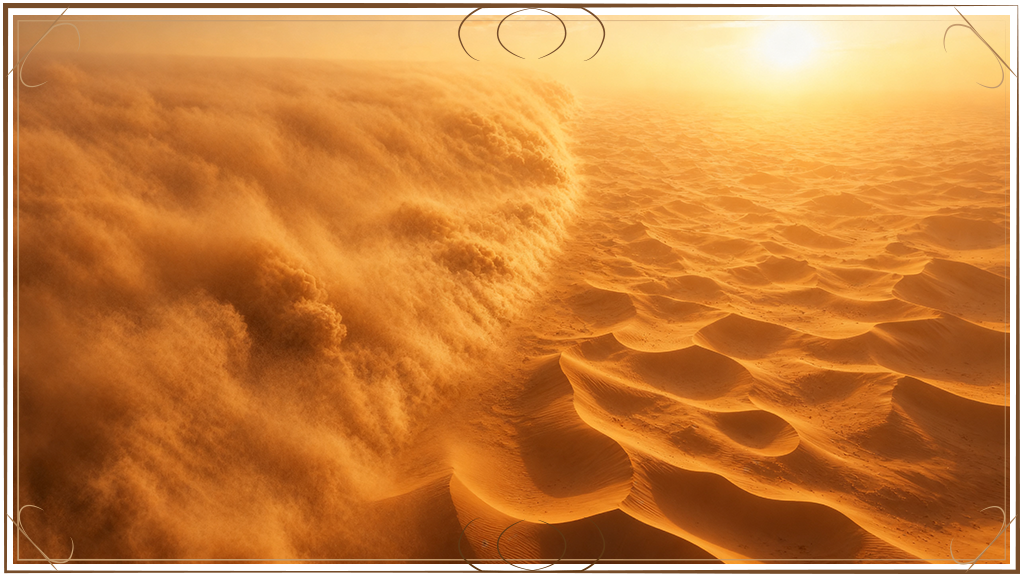
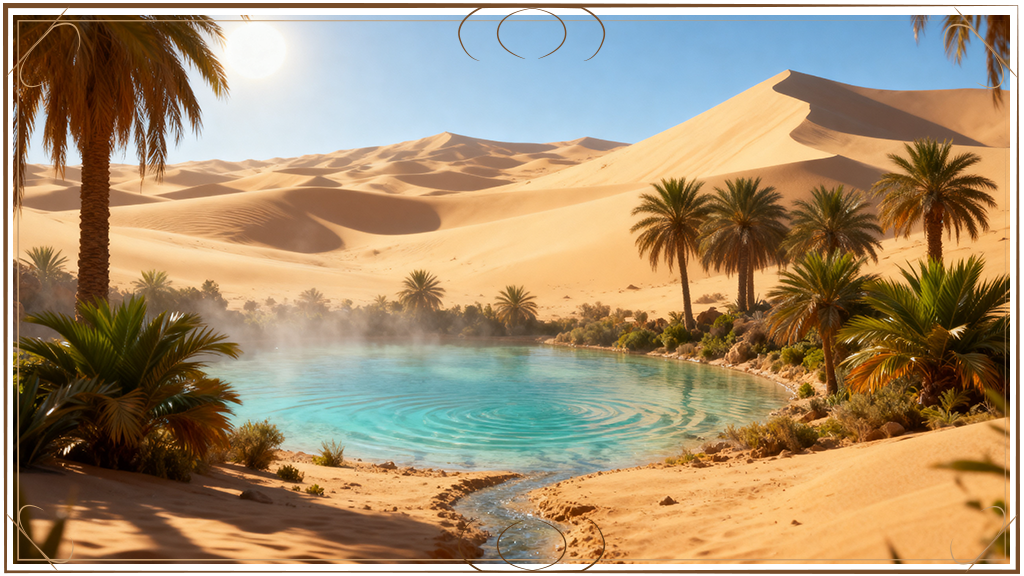
To the Santhress, the desert is no empty place, no wasteland, nor a punishment inflicted by nature. It is Sethira’s body. Every dune is a movement of her skin. Every underground stream a hidden current of blood. Every sandstorm her breath. Every ruin a bone from an age long past. Every oasis a wound from which life emerges.
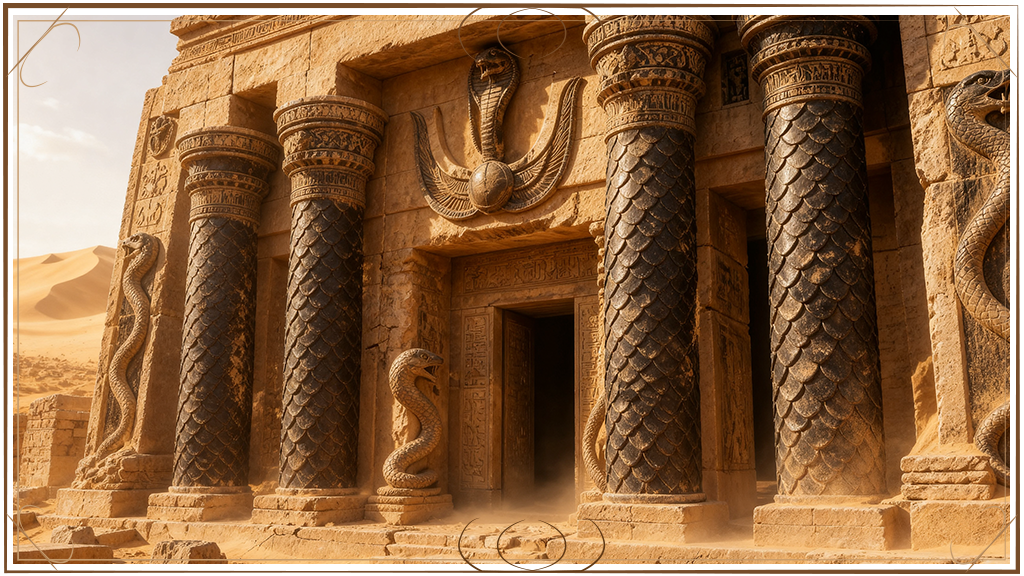
Phanisses spares no one. The sun burns without mercy, storms bury tracks and names alike, sand vipers lurk beneath the dunes and within ancient ruins lie dormant signs that none should dare disturb unless they understand the language of serpents.
Yet Phanisses is not dead.
Its life lies hidden.
In oases.
In crystal blossoms.
In night-blooming flowers.
In underground streams beneath the stone.
And in Thissa, the golden city of pyramids.
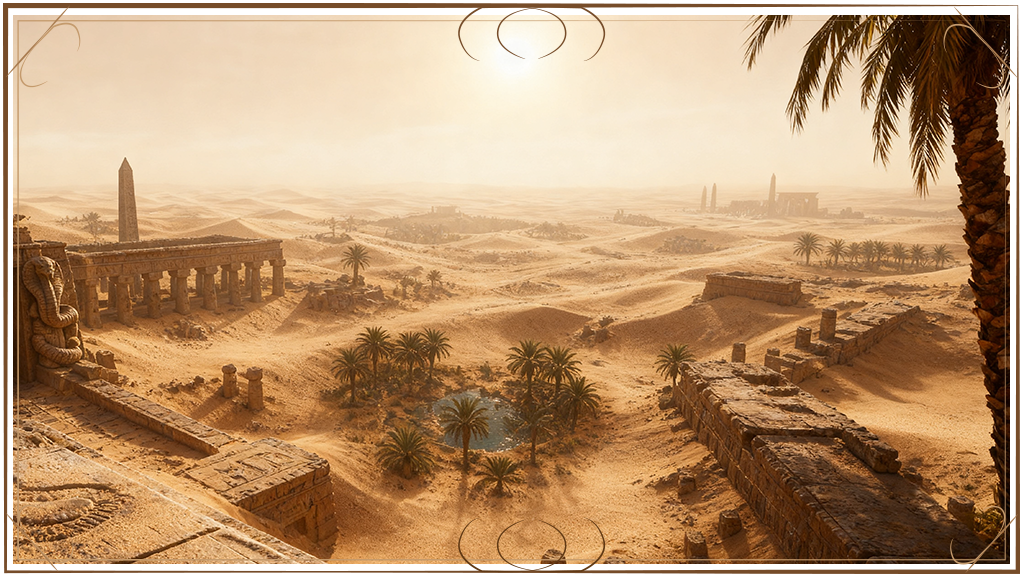
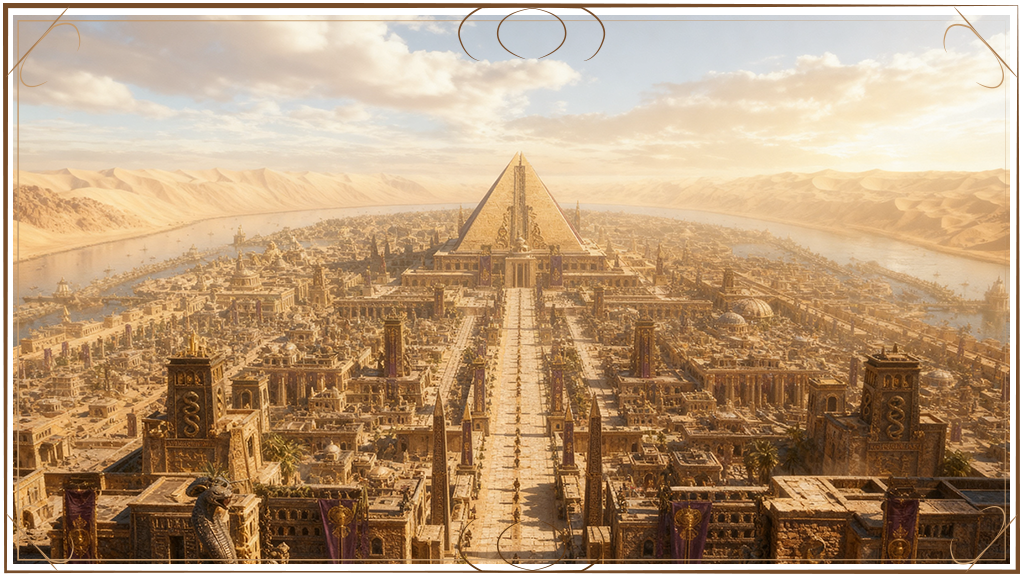
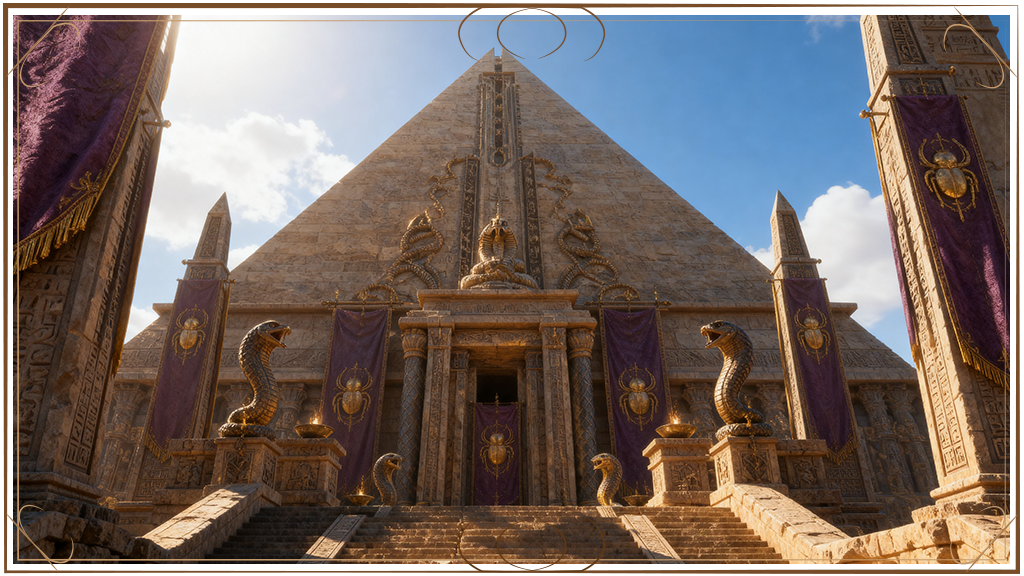
At the heart of this deadly expanse rises Thissa, the capital of the Santhress: a monument of pyramids, obelisks, golden facades, black altars, serpentine pillars, bloodstones, subterranean crystal chambers and spiraling temple passages.
Thissa was not built for legs.
It was created for bodies that glide.
Its ramps sweep in broad curves through courtyards and halls. Its ascending passages wind like the trails of serpents. Its plazas are smooth, warm and spacious, allowing the Santhress to raise themselves in displays of rank and dignity.
The city is not loud.
Not like the markets of men.
Not like the camps of orcs.
Not like the workshops of goblins.
Thissa whispers.
Chains chime softly against wrists and rings adorning serpentine tails. Scales glide across stone. Golden bells sway in the wind. Voices hiss in long, gentle syllables. Music drifts from the temples, scarcely more than a breath, yet settles within the mind like a command one does not immediately recognize as such.
Beneath Thissa lie the true chambers of power. There rest the few remaining crystals of Phanisses. There, vessels of blood are sealed. There, bloodlines are nurtured within brood chambers under the watchful eyes of the priestesses. There, forbidden scriptures are sealed away with gold and dark magic. There, seeresses listen to the whispers of Sethira.
Thissa is no city in the ordinary sense.
It is a temple.
An archive.
A breeding sanctuary.
A court of judgment.
A place of sacrifice.
A serpent of stone.
And everyone who enters its gates comes to realize, sooner or later, that they are not merely walking through streets.
They are moving through the body of a power that has long since become aware of their presence.

Nothing grows in Phanisses without reason.
No plant in this land is wasteful, delicate or careless. Everything that lives beneath this sun has had to learn to conserve its strength, conceal its water and awaken at the appointed hour.
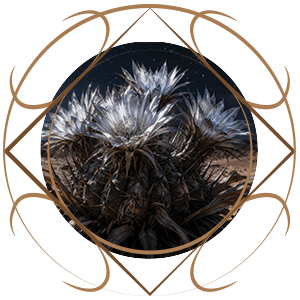
The Moon Cactus blooms only at night. Its silvery blossoms unfold beneath the cold light and close again before the sun can scorch them.
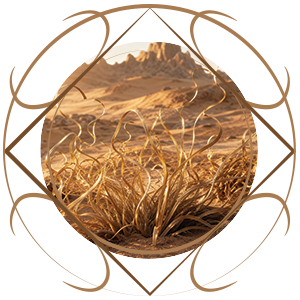
Serpentgrass grows thin, golden and twisting. Its sap is used in potions, poisons, salves and magical preparations.
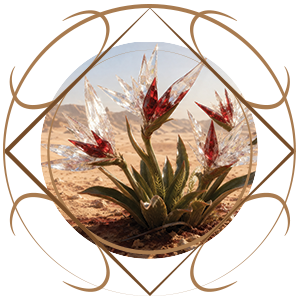
Crystal Blossoms flourish only in the presence of ancient energies. Their glasslike petals preserve faint magical resonances, revealing to the Santhress where ancient chambers or forgotten powers might lie buried beneath the sand.
Through its plants, Phanisses teaches the same lesson as through its desert:
Never reveal where you draw your water.
The Santhress do not revere plants as the High Elves do. They do not regard them as gentle kin, nor as sacred voices of a greater balance.
They read them as signs.
A plant that survives in Phanisses proves its worth. Not through beauty, but through adaptation. Not through openness, but through roots concealed beneath the earth.
The Moon Cactus is regarded as a symbol of truths that do not reveal themselves in the harsh glare of daylight. It blooms only when the sun has vanished, when the desert grows cool, when the stars and moon rise above the dunes and when the temples of Thissa rest in silver silence. Its fruits are rare and are often presented as offerings.
Serpentgrass is humbler, more practical and more dangerous. It twists even when the air is still, as though its slender blades carried memories within them. Its sap can numb, strengthen, purify or poison – depending on who prepares it and the purpose for which it is intended.
Crystal Blossoms are the most mysterious plants of Phanisses. They grow wherever ancient magic lies dormant beneath the sands. To priestesses and Keepers, they are clues. To alchemists, precious ingredients. To seeresses, omens. To outsiders, a beautiful mistake best left untouched.
These plants do not teach gentleness.
They teach patience.
Concealment.
Restraint.
Dangerous beauty.
And perhaps the darkest truth of Phanisses:
Not everything that lies hidden is dead.
Some things are merely waiting for the right hand to uncover them.

The creatures of Phanisses are more than mere inhabitants of the desert.
They are reflections of Sethira.
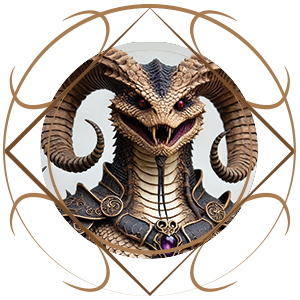
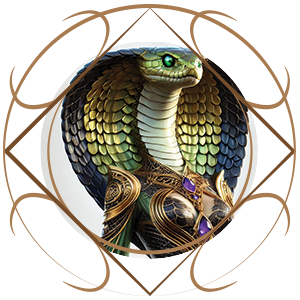
Above them all stand the Sand Vipers: enormous, silent, lurking beneath the sands, both revered and feared. They embody patience, venom, sudden strikes and absolute control over movement.
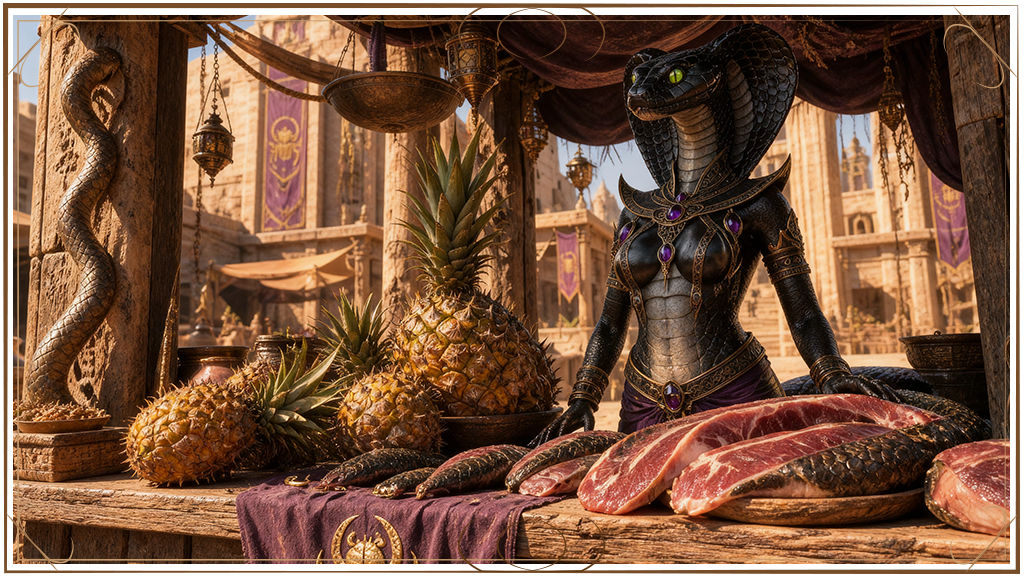
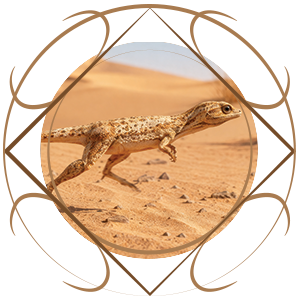
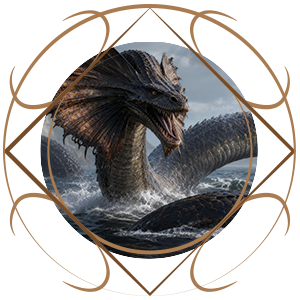
Dune Runners, swift desert lizards, teach the art of survival without the need for size or strength. Nightshade Bats dwell among ancient ruins, disorienting enemies with their piercing cries. Sea Serpents of the southern coasts provide resilient hides used in armor and rituals.
The Santhress do not love animals as companions.
They respect them as embodiments of deeper meaning.
A creature may be useful, sacred, dangerous, edible, worthy of sacrifice or a source of wisdom.
Sometimes all at once.
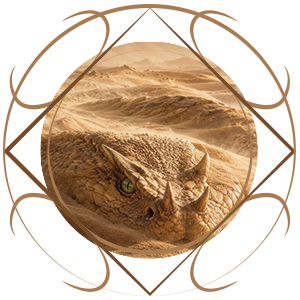
The Sand Viper is the most sacred creature of Phanisses.
Not because it is tame. Not because it serves the Santhress. But because it comes closest to embodying the very nature of their land. It waits beneath the surface, wastes no movement, strikes not out of anger and kills only when the moment is right.
Warriors learn from it.
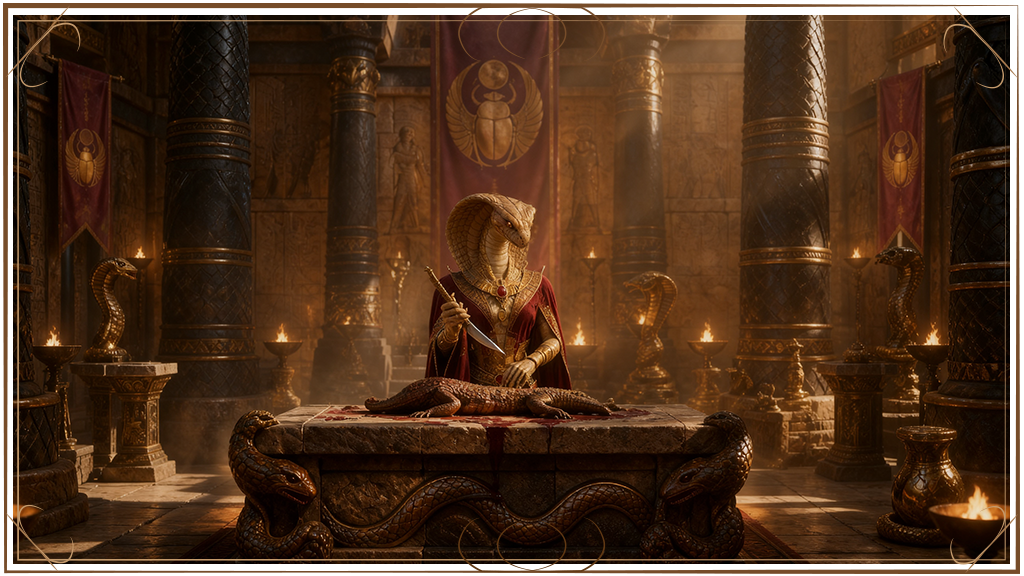
Priestesses commune with it through sacred rituals.
High Priestesses bear its symbol not as an ornament, but as a declaration of what is expected of them: Those who rule must know how to wait until their prey brings itself within reach.
Dune Runners offer a humbler lesson, though one no less valuable. They are swift, watchful and difficult to catch. Not every life worthy of respect is mighty. Sometimes dignity lies in instinct, in knowing when to flee and in surviving without grandeur.
Nightshade Bats are creatures of the ruins. Their cries can disorient wanderers and even warn the Santhress of ancient chambers. They are regarded as messengers of forgotten places – creatures that hear in the darkness what others see only when it is too late.
Sea Serpents remind the Santhress that Sethira’s body does not end where the desert meets the horizon. In the south, where Phanisses touches the sea, these creatures glide through dark currents. Their hides are used to craft armor, their movements inspire ceremonial dances and the depths they inhabit serve as a reminder that even water can be dangerous when left uncontrolled.
The creatures of Phanisses offer no comfort.
They teach.
Wait.
Conserve your strength.
Remain hidden.
Strike when the other still believes they have a choice.

The society of the Santhress rests upon three pillars:
Blood.
Sacrifice.
Control.
These three words are law, religion, upbringing, politics, magic, art, love and death all at once.
Blood is memory. It carries ancestry, oaths, guilt, power, prophecy, heritage and bonds. History is preserved within bloodlines. Magic is awakened through blood rituals. Names are immortalized within bloodstones.
Sacrifice is truth. To the Santhress, an oath without a price is nothing but empty air. Those who wish to serve Sethira must give: blood, pain, renunciation, control and sometimes life itself.
Control is survival. Control over the body, the voice, pain, knowledge, bloodlines, magic, fate and others.
A Santhress who loses control loses their dignity.
A Santhress who loves creates a vulnerability.
And that is precisely why love is more dangerous than hatred in Phanisses.
The Santhress possess no code of compassion. No doctrine of forgiveness. No gentle light that heals wounds simply because they have been brought into the open.
Their world asks different questions:
Which blood holds value?
Which sacrifice proves devotion?
What manner of control prevents destruction?
Who may live because their life serves the pattern?
Who must die so that the pattern may endure?
It sounds cruel.
And it is cruel.
Yet in Phanisses, cruelty is not considered a failing so long as it follows an established order. A needless sacrifice earns no admiration. It is regarded as waste. An outburst of rage is not strength, but disgrace. Crude violence belongs to the lesser ranks. A true Santhress wastes neither blood, nor movement, nor words.
This does not make them merciful.
It makes them more dangerous.
For their cruelty is not chaotic. It is ritualistic. It carries meaning. It has structure. And structure makes even horror more difficult to resist, for those who perpetrate it do not see themselves as murderers, but as custodians of an ancient law.
Yet every pillar casts a shadow.
Blood makes ancestry more important than life.
Sacrifice makes suffering more sacred than joy.
Control makes security more important than trust.
And so a people emerge who endure, yet scarcely ever rest.
A people who wield great power, yet are not free.
A people who seek eternity, while time and again forgetting why life was ever worth preserving.
In Phanisses, there is no king.
No crown.
No throne.
No rule by hereditary succession.
The Santhress know the High Priestess.
And she is more than a ruler.
She is the voice of Sethira.
So the doctrine declares.
Her word is law, her silence a judgment, her gaze a trial, her blood sacred. When she rises within the halls of Thissa, torsos bow, tails lower, voices fall silent and eyes turn downward.
Not because they all love her.
But because her very presence embodies the claim that Sethira herself speaks through her.
She is not simply born into her position. She is chosen – through bloodline, training, discipline, prophecy and the trial of blood magic known as Thiss’Khaa.
Those who fail die.
Or wish they had.
The reign of a High Priestess lasts fifty years. Long enough to shape a realm. Short enough to ensure that Phanisses never becomes entirely stagnant.
During this time, she decides matters of war and peace, rituals, crystals, bloodlines, sacrifices, trade, archives, prophecies and the interpretation of what Sethira is said to whisper.
Yet coiled around her is the High Temple Council.
Not as an openly opposing power.
But as a web.
The Khaa’Zan, Grand Sorceresses and Keepers of the Crystals, oversee blood magic, crystals, rituals, scrying pools, vessels of blood and dangerous incantations.
The Thiss’Kar, Enforcers and Shadow Warriors, carry out commands through poison, blade, sacrifice and disappearance.
The Raa’Santh, Keepers of Knowledge, guard the archives, bloodlines, prophecies and those truths that Phanisses itself might be unable to bear.
Alongside them stand Mistresses of Bloodlines, seeresses, alchemists, guardians of the brood chambers and secret circles, all claiming to serve Sethira – yet often struggling over interpretation, influence and the fate of the future.
To outsiders, Phanisses appears united.
One people.
One goddess.
One High Priestess.
One will.
Yet beneath its golden surface, factions coil and writhe: conservative blood priestesses who regard any act of leniency as betrayal; visionary reformers who seek to interpret Sethira’s voice more deeply or differently; and radical blood sorceresses who pursue eternity at any cost.
The High Priestess stands above them.
And between them.
Her greatest power is the belief that Sethira speaks through her.
Her greatest danger is that very same belief.
For when the goddess falls silent, someone must fill the silence.
With blood.
With prophecy.
With fear.
With lies.
With power.
Ss’Thariss is far more than a mere language – it is a whisper, a murmur that glides through the air like the silent passage of a serpent through the sand. It is not spoken, but breathed; not called aloud, but conveyed in a darkness as gentle as it is unsettling. Those who hear Ss’Thariss feel the touch of an unfamiliar will, a voice capable of soothing, seducing or consuming. It is said that the language itself is a form of magic – an art of manipulation, deception and seduction. Only those with a supple tongue and unwavering mastery over their breath can hope to command it in its truest form.
Ss’Thariss is a flowing current of sounds, gentle and fluid:
Soft Sibilants Dominate: “Ss”, “Th”, “Sh” and “Zhh” glide through the air like finely honed blades.
Long, Drawn-Out Vowels: Particularly “aa”, “ii” and “uu” are frequently prolonged to intensify meaning.
Seamless Transitions Between Syllables: Words are scarcely separated, as though they flow effortlessly into one another.
Intonation Changes Everything: The same phrase may become a threat or a tender promise depending entirely on its emphasis.
Whispered Tones and Gentle Breathy Sounds: Many Santhress speak softly and rhythmically, lending Ss’Thariss an almost hypnotic quality.
Examples of Sounds and Meanings:
“Sssaa’thariisshh” – “Sacred Words”, often used in magical incantations.
“Thzz’araa” – “Whisper of the Wind” or “Gentle Lie”.
“Ssh’vaa’rii” – “Dominion” or “Leadership”.
“Zhh’isssh’aal” – “Blood Magic” or “Power Through Sacrifice”.
“Sss’thaa’rraa” – “The Song of the Serpent”, a term used for sacred rituals and traditional tales.
Ss’Thariss follows a unique linguistic structure:
– Object – Verb – Subject: Unlike most languages, which typically begin with the subject, Ss’Thariss places the object first.
“Ssh’vaa’rii ssa’thaa’niss.” – “The priestess claims the throne.”
– Important Words Are Lengthened or Enriched with Additional Syllables to Emphasize Their Meaning.
“Thzz’araa” (Whisper) → “Thzz’aaaaa’raa” (A whisper that touches the soul).
– Possession Is Expressed Through Repetition.
“Sshaa’thar sshaa’rii.” – “The knowledge belongs to me.” (Literally: “Knowledge-knowledge mine.”)
– Emotions Are Intensified Through Additional Hissing Sounds.
“Ssshaa’vaaa’rii” – Enthusiasm or profound conviction.
“Thzhaa’rissshh!” – Anger or a threat.
Tenses:
– Past Tense: Marked by a double “Ss” at the beginning of the verb.
“Ss’thaa’rraa ssh’rii.” – “The serpent sang.”
– Present Tense: Remains unmarked.
“Thaa’rraa ssh’rii.” – “The serpent sings.”
– Future Tense: Introduced by “Zhh”.
“Zhh’thaa’rraa ssh’rii.” – “The serpent will sing.”
General Terms:
“Ssh’vaa’rii” – Dominion / Leadership.
“Thaa’rraa” – Serpent.
“Zhh’isssh” – Blood.
“Sss’thaa’niss” – Priestess.
“Thzz’araa” – Whisper.
“Ssh’thrii” – Spell.
“Shzz’raa” – Sacrificial Offering.
Common Phrases:
“Ssh’vaa’rii ssa’thaa’nisshh!” – “The priestess rules over you!”
“Thaa’rraa zhh’isssh’aal.” – “The serpent demands blood.”
“Zhh’isssh ssh’thrii shzz’raa!” – “The sacrifice is complete!”
“Ssshaa’vaaa’rii ssa’thaa’nisshh’rr.” – “The High Priestess speaks.”
Ss’Thariss is more than spoken words – the movements of the body are just as important as the sound of the voice.
Common Gestures:
A Slow, Circular Movement of the Tail → A sign of superiority and control.
A Gentle Swaying of the Head from Side to Side → Expresses agreement or goodwill.
A Sharp Hiss Without Words → A warning or expression of contempt.
A Soft, Prolonged “Ssss…” → A sign of deception or manipulation.
A Sudden, Jerking Withdrawal → Indicates surprise or distrust.
Linguistic nuances according to social standing:
Priestesses speak in long, flowing hisses, their words drawn out as though dissolving into the wind.
Warriors speak more briefly and directly, with fewer embellishments – their commands are sharp and swift.
Scholars and sorcerers often whisper, their words barely audible as they slip across their lips, as though each utterance were itself a spell.
To outsiders, these distinctions are almost imperceptible. To the Santhress, however, they are essential – a single misplaced sound can determine rank and respect.
The written form of Ss’Thariss resembles the trails left by a serpent in the sand:
Curved, S-shaped lines flow across stone or parchment.
Vertical strokes mark words of power, frequently used for terms such as “Priestess” or “Blood”.
Magical scriptures are written in silver or golden ink, adorned with serpentskin and sacred glyphs.
Ss’Thariss is no ordinary language – it is a whisper, a command, a seduction. It is difficult to master, for it relies upon soft, flowing sounds almost entirely devoid of harsh consonants. Intonation alters meaning and those who speak carelessly may unwittingly condemn themselves. Its writing is intricate, shaped in the likeness of a serpent’s movements. Only those who have lived among the Santhress for many years can hope to truly master their tongue.
Where other languages wield power through words, Ss’Thariss commands through the very sounds of its syllables, through gestures and through nuances so subtle they often pass unnoticed. It is a language not merely heard, but felt – a shadow that whispers, a song that seduces, an echo that never entirely fades.
| Word (Ss’Thariss) | Translation | Meaning |
|---|---|---|
| Ss’thaa’rraa | Serpent | The symbolic creature of the Santhress, revered as a divine being. |
| Zhh’isssh | Blood | The essence of life, often associated with magic and rituals. |
| Ssh’vaa’rii | Dominion | Control, power over others or mastery over fate. |
| Thzz’araa | Whisper | Secret communication, often associated with manipulation. |
| Sss’thaa’niss | Priestess | A woman of high standing within the religious hierarchy of the Santhress. |
| Ssh’thrii | Spell | Magic, particularly arcane incantations and rituals. |
| Shzz’raa | Sacrificial Offering | A living being or object offered as a sacrifice during a ritual. |
| Thzz’Raan | Gaze | An intense, penetrating gaze possessing hypnotic power. |
| Kha’Zerath | Wrath | Anger or ritual punishment among the Santhress. |
| Ss’Varran | Shadow | Secrecy, concealment or an unseen presence. |
| Zhh’Saarek | Moon | A symbol of night, transformation and hidden powers. |
| Ss’Darran | Claw | A symbol of attack, control or killing. |
| Rha’Thyss | Knowledge | The accumulated wisdom of the Santhress, often preserved in sacred glyphs. |
| Thzz’Korah | Night | A state of tranquility or concealed danger. |
| Ss’Varesh | Fire | A symbol of energy, magic and transformation. |
| Zhh’Thash | Poison | May refer to deadly substances or treacherous intrigues. |
| Ss’Thariss | Voice | A word or command imbued with power. |
| Khar’Issan | Shadowborn | An individual of dark origins or possessing hidden powers. |
| Ss’Nyxira | Future | Prophetic visions or the unfolding of destiny. |
| Thzz’Vashk | Silence | Symbolizes secret knowledge or concealed intentions. |
| Ss’Zarrith | Ritual | A sacred or magical rite practiced by the Santhress. |
| Rha’Zhann | Storm | Uncontrollable forces or the sudden emergence of danger. |
| Zhh’Kaaris | Bite | A direct attack or a sign of loyalty to the goddess. |
| Ss’Thaalek | Cobra | A powerful, dangerous presence or an embodiment of cunning. |
| Zhh’Malir | Traitor | One who acts against the Serpent Realm or its laws. |
| Ss’Miraa | Dancer | An individual who moves with exceptional grace and skill. |
| Kha’Dorran | The Relentless One | An unstoppable individual, often a warrior or priest. |
| Thzz’Rilaa | Ancestral Voice | A guardian of ancient knowledge and sacred rituals. |
| Ss’Shyra | Veil | Something that conceals or signifies hidden intentions. |
| English | Ss’Thariss |
|---|---|
| I | Ss’murr |
| You | Zhh’thurr |
| He/She/It | Ss’garr |
| We | Thzz’kurr |
| They | Ssh’tharr |
| This | Ss’brak |
| That | Zhh’drak |
| Who | Ss’gharr? |
| What | Thzz’throk? |
| Where | Ss’marrk? |
| Why | Zhh’zorr? |
| How | Ss’khuur? |
| Not | Ss’nurr |
| Yes | Ssh’urgh |
| No | Zhh’brukh |
| And | Ss’thrak |
| Or | Zhh’zrak |
| With | Ss’marr |
| For | Thzz’gorr |
| In | Ss’rukh |
| On | Zhh’thruk |
| A/An | Ss’grash |
| Good | Thzz’kraal |
| Bad | Ss’brath |
| Love | Zhh’varrk |
| Life | Ss’zurrk |
| Death | Zhh’drog |
| Time | Ss’harrk |
| To Eat | Ss’marr’khaar |
| To Drink | Thzz’ruk’marr |
| English Phrase | Ss’Thariss |
|---|---|
| Hello! | Ss’urgh! |
| How are you? | Ss’khuur zhh’thurr? |
| I am fine. | Ss’murr thzz’kraal. |
| Thank you! | Thzz’thorr! |
| Please. | Ss’rukh’tharr. |
| Excuse me! | Zhh’brukh’marr! |
| No problem. | Ss’nurr thzz’throk. |
| I don’t understand. | Ss’murr ss’nurr thzz’throk. |
| Can you repeat that? | Zhh’thurr marrk zhh’drak? |
| Where is …? | Ss’marrk …? |
| What time is it? | Ss’khuur harrk? |
| What are you doing? | Thzz’throk zhh’thurr? |
| I am hungry. | Ss’murr ss’marr’khaar. |
| I am thirsty. | Ss’murr thzz’ruk’marr. |
| I am tired. | Ss’murr ss’brath. |
| I love you. | Ss’murr zhh’varrk zhh’thurr. |
| Watch out! | Ss’thruk’gharr! |
| See you later! | Ss’harrk’tharr! |
| I don’t know. | Ss’murr ss’nurr thzz’throk. |
| Good luck! | Ss’drak’kraal! |
| Good night. | Ss’harrk’brukh. |
| Welcome! | Thzz’thorr’gharr! |
| I need help. | Ss’murr thzz’throk’brukh. |
| I am sorry. | Zhh’brukh’marr ss’murr. |
| Nice to meet you. | Ss’kraal zhh’thurr thzz’thorr. |
| What is your name? | Ss’khuur zhh’thurr marrk? |
| My name is … | Ss’murr zhh’gharr … |
| I come from … | Ss’murr zhh’marrk’urr … |
| I like that. | Ss’murr thzz’kraal zhh’drak. |
| I don’t like that. | Ss’murr ss’nurr thzz’kraal zhh’drak. |
The Santhress are a people whose language echoes the whispers of the sand, the hissing of serpents and the resonance of ancient magic. Their names embody the very essence of their culture – they are more than mere sounds. They are legacies, promises made to the serpent goddess Sethira and to the bloodlines of their ancestors. Santhress names are fluid and graceful, often woven with soft sibilants, elongated vowels and hypnotic patterns of sound that symbolize their connection to magic and the desert.
Every name carries a deeper meaning. Some reflect the nature of the desert, others the abilities of their bearers or the prophecies surrounding their birth. It is not uncommon for a Santhress to receive a second name during their lifetime – a mark of their ascension, their devotion or a sign bestowed by the goddess herself.
| Name | Gender | Translation | Meaning |
|---|---|---|---|
| Ss’Tharak | Male | Blade of the Desert | A warrior whose will is sharper than any weapon. |
| Zhh’Kaaris | Male | Shadowbite | A silent assassin who strikes like a viper. |
| Thzz’Raan | Male | Gaze of the Serpent | One who sees through deception and perceives hidden paths. |
| Ss’Vaashir | Male | Whispering Wind | A sorcerer whose words carry power. |
| Zil’Thaar | Male | Bloodborn | One whose birth was foretold by an omen or determined through ritual. |
| Rha’Zhann | Male | Stormcaller | One who defies fate and knows how to harness the elements. |
| Khar’Seth | Male | Chosen of Sethira | A consecrated servant of the goddess, blessed with her magic. |
| Ss’Thalith | Male | Desert Strider | A wanderer whose journeys leave no trace behind. |
| Zhh’Varik | Male | Soul of the Sandstorm | An unstoppable warrior who sweeps away his enemies. |
| Ss’Darran | Male | Claw of Fate | One who shapes the future with his own hands. |
| Thzz’Korah | Male | Nightglider | A shadow that moves silently through the darkness. |
| Ss’Thariss | Male | Voice of the Wind | A prophet or seer who communes with the spirits of the desert. |
| Kha’Zerath | Male | The Wrathful One | A warrior whose battle never ends. |
| Zhh’Thash | Male | Venomous Tongue | One whose words are as deadly as his weapons. |
| Ss’Malrik | Male | Bearer of Scars | A survivor who has endured countless trials. |
| Thzz’Raihn | Male | Golden Claw | A Santhress of great wealth or noble birth. |
| Zil’Varek | Male | Sand Wolf | A warrior who fights with cunning and strategy. |
| Khar’Issan | Male | Shadowborn | A child of the night, skilled in concealment and deception. |
| Ss’Zarrith | Male | Blood-Whispered | A sorcerer who knows the whispers of ancient rituals. |
| Rha’Thyss | Male | Keeper of the Scriptures | A scholar or guardian of ancient knowledge. |
| Zhh’Saarek | Male | Moonclaw | A fighter whose true strength emerges in darkness. |
| Ss’Varran | Male | The Unseen One | A master of concealment and silent death. |
| Kha’Dorran | Male | The Relentless One | A ruler or warrior who never yields. |
| Zil’Rhaash | Male | Wind Whisperer | A gentle yet penetrating spirit, often a diplomat or sorcerer. |
| Ss’Thaalek | Male | The Cobra | A warrior possessing deadly precision. |
| Zhh’Malir | Male | Betrayer of the Light | An outcast or one who dares to challenge fate. |
| Ss’Varesh | Male | Firebite | One whose passion burns as fiercely as his warrior spirit. |
| Rha’Kaaran | Male | The Ashborn | A survivor of catastrophe, forever marked by the past. |
| Thzz’Vashk | Male | Silent Threat | A strategist whose power lies not in his words, but in his actions. |
| Name | Gender | Translation | Meaning |
|---|---|---|---|
| Seth’Nara | Female | Daughter of the Goddess | A chosen one, destined to become a High Priestess. |
| Ss’Zhalaa | Female | Golden Flame | A woman whose influence grows ever more powerful and unstoppable. |
| Zhh’Nyssa | Female | Dancing Blade | A warrior whose movements possess deadly elegance. |
| Thzz’Rilaa | Female | Voice of the Ancestors | A guardian of ancient magic and prophecies. |
| Ss’Shyra | Female | Veil of Shadows | A mistress of concealment and cunning. |
| Zil’Thaya | Female | The Silent One | A guardian of a dark and dangerous secret. |
| Kha’Varis | Female | Whispering Venom | A Santhress whose words can kill as surely as steel. |
| Ss’Rheesa | Female | The Eternal One | A woman said to be untouched by the passage of time. |
| Zhh’Kaari | Female | Bearer of Fate | One whose deeds echo through generations. |
| Thzz’Vaasha | Female | Voice of the Sands | A sorceress who communes with the spirits of the desert. |
| Ss’Miraa | Female | Dancer of Shadows | An assassin or mistress of graceful movement. |
| Rha’Thyssa | Female | The Gilded One | A woman of immeasurable value to her people. |
| Kha’Nyxira | Female | Guardian of the Future | A seeress or prophetess. |
| Ss’Varess | Female | The Soundless One | A mistress of manipulation. |
| Zhh’Thysha | Female | Desert Blossom | One who flourishes even in the harshest conditions. |
To the Santhress, a name is far more than a designation – it is a prophecy, a reflection of the soul, a calling from the ancestors. Those who bear a name bear power. Some change their names as they grow, as their place in society shifts or when the goddess herself calls upon them.
And so their names whisper upon the desert winds, eternal and undying, like the legacy of their bloodlines.
The Santhress do not shape metal merely into weapons.
They shape meaning.
Their art of smithing is an alchemical fusion of magic, symbolism and deadly precision. Every blade, every suit of armor, every artifact is at once a tool, a mark of rank, a ritual object and a tribute to Sethira.
In Phanisses, metal is more than ore given shape.
It is a vessel for power.
Gilded steel serves as a symbol of rank and an amplifier of ritual magic. Serpent Silver is light, flexible and ideally suited for delicate, flowing weapons. Violet crystals store energy. Dune Crystals lend certain artifacts an almost living quality, as though the sand itself carried memories within them.
Before the creation of particularly significant works, a sacrifice is made.
Not always a life.
Sometimes blood.
Sometimes a wound.
Sometimes an oath.
Sometimes an ancient name.
For a blade destined to wield power must first know the price.

In Glyphsmithing, every creation is adorned with intricate magical engravings capable of strengthening protective enchantments, curses, healing magic or offensive spells. Through Sand Hardening, the Santhress use scorching desert sand instead of water to temper their metals. In the forging of Moon-Imbued Alloys, weapons are crafted beneath specific lunar phases, allowing them to retain hidden magical energies.
Their weapons are both deadly and beautiful.
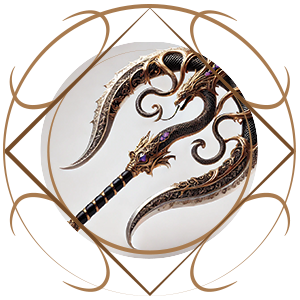
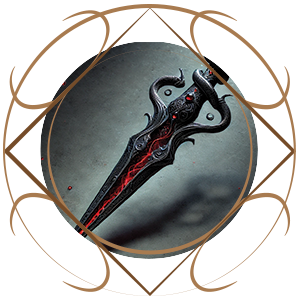
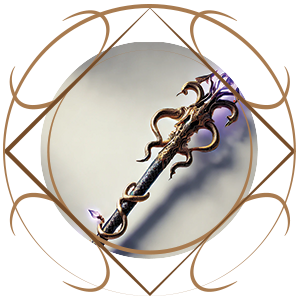
Spears of gilded steel and violet crystals can unleash clouds of poison or channel currents of magical energy. Scimitars bear serpentine engravings that refract light into hypnotic patterns. Ritual daggers serve equally in battle and upon the altar. The crystal staffs of the High Priestesses channel blood magic and the power of foresight.
Santhress armor is lightweight, flexible and magnificent. Golden scale armor, crafted from hardened Sand Viper hide and magically reinforced metal, offers protection without hindering the fluid movements of their serpentine bodies. Helmets are often fashioned in the likeness of serpent heads, adorned with gemstones that gleam within their eye sockets.
Jewelry is never merely jewelry.
Rings, necklaces, bracelets and chains adorning their tails signify rank, bloodline, protective enchantments, curses and guilt.
An outsider sees decadence.
A Santhress reads order.
Gold is power.
Violet is hidden magic.
Dark red is blood.
Black is shadow.
Bronze and dark green belong to hunters, assassins and those who become one with the desert.
Too much gold without the rank to justify it is arrogance.
The wrong shade of violet is blasphemy.
A broken serpent symbol is treason.
In Phanisses, clothing is not an expression of individuality.
It is a hierarchy made visible.
Those who dress incorrectly lie with their very bodies.
And deception without artistry is merely foolishness.
The Santhress do not fight with brute force.
They do not charge into battle with roaring battle cries, seek open exchanges of blows or celebrate rage as a sign of strength.
To them, combat is a dance.
A ritual of control, deception and merciless efficiency.
Their movements resemble the silent passage of a serpent through the sand: always deliberate, always guided by perfect timing, always waiting to strike when the enemy least expects it.
Their martial arts follow three fundamental principles:
Deception surpasses strength.
Speed overcomes resistance.
Magic is an extension of the body.
An opponent should not be defeated when they are prepared.
They should be maneuvered until their readiness no longer matters.
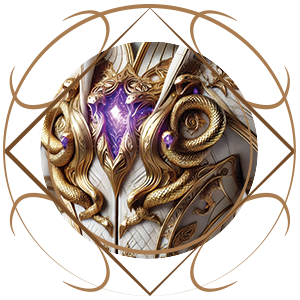
The Santhress favor lightweight, curved blades, ritual daggers, throwing knives and slender, venom-tipped spears. Scimitars sweep in arcs that mirror the movements of their serpentine bodies. Daggers vanish within sleeves, chains or bracers. Spears keep opponents at a distance until venom, curses or relentless movement begin to weaken them.
The Dance of Blades, Zhh’Vaari, is an art of elegance and precision. Whirling movements create openings, curved blades strike where armor offers no protection and every attack seems part of a greater, continuous motion.
The Dance of Shadows employs concealment, illusion and silent approach. A Santhress who masters this style strikes only when their target has already lost any real chance to react.
The Dance of Blood combines combat with blood magic. A single drop of one’s own blood can heighten speed. A cursed sigil inscribed upon a blade can drain an enemy’s life force. A hypnotic movement can hold an opponent captive for one breath too long.
And one breath is enough.
Santhress battle magic is subtle. They rarely unleash devastating firestorms or blinding bolts of lightning. Such crude displays of power are considered inelegant, wasteful and tactically foolish. Their magic works through the body, venom, movement, illusion, blood, voice and the perfect moment.
A Santhress does not seek to appear stronger than their enemy.
They seek to place their enemy in a position where strength no longer matters.
And so seasoned warriors do not fear the Santhress because of their size.
They fear them because of their patience.

To the Santhress, magic is not a light bestowed through grace.
It is not a current into which one gratefully places one’s hands. Nor is it the harmony of the world entrusting itself to an open heart.
Magic is a pact.
An incision.
A price.
A whisper from the depths that answers when blood is spilled – or falls silent when the sacrifice proves insufficient.
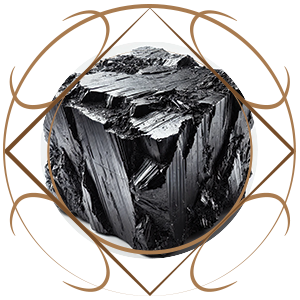
Phanisses possesses crystals, though only a few. Violet crystals store and channel magical energy. Dune Crystals amplify blood magic in unpredictable ways. Some crystals lie dormant within sealed chambers beneath Thissa, brought forth only for the grandest rituals.
A crystal can channel magic.
Blood can nourish it.
A crystal can shine.
Blood can force it to shine once more.
Yet every spell carries the same truth:
Whatever is meant to wield power must first be paid for.
The magic of the Santhress follows three great paths:
Blood Magic.
Divination Magic.
Curses and Manipulation.
These paths are not entirely separate. They coil around one another like three serpents entwined about the same altar.
Blood Magic is the power of sacrifice. It transforms life, pain, wounds, bloodlines and devotion into tangible power. It strengthens crystals, binds oaths, heals at a price, prolongs life, enables rituals and nourishes the altars of Sethira.
Divination Magic is the art of gazing into time, blood and memory. It reads the past from traces of blood, the future from sacrificial basins and omens from the colors of scales, sandstorms, stars, the reactions of crystals and dreams. It grants the Santhress the sense that they need not merely endure fate, but can coil themselves around it.
Curse and Manipulation Magic is the whisper of the serpent. It bends thoughts, weakens enemies, binds descendants to ancient guilt, seduces hearts, breaks wills, ensnares spirits and transforms a word, a name or a single drop of blood into a noose.
Healing, too, exists in Phanisses.
Yet it differs profoundly from that of Lohiras.
Lohiras heals to restore dignity to life.
Phanisses heals when a life still holds value.
A high-ranking warrior, a priestess, an important brood-bearer, a seeress, a valuable slave before a ritual, an artisan possessing rare knowledge – all may receive astonishing forms of treatment.
Yet none of it comes without a price.
A wound may be closed by sacrificing one’s own blood, transferring the blood of another, placing a burden upon a crystal or recording a debt to be collected at a later time. Some healings leave marks upon the skin like scars. Some bind the healed to the healer. Others save the body, yet alter the dreams of the one who survives.
A Santhress healer does not first ask:
Do you wish to be healed?
She is more likely to ask:
To whom does your continued life belong?
The culture of the Santhress is one of sound, movement, gold, blood, glyphs and carefully controlled beauty.
Their language is called Ss’Thariss.
It is not merely spoken. It is breathed, hissed, drawn out and deliberately shaped. It slips from the mouth like a serpent gliding across warm stone: quiet enough not to be perceived as an attack, gentle enough to nestle into a stranger’s ear and precise enough to leave a wound before the mind even realizes it has been struck.
Other peoples possess languages to communicate their thoughts.
The Santhress possess a language to shape the thoughts of others.
Music, too, is more than an art form in Phanisses.
It is control.
A rhythm can guide the breath.
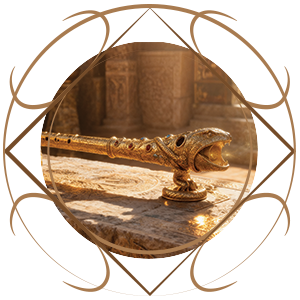
A flute can open the mind.
A dance can take the place of an incantation.
An entire hall can fall into a trance without a single sword being drawn.
Ss’Thariss is at once a mark of rank, a ritual form, an art of deception, a conduit for magic, a weapon of the court, a threat, a seduction and a prayer to Sethira.
Those who have not mastered Ss’Thariss betray themselves.
A sound too harsh reveals impatience.
A breath too brief betrays uncertainty.
A misplaced hiss exposes lowly origins.
An unintended elongation reveals fear.
A break in the breath betrays weakness.
Thus, the Santhress do not learn this language merely with tongue and mind.
They learn it with their entire bodies.
With chest, throat, teeth, tongue, gaze, tail, posture, breath and silence.
For Ss’Thariss is control made audible.
Their music, too, follows no human structure. It coils like a serpent, flowing and encircling, slowly gathering strength until it holds the listener captive.
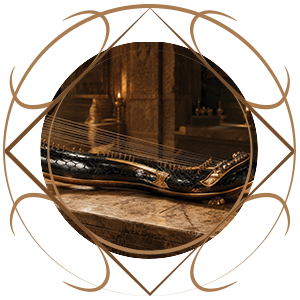
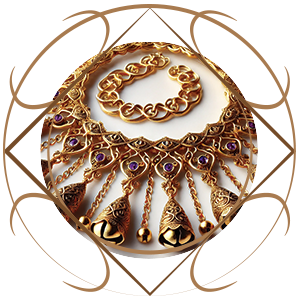
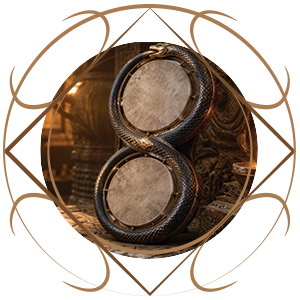
Golden flutes, known as Thiss’Kra, send breathlike notes drifting through the air. Serpent zithers, Zalithara, produce trembling tones that resonate through mind and body. Chains of bells, Ssath’Dril, accompany every movement of high-ranking dancers. Dune harps, Seth’Nai, create deep tones that can be felt throughout the body. Serpent drums, Niss’Tara, beat monotonous rhythms that guide heartbeat and breath.
The Serpent Dance is more than movement.
It is prayer.
Incantation.
Language.
Rank.
Seduction.
Dominion.
Every coil, every lowering of the body, every rising movement, every chime of golden chains may form part of a ritual sentence. Some sacred texts are not spoken in their entirety, but danced. A movement may signify an ancient incantation. A circle, a bloodline. A spiral, a future yet to unfold. A sudden stillness, a demand for sacrifice.
Outsiders see a dance.
The Santhress read a liturgy.
And thus arises the terrible beauty that permeates Phanisses: golden symmetry, flowing curves, serpentine reliefs, dark altars, violet crystals, crimson light, black shadows, flawless movements and hypnotic music.
Beauty in Phanisses offers no comfort.
It demands.

Sethira loves the Santhress.
Of this, they have no doubt.
But her love is not human, nor gentle, nor comforting. It is cruel, divinely alien and so deeply entwined with power that other peoples would scarcely recognize it as love at all.
Sethira does not preserve by protecting.
She preserves by testing.
She does not offer comfort by taking suffering away.
She exalts those who transform suffering into power.
To the Santhress, this is not cruelty. It is the purity of divine will. Sethira wastes nothing: no blood, no pain, no weakness, no life. Everything holds value when it enters the circle of sacrifice. Everything can become power when offered in the proper way.
Yet Sethira’s love knows no mercy.
She does not allow her people to grow soft.
She demands that they never again become weak enough to be wiped from existence.
In the art of Phanisses, Sethira appears as an immense, serpentine figure whose lower body disappears into endless coils. Her scales gleam like molten rubies, her upper body possesses an otherworldly beauty and her eyes glow a deep crimson, as though the very heart of the world were beating within them.
Her sacred symbol is a serpent coiled into a ring around a single drop of blood: the eternal bond between power and sacrifice.
Within her temples, black altars stand beneath ruby-red light. Bloodstones smolder within the walls. Serpentine pillars coil upward toward the ceilings. Violet crystals pulse whenever sacrifices are offered. Golden glyphs tell of salvation, the Bloodstorm, divine selection and those names that Sethira’s realm is said never to forget.
The Santhress do not pray as other peoples do.
They cut.
They offer.
They dance.
They whisper.
They prove their devotion.
For in Phanisses, it is held:
Faith that demands no sacrifice is not true faith.
To the Santhress, death is not merely an end. A worthy name may be engraved in bloodstone. A sacrificed soul may continue to whisper within Sethira’s Shadow Realm. A High Priestess may endure beyond her mortal body through ritual, memory and prophecy.
The deepest longing of the Santhress is eternity.
Not happiness.
Not peace.
Not healing.
Eternity.
They refuse to fade as other peoples do. They cannot bear the thought of their bloodlines being severed, their rituals coming to an end, their scales growing old, their High Priestesses being forgotten or their sacrifices having been in vain.
Yet eternity comes at a price.
Those who seek to endure forever must decide what shall be sacrificed so that something may remain.
Bodies.
Blood.
Love.
Freedom.
Children.
Enemies.
Truth.
Perhaps, one day, everything that made existence worth preserving.
And therein lies the greatest tragedy of the Santhress:
They struggle so fiercely against oblivion that, piece by piece, they preserve their very souls within the altars of sacrifice.
And beneath all the gold, beneath every ritual, beneath every bloodline and every prophecy, lies the one fear that no sacrifice has ever managed to silence entirely:
What if Sethira falls silent one day?