Lohiras is a land of light.
So say the pilgrims when they behold the white towers of the Circle for the first time. So say the sick when, after weeks of fever, they open their eyes and feel the morning light falling through tall windows upon their faces. So say the paladins when they lower their blades before battle because an enemy has repented.
Yet this light was not born of innocence.
Lohiras emerged from an age of chaos – a time when power spoke louder than truth, lies governed kingdoms, oaths were broken, knowledge was sold, healing was denied and faith was twisted into a tool of those who ruled.
From this wound arose its greatest resolve:
Never again would power alone stand above justice.
Never again would truth fall silent because a throne, an army or a name carried greater weight.
Never again would healing be the privilege of the wealthy, the strong or the influential.
Thus, Lohiras became a realm without a crown.
A realm devoted to the light because it had once witnessed how dark the human heart could become when no one was forced to confront their own reflection.
The people of Lohiras do not revere truth because they wish to pass cold judgment. They revere truth because without it, healing cannot begin.
A body cannot be healed while its wounds remain hidden. Guilt cannot be absolved while it is denied. Hatred cannot fade while it mistakes itself for justice. A realm cannot remain pure while its leaders conceal their failures behind sacred words.
Yet within this very belief lies the danger of Lohiras.
For truth can become a blade when spoken without mercy. Light can blind when it no longer offers warmth. Healing can become an act of control when the healer ceases to ask and begins only to command.
That is why Lohiras holds to a saying taught alike in temples, schools, healing halls and paladin academies:
Mercy without truth is weakness.
Truth without mercy is cruelty.
Lohiras is at its greatest when it holds fast to both.
Truth and warmth.
Clarity and compassion.
Judgment and the path to redemption.
Duty and heart.
Its greatest moments are not victories over enemies.
They are the sick who awaken once more.
The family that finally lets go of hatred.
The child who reads their first verse.
The paladin who lowers their sword.
The guilty soul who finds the path back through penance.
Lohiras says:
Only that which stands in the light can be healed.
Yet if it is to remain truly great, it must remind itself, time and again:
Not everything that stands in shadow is lost.
Some things are merely waiting for the light to come, not as judgment.
But as warmth.
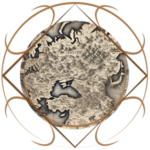
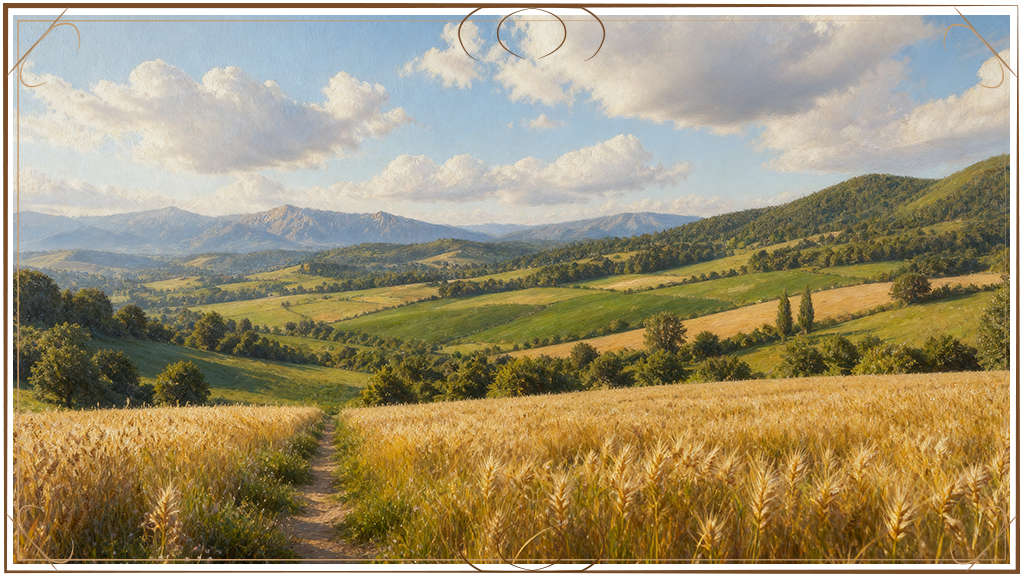
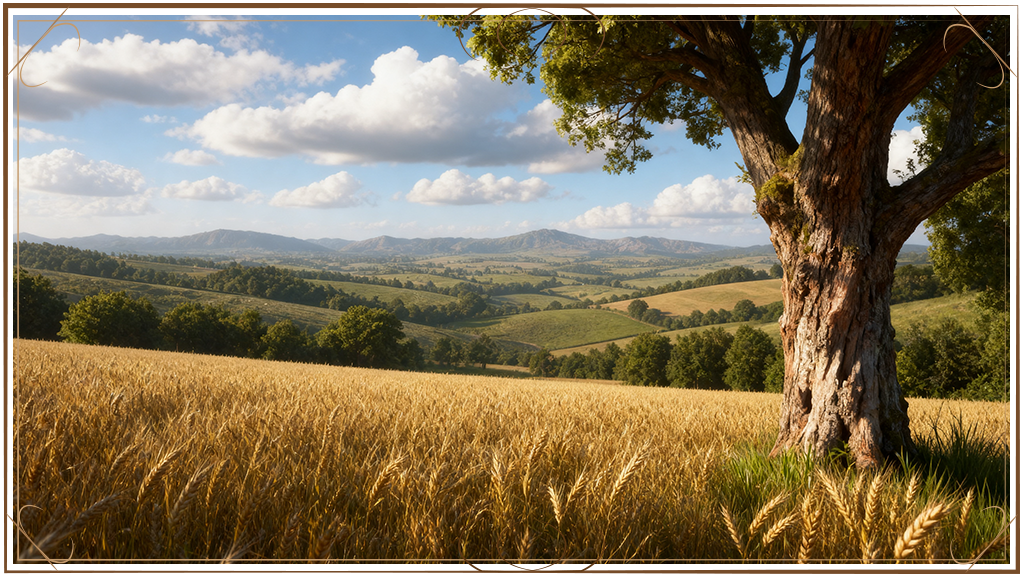
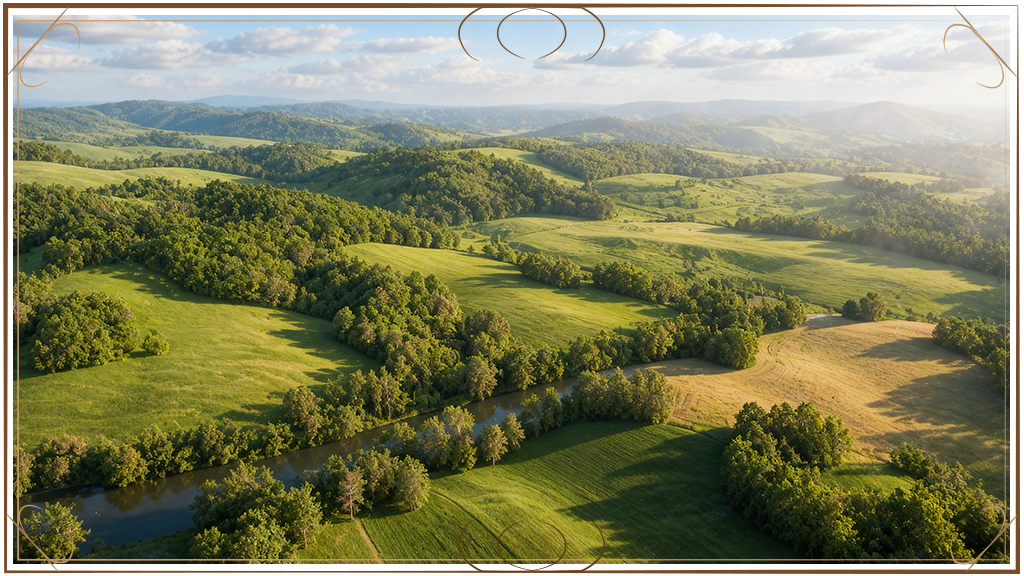
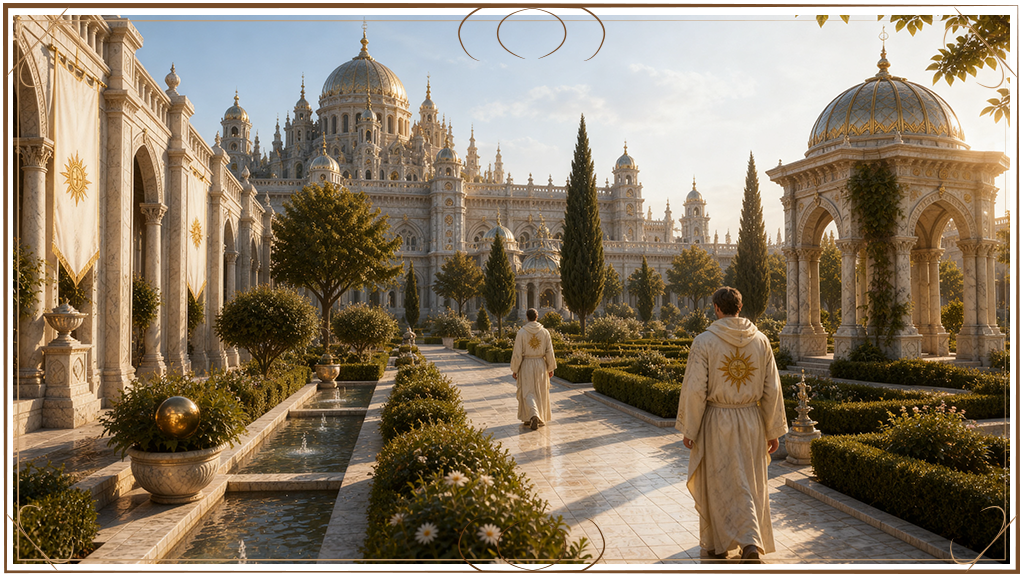
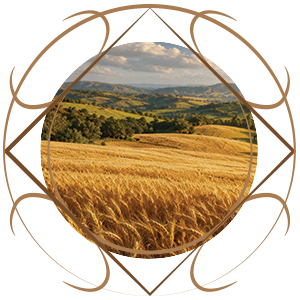
At first glance, Lohiras seems like a land that has never learned to fear. Gentle hills stretch beneath vast skies. Fields of wheat sway in the wind like golden prayers. Small forests bathed in sunlight lie scattered among villages, temple paths and crystal-clear streams.
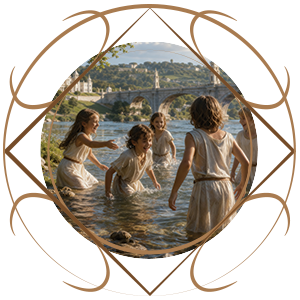
The Candrian River winds through the land like a silver lifeline. It nourishes fields, healing gardens, monastery courtyards, villages and pilgrim sanctuaries. Where its waters flow close to the white stone of the Circle, even the light itself seems to grow more tranquil.
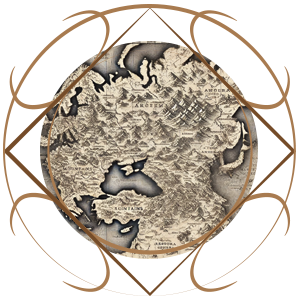
To the north rise the rugged peaks of the Lhanes Mountains. To the east lies Ghârdyran, the great grain-producing power. To the southwest begins the Hyrathelar Desert, a constant reminder to Lohiras that water must never be taken for granted.
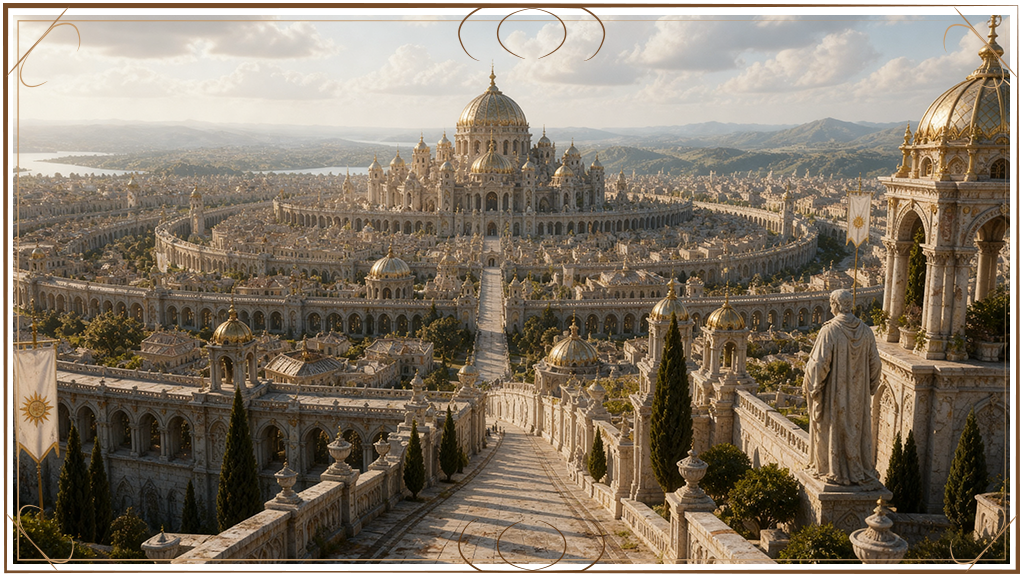
And to the south rises the Circle.
Not as a fortress of dominion.
Not as the palace of a crowned ruler.
But as an answer carved from white stone.
To Lohiras, the Candrian is more than water.
It is a symbol.
Water purifies, yet does not command. It finds its way without losing its nature. It reflects the light without being light itself. It carries life onward, so long as it is neither dammed, poisoned, nor abused.
That is why the Candrian holds a central place in rituals, healing ceremonies, weddings, blessings of newborn children and funerals. Children are anointed with its waters. Hands are cleansed before sacred vows are spoken. The sick drink consecrated drops, not because water alone can work miracles, but because it is meant to remind the body that healing, too, must flow.
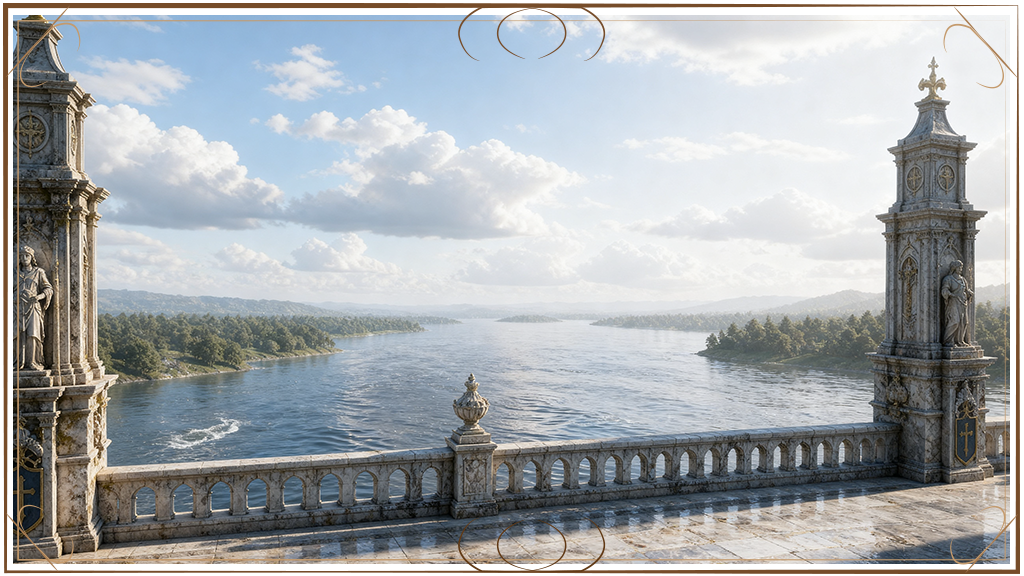
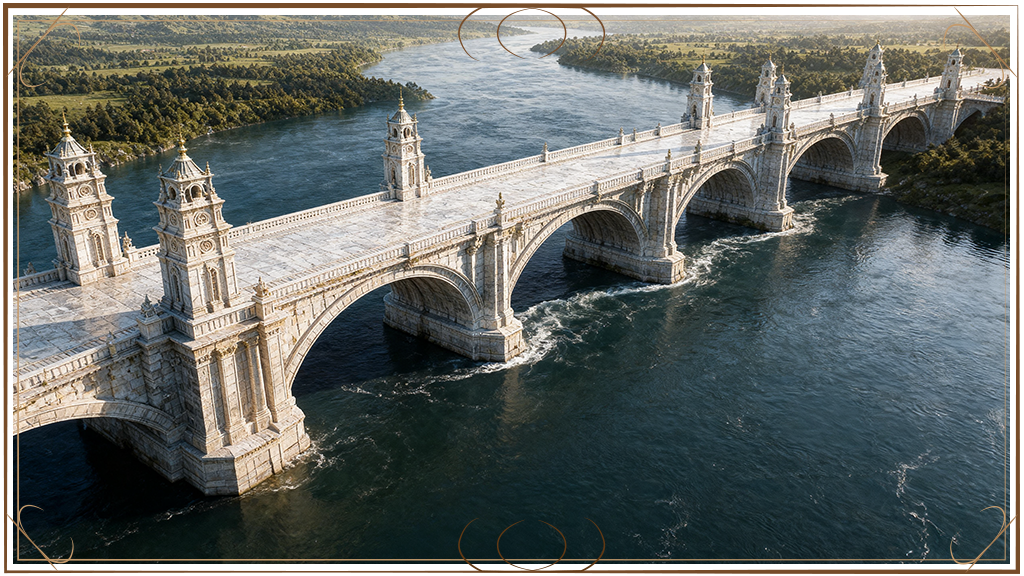
Across the Candrian stretches the Pantiras Bridge, one of the great symbols of Lohiras. Built of white marble, elegant and gracefully sweeping, it blends so perfectly with the river’s course that it seems not an act of humanity’s dominion over nature, but a vow between stone and water.
It connects more than two shores.
Across it pass merchants, paladins, pilgrims, the sick, scholars, messengers, refugees, diplomats, doubters and those who do not yet know whether they seek forgiveness or judgment.
The Pantiras Bridge is no bastion.
It is a promise.
It embodies what Lohiras aspires to be: not a wall, but a passage. Not a boundary that divides, but a threshold that tests those who cross it.
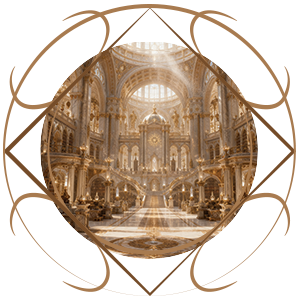
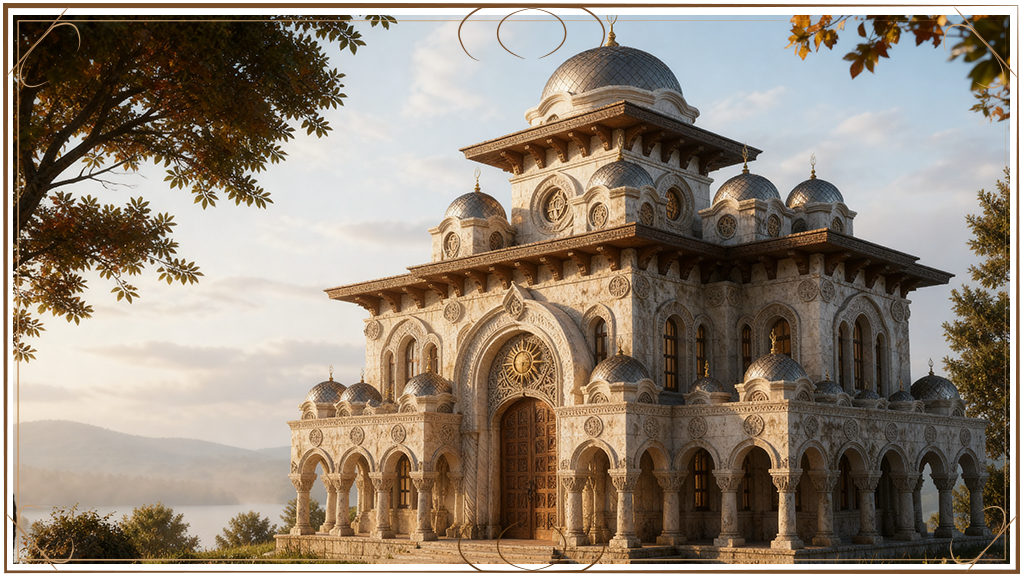
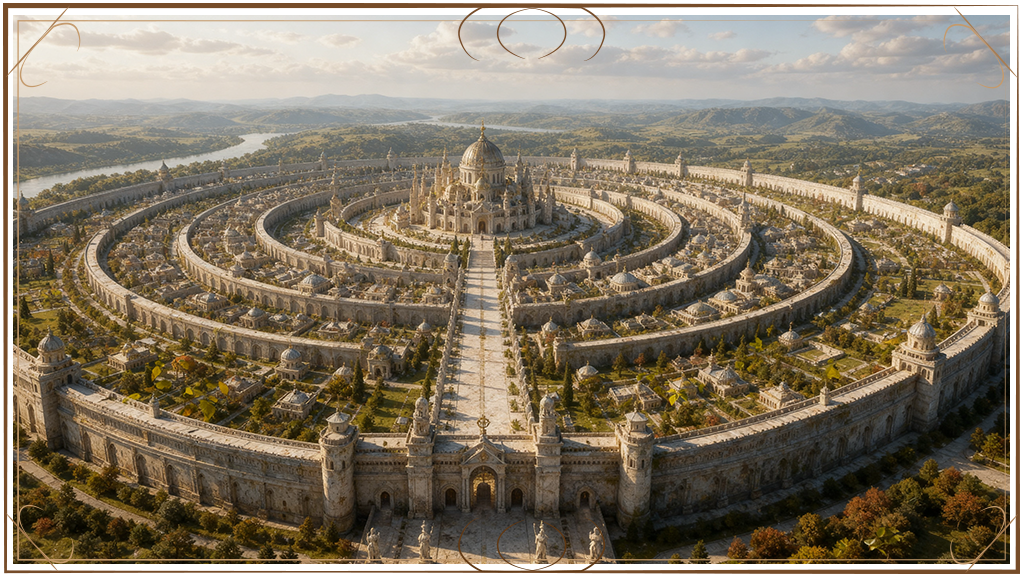
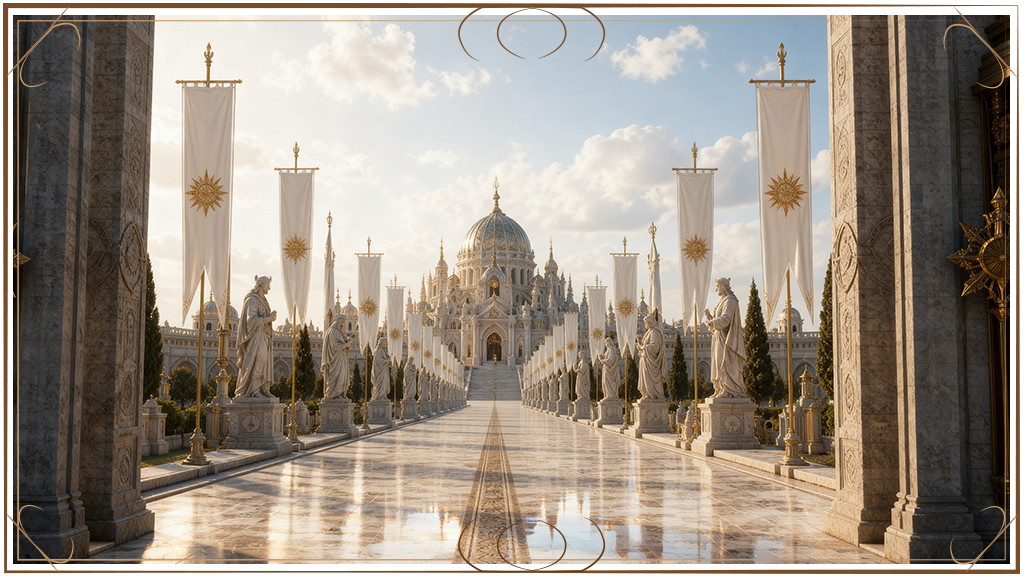
The Circle itself is the heart of this land. Its towers rise toward the heavens, yet not like threatening spears. They resemble fingers of stone reaching to touch the light. Within its halls, paladins are trained, the sick are healed, disputing voices are heard, ancient writings are preserved and the great decisions of the land are made.
Here, Lohiras reminds itself, time and again, why it exists:
Not to rule.
Not to conquer.
Not to force other peoples beneath its light.
But to preserve a place where truth carries greater weight than power.
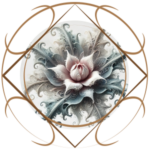
The plants of Lohiras are more than mere vegetation. They are symbols.
Not because every blade of grass holds a miracle, but because its people have learned to see a question in every living thing: What carries the light? What brings healing? What preserves memory? What teaches restraint?
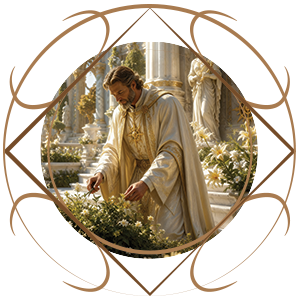
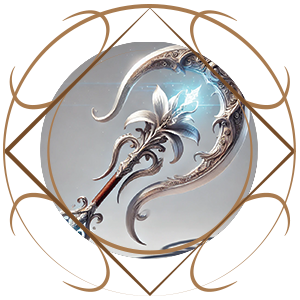
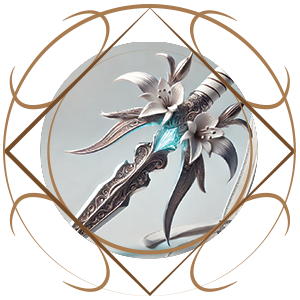
Light Lilies grow along the Candrian, at the edges of fields and in the tranquil gardens of the Circle. By day, they appear delicate and almost unremarkable. Yet when night falls, they begin to glow faintly – not with dazzling brilliance, but like a quiet promise.
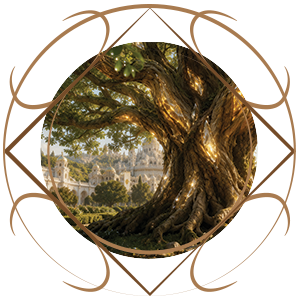
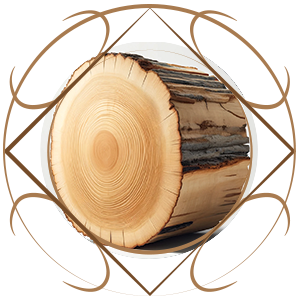
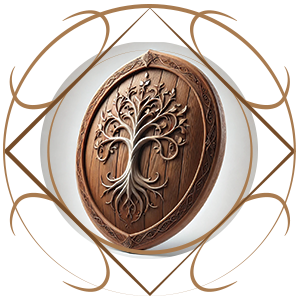
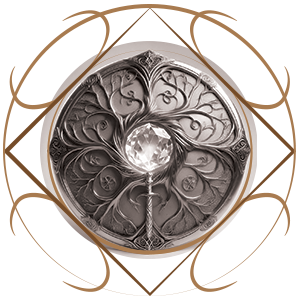
Near the Circle grows the sacred Circle Tree. Its roots reach deep into the earth, its crown spreads wide and veins of crystal shimmer among its branches, as though light itself had sought refuge within its wood.
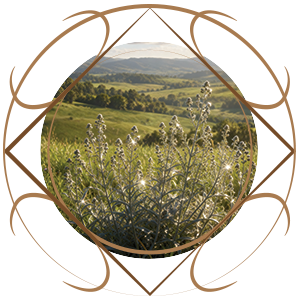
Across the meadows thrives Myrtlewort, an unassuming, silvery herb, yet one possessing remarkable healing properties.
Thus, the flora of Lohiras teaches:
Not every miracle shines brightly.
Some heal in silence.
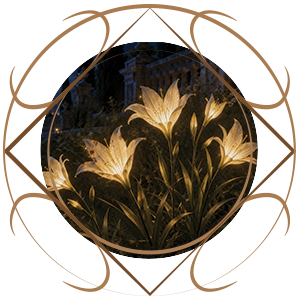
The Light Lily is one of the most profoundly human symbols of Lohiras.
It is not strong like a tree. Not useful like wheat. Not rare enough to seem precious. Yet it glows when the world grows dark.
It is used in blessings of newborn children. In healing rituals. In ceremonies of reconciliation. At the bedsides of the gravely ill. Its blossoms are placed in bowls of water, woven into wreaths, embroidered upon garments or pressed between the pages of prayer books.
Many soul healers use it as a symbol:
One need not be the sun to stand against the night.
Sometimes, it is enough simply not to fade.
The Circle Tree offers a different lesson. It is never felled, never pruned without prayer and its wood is used only in the rarest of sacred circumstances. Its leaves are regarded as symbols of wisdom – not because they bestow knowledge like some magical elixir, but because they remind those who behold them that true understanding must grow.
Slowly.
Deeply rooted.
Reaching toward the light, yet born of the earth.
This matters.
For Lohiras is forever in danger of revering the light so deeply that it forgets the earth beneath it.
The Circle Tree unites both.
No light without roots.
No heights without depths.
No wisdom without patience.
Myrtlewort, finally, represents the quiet work of healing. It does not shine like the Light Lilies. It does not tower like the Circle Tree. It does not feed villages like wheat. And yet, it is among the most precious gifts the land has to offer.
Its leaves are used to prepare salves, teas, tinctures and soothing poultices. It eases inflammation, strengthens weakened bodies and is burned during rituals of spiritual healing, for its fragrance is believed to bring clarity to the mind and soul.
Myrtlewort reminds Lohiras:
Healing does not always take place within grand halls.
Sometimes, it is an elderly healer crushing herbs at precisely the right moment.

The animals of Lohiras are not regarded as possessions, but as free-spirited symbols of the land.
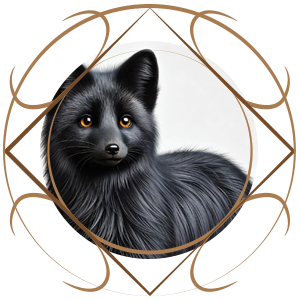
Golden Foxes are considered bearers of good fortune. Their fur shimmers warmly in the sunlight and countless tales speak of wanderers who followed such a creature and found their way out of mist, forest or the depths of their own despair.
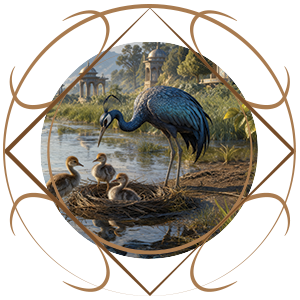
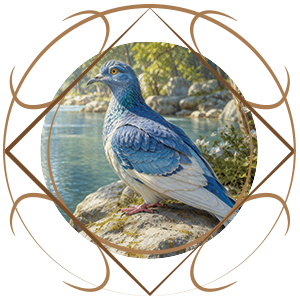
Candrian Cranes nest along the river. Their graceful movements and their stillness between water and reflection make them sacred birds of patience.
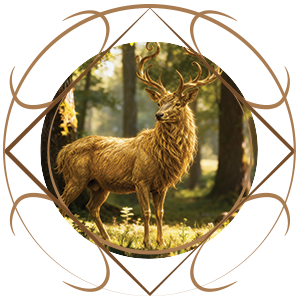
Shepherd Stags roam the fields, meadows and sunlit woodlands. They are regarded as symbols of peace and prosperity.
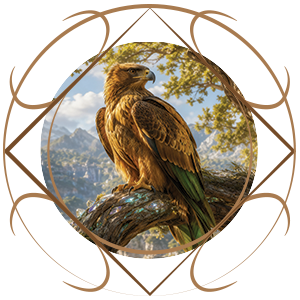
Healing Falcons nest upon the soaring towers of the Circle and among the rocky ledges near the Lhanes Mountains. Their circling flight above the white halls is considered a sign of protection.
These creatures are not tame.
And that matters.
Lohiras does not revere them because it possesses them.
But because they live freely in the light.
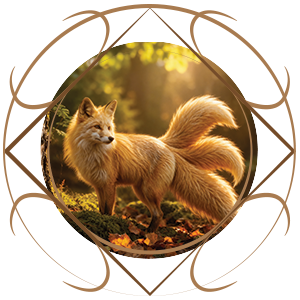
In Lohiras, the Golden Fox is a symbol of gentle guidance. It forces no one to follow. It appears, vanishes, perhaps waits at the edge of a forest and leaves each person to decide for themselves whether to continue onward.
Many soul healers cherish this image.
For healing, too, does not lead through force. It reveals a path. But the wounded must walk it themselves.
The Candrian Crane teaches patience. Those who watch it standing motionless in shallow waters may come to understand a truth Lohiras often needs to remember: Not every movement is progress. Sometimes, waiting in stillness is not weakness, but a gathering of strength. Yet when the crane takes flight, it does so with purpose and clarity.
Shepherd Stags are considered a blessing upon the fields. A land where gentle creatures can wander across meadows without fear has not yet fallen entirely into corruption. Thus, they are respected, never hunted merely for pride.
The Healing Falcon, by contrast, embodies watchful clarity. It is a bird of prey, certainly. Yet Lohiras sees in it not cruelty, but protection born of vigilance and far-reaching sight. Its flight above the Circle serves as a reminder that peace must never be blind.
The animals of Lohiras are not obedient symbols.
And therein lies their dignity.
They reveal that the light need not possess something for it to hold meaning.
Lohiras is not built upon walls, swords, gold or bloodlines. It rests upon four pillars:
Truth.
Healing.
Mercy.
Duty.
These four forces shape its laws, prayers, schools, families, paladins, judges, healers, festivals, language and the very gaze with which a person of Lohiras examines themselves before passing judgment upon others.
Truth is the foundation.
Healing is the longing.
Mercy is the greatest trial.
Duty is the force that transforms all into action.
Yet none of these pillars is without danger.
Truth can liberate – but it can also wound.
Healing can save – but it can also become a means of control.
Mercy can lead the fallen home – but it can also diminish the weight of guilt.
Duty can provide strength – but it can also suffocate the heart beneath its burden.
Thus, Lohiras is not great merely because it holds noble ideals.
It is great when it keeps them in balance.
The people of Lohiras wish to be good.
Not merely good in appearance. Not simply kind. But truly, profoundly good. They seek to act with righteousness, acknowledge guilt, protect the weak, settle disputes, preserve knowledge, heal the sick, stand against darkness and serve the light without elevating themselves above others.
It is a lofty aspiration.
And that is precisely why they are often solemn.
Sometimes too solemn.
They examine their words. They weigh their decisions. They fear tarnishing the light. They fear that the Circle may judge wrongly. That dark magic may corrupt their crystals. That truth may be twisted for political gain. That healing may fail. That they themselves may become judges without compassion.
This fear is not merely weakness.
It is awareness.
A people who no longer fear their own self-righteousness are already lost.
Yet the high ideals of Lohiras can also become a heavy burden. A child may come to believe they are loved only when they are without fault. A paladin may feel ashamed for knowing fear. A mother may carry guilt because she cannot regard her child as a pure blessing every single day. A healer may break beneath the weight of being unable to save everyone.
Duty without healing becomes coldness.
And so Lohiras must learn, time and again:
A person is more than their duty.
Luxarion did not create the dawn alone.
He created the evening, too.
For rest, too, belongs to the order of light.
Lohiras has no king.
No crown.
No hereditary throne.
No prince whose bloodline determines the fate of the land.
No sword that rules alone.
This is no coincidence.
It is the very origin of Lohiras given political form. The Circle arose in the aftermath of an age of chaos, when the people of this land had witnessed what happens when power is placed above truth.
And so they chose no throne.
They created a circle.
The High Circle consists of twelve brothers of the Order, twelve voices, twelve individuals who are meant to govern not because they possess power – but because they must be the least willing to yield to it.
They decide matters of justice, resources, trade, diplomacy, paladins, crystals, doctrine and the great questions that shape the land.
Yet a judgment issued by the Circle is more than an act of governance.
It is a declaration made in the name of the light.
And a false declaration made in the name of the light casts a long shadow.
Every twelve years, the seats of the High Circle are either filled anew or their occupants reaffirmed. The election is rigorous, anonymous and accompanied by rituals of purification. Those who pursue a seat too eagerly invite suspicion. Those who desire power may reveal precisely why they should not be entrusted with it.
Thus, Lohiras speaks of governance without ambition.
Whether it is truly always free of ambition is another matter entirely.
Officially, the High Circle recognizes no political factions. In reality, different schools of thought exist.
The conservative voices fear that excessive leniency will dilute the purity of the light. They emphasize purity, firm boundaries, the protection of the crystals, strict paths of penance and vigilance against dark magic.
They are not evil.
Many are driven by genuine concern.
Then there are the voices of compassion. They emphasize healing, redemption, wounds of the soul, the danger of judgment without empathy and the possibility that Luxarion’s light may reach farther than mortal fear allows people to believe.
Nor are they naïve.
At least, not the wisest among them.
Between these opposing currents, the Circle struggles to find its way. And within that struggle lies its vitality. So long as they recognize their need for one another, the Circle remains strong. But when one side ceases to regard the other as a voice of the light and begins to see it instead as a threat, the circle begins to fracture.
The common people of Lohiras trust the Circle.
Most of the time.
Yet there is a vast distance between being heard and having a voice in the decisions that govern one’s life. A farmer may lodge a complaint, make a plea or bear witness – but the decisions belong to others.
And therein lies a subtle fracture.
If truth is to stand above power, then the truth spoken by ordinary people must carry weight as well.
Not merely the truth spoken by the consecrated.
“The Language of Knowledge and Unity”
Liréth, the language of the people of Lohiras, is far more than a mere means of communication – it is a symbol of peace, diplomacy and wisdom. Originally derived from Vélyan, the language of Nendalin, Liréth evolved through centuries of cultural exchange with the High Elves, dwarves and other peoples into a universal language of the Circle. It preserves the elegance and structure of its origins while remaining adaptable enough to build bridges between different cultures.
The Circle, a sanctuary of scholars and a place of pilgrimage for seekers from every corner of Argenon, has shaped a language over the centuries that serves as common ground not only for the people of Lohiras, but also for diplomats, healers and brothers of the Order. It was developed not merely to preserve knowledge, but to foster mutual understanding – an expression of the belief that true harmony arises from communication and insight.
Distinctive Sounds & Characteristics:
Soft Consonants – “L”, “V”, “Th”, “S” and “M” dominate the language, lending it a flowing, melodic quality.
Harmonized Vowels – “É”, “Aê”, “Uo” and “Δ are widely used to create pronunciation that is both clear and gentle.
Flowing Syllables – Sentences follow rhythmic patterns, making them easy to understand and pleasant to speak.
Softened Pronunciation of Harsh Sounds – “K”, “G” and “D” occur less frequently and are pronounced with a softer articulation.
Loanwords from Other Languages – Terms from Vélyan, High Elven and the dwarven tongue are often adopted when no direct equivalent exists.
Examples of Pronunciation and Meaning:
“Liréth” – “Language of Knowledge” (the name of the language itself)
“Valéon” – “Gathering of Voices” (a term for council assemblies and diplomatic meetings)
“Solûn” – “Understanding That Unites All”
“Séraviel” – “An Open Heart for All Peoples”
“Athuér” – “Harmony in Words”
“Thirian” – “Listener of Wisdom” (an honorary title bestowed upon translators or scholars of language)
As Liréth is derived from Vélyan, it shares a similar grammatical structure, though it has been simplified to encourage clarity, accessibility and adaptability.
Sentence Structure:
The basic sentence structure follows Subject – Verb – Object, ensuring clarity in communication.
“Je sérath valéon.” → “I hear the assembly.”
Adjectives may appear either before or after a noun, allowing different nuances to be emphasized.
“Lûma sérath.” → “The gentle voice.”
“Sérath lûma.” → “An exceptionally gentle voice.”
Past and Future Tenses:
Past Tense: Formed using “é-” or “an-“.
“Éthar séraviel.” → “I spoke with an open heart.”
Present Tense: Unmarked.
“Thar séraviel.” → “I speak with an open heart.”
Future Tense: Formed using “tha-” or “al-“.
“Tha’thar séraviel.” → “I shall speak with an open heart.”
Plural Formation:
“-éa” or “-iel” for softer, more melodic terms.
“Sérath” (voice) → “Sérathéa” (voices).
“-in” or “-un” for general terms.
“Thirian” (translator) → “Thirianun” (translators).
Cases & Prepositions:
“en” → Possession or belonging (“The wisdom of the people.” → “Solûn en Valéon.”)
“va” → Direction or reference (“I travel to Lohiras.” → “Je vá Lohiras.”)
“aë” → Purpose or intended meaning (“A word for truth.” → “Liréth aë Solûn.”)
General Terms:
“Liréth” – Language of Knowledge
“Valéon” – Gathering of Voices
“Solûn” – Understanding, Wisdom
“Séraviel” – An Open Heart for All Peoples
“Athuér” – Harmony in Words
“Thirian” – Translator, Scholar of Languages
Common Phrases:
“Séraviel en liréth.” → “An open heart speaks with wisdom.”
“Athuér va Valéon.” → “Harmony within the assembly.”
“Éthar va solûn, an’thar liréth.” → “I heard wisdom and so I shall speak.”
“Je vá Lohiras, liréth sérath.” → “I travel to Lohiras; the language speaks.”
Characteristics of the Writing System:
Based on the calligraphic elegance of Vélyan, yet simplified to improve readability and understanding.
Flowing, curved lines reminiscent of the Candrian River, combined with clear and structured forms.
Influences from dwarven runes and elven ornamentation, reflecting the richness of cultural exchange.
Often used in dual-language inscriptions, with texts written in both Liréth and another language to encourage mutual understanding.
A gentle yet precise language that unites clarity with elegance.
A flexible sentence structure that preserves the grace of Vélyan.
The integration of loanwords to encourage understanding between cultures.
A calligraphic yet functional writing system that reflects the richness of cultural exchange.
| Word (Liréth) | Translation | Meaning |
|---|---|---|
| Liréth | Language of Knowledge | The name of the language spoken by the people of Lohiras. |
| Valéon | Gathering of Voices | A term for council assemblies and diplomatic meetings. |
| Solûn | Understanding / Wisdom | Symbolizes profound knowledge and insight. |
| Séraviel | An Open Heart for All Peoples | An expression of hospitality and diplomacy. |
| Athuér | Harmony in Words | The principle of mutual understanding and peace. |
| Thirian | Listener of Wisdom | An honorary title for translators or scholars of language. |
| Althéris | Light of Renewal | A term for spiritual renewal and purification. |
| Celuván | Protection of the Spirit | A symbol of the teachings of the Circle. |
| Elysar | The Radiant One | A designation for enlightened scholars or healers. |
| Miréon | The Whisper of Truth | Symbolizes wisdom that is gentle yet powerful. |
| Tiriel | Voice of the Heavens | Used for preachers or spiritual teachers. |
| Zendariel | Keeper of Balance | A term for a wise individual who preserves harmony. |
| Thalmaris | Light of Knowledge | A title for those who spread wisdom and understanding. |
| Caelion | Son of Light | A spiritual leader or scholar. |
| Fendrel | Keeper of the Scriptures | A guardian of the ancient knowledge of the Circle. |
| Seraphis | The Burning Messenger | Symbolizes divine purpose and devotion. |
| Evandor | The Peacemaker | Used for diplomats and mediators. |
| Hadrian | Scholar of the Circle | A name associated with sages and philosophers. |
| Siranos | Wanderer of Faith | A term for pilgrims and spiritual teachers. |
| Leomar | Knight of the Sun | A name associated with paladins and defenders of the light. |
| Aurelian | The Radiant One | A name symbolizing divine power of light. |
| Solara | Sun of Faith | A female leader or spiritual guide. |
| Lysandra | Guardian of Healing | Used for female healers or priestesses. |
| Celisara | Bearer of the Stars | A wise woman with a profound spiritual connection. |
| Althea | The Healer | A name for priestesses or herbalists. |
| Isadora | The Knowing One | A name for female scholars and teachers. |
| Naelith | Seer of Light | A wise seeress of the Circle. |
| Miriel | The Radiant One | A name symbolizing holiness. |
| Evadriel | The Benevolent One | A name for gentle and wise women. |
| Ferelith | The Eternal One | Symbolizes immortality through faith. |
| English | Liréth |
|---|---|
| I | Je |
| You | Tu |
| He/She/It | Il/Elle |
| We | Nous |
| They | Ils/Elles |
| This | Cela |
| That | Celui |
| Who | Qui? |
| What | Quoi? |
| Where | Où? |
| Why | Pourquoi? |
| How | Comment? |
| Not | Pas |
| Yes | Oui |
| No | Non |
| And | Et |
| Or | Ou |
| With | Avec |
| For | Pour |
| In | Dans |
| On | Sur |
| A/An | Un/Une |
| Good | Bon/Belle |
| Bad | Mauvais |
| Love | Amour |
| Life | Vie |
| Death | Mort |
| Time | Temps |
| To Eat | Manger |
| To Drink | Boire |
| English Phrase | Liréth |
|---|---|
| Hello! | Bonjour! |
| How are you? | Comment vas-tu? |
| I am fine. | Je vais bien. |
| Thank you! | Merci! |
| Please. | S’il vous plaît. |
| Excuse me! | Pardon! |
| No problem. | Pas de problème. |
| I don’t understand. | Je ne comprends pas. |
| Can you repeat that? | Peux-tu répéter? |
| Where is …? | Où est …? |
| What time is it? | Quelle heure est-il? |
| What are you doing? | Que fais-tu? |
| I am hungry. | J’ai faim. |
| I am thirsty. | J’ai soif. |
| I am tired. | Je suis fatigué(e). |
| I love you. | Je t’aime. |
| Watch out! | Fais attention! |
| See you later! | À plus tard! |
| I don’t know. | Je ne sais pas. |
| Good luck! | Bonne chance! |
| Good night. | Bonne nuit! |
| Welcome! | Bienvenue! |
| I need help. | J’ai besoin d’aide. |
| I am sorry. | Je suis désolé(e). |
| Nice to meet you. | Enchanté(e) de te rencontrer. |
| What is your name? | Comment t’appelles-tu? |
| My name is … | Je m’appelle … |
| I come from … | Je viens de … |
| I like that. | J’aime ça. |
| I don’t like that. | Je n’aime pas ça. |
Liréth is the language of peace and wisdom – a bond woven not through blood, but through words.
The people of Lohiras bear names deeply rooted in their faith, culture and the spiritual traditions of the Circle. Their names often possess a gentle, melodic quality, incorporating elements that evoke light, wisdom and purity. Many names end in soft sounds such as -ar, -iel, -on or -is, reflecting the harmony of their language.
Male names often express strength, leadership and divine protection, while female names symbolize gentleness, wisdom and light. Some names originate from the ancient scrolls of the Circle and carry profound spiritual meanings.
| Name | Gender | Meaning | Symbolism |
|---|---|---|---|
| Aurelian | Male | The Radiant One | A name symbolizing the divine power of light. |
| Seraphis | Male | The Burning Messenger | Inspired by the sacred flames of the Circle. |
| Valerius | Male | The Strong One of the Light | A name uniting strength and protection through faith. |
| Luthair | Male | The Eternal Guardian | Represents steadfastness and a profound sense of duty. |
| Thalmaris | Male | Light of Knowledge | A scholarly name signifying wisdom and enlightenment. |
| Elionas | Male | Blessed by the Light | A symbol of purity and divine guidance. |
| Damariel | Male | Voice of the Heavens | A name associated with preachers and spiritual teachers. |
| Lucanor | Male | Bringer of Light | Inspired by the divine mission to drive away darkness. |
| Iskander | Male | The Unshakable | A warrior’s name representing loyalty and courage. |
| Ephrion | Male | The Guardian’s Shield | A name emphasizing the protection of the innocent. |
| Siranos | Male | Wanderer of Faith | For those who leave the Circle to spread its teachings throughout the world. |
| Vorian | Male | The Chosen One | Symbolizes destiny and a divine calling. |
| Lorian | Male | The Golden One | An expression of divine radiance. |
| Zenaris | Male | Arrow of Light | A name for an unerring archer or warrior. |
| Athalon | Male | The Radiant Guardian | A name bestowed upon the guardians of the Circle. |
| Thalorian | Male | The Pure of Heart | A name emphasizing spiritual purity. |
| Tirian | Male | Herald of the Light | Associated with preachers and emissaries of the Circle. |
| Caelmir | Male | The One Who Mirrors the Heavens | A name for scholars and high priests. |
| Eldaniel | Male | Messenger of Wisdom | Represents truth and knowledge. |
| Galahad | Male | The Righteous One | A name embodying honor and strength. |
| Fendrel | Male | Keeper of the Scriptures | A guardian of the ancient knowledge of the Circle. |
| Samandor | Male | Spirit of Fire | A name for passionate yet honorable souls. |
| Veradin | Male | The Steadfast One | A name for those whose faith remains unshaken. |
| Cendoran | Male | Bringer of Light | A symbol of wise and enlightened leadership. |
| Hadrian | Male | Scholar of the Circle | Represents wisdom and knowledge. |
| Leomar | Male | Knight of the Sun | A name associated with paladins and defenders of the light. |
| Orlian | Male | Messenger of Light | A gentle yet deeply meaningful name. |
| Belerian | Male | The Consecrated One | A name for those who are faithfully devoted to the Circle. |
| Zenovar | Male | The Unwavering Paladin | A name for steadfast and resolute warriors. |
| Caldorin | Male | Defender of the Sacred | Symbolizes the protection of the Circle. |
| Name | Gender | Meaning | Symbolism |
|---|---|---|---|
| Seraphina | Female | The Burning Flame | Represents spiritual passion and devotion. |
| Lirielle | Female | She Who Sings of the Light | A tribute to the sacred songs of the Circle. |
| Althea | Female | The Healer | A name associated with healers and priestesses. |
| Thalysia | Female | The Luminous One | An expression of both inner and outer beauty. |
| Elysara | Female | The Heavenly One | A name for spiritual leaders. |
| Valaria | Female | The Divine Protector | A name for female warriors of the Circle. |
| Celisara | Female | Bearer of the Stars | Symbolizes wisdom and enlightenment. |
| Aurelia | Female | The Golden One | Represents purity and nobility. |
| Solara | Female | Sun of Faith | A name for revered and exalted female leaders. |
| Rhiannon | Female | The Lightwalker | A name for seeresses and priestesses. |
| Tiriel | Female | The Righteous One | A symbol of truth and fairness. |
| Isadora | Female | The Knowing One | A name associated with female scholars and teachers. |
| Elaria | Female | Guardian of Peace | An expression of tranquility and wisdom. |
| Miriel | Female | The Radiant One | A name symbolizing holiness. |
| Selendra | Female | The Sacred Flower | Represents the connection between nature and the divine. |
| Lysandra | Female | Guardian of Healing | A name for female healers and herbalists. |
| Elvanna | Female | Voice of the Heavens | Associated with female preachers and singers. |
| Zeraphia | Female | The Pure Flame | A name for those who spread the light. |
| Caeliana | Female | The Celestial One | An expression of divine guidance. |
| Luthiel | Female | The Silent Guardian | A name for wise women of the Circle. |
| Ferelith | Female | The Eternal One | Symbolizes immortality through faith. |
| Evadriel | Female | The Benevolent One | A name for gentle and compassionate souls. |
| Naelith | Female | Seer of Light | Associated with the wise seeresses of the Circle. |
The names of the people of Lohiras reflect the profound spiritual depth of their culture. Male names emphasize protection, wisdom and leadership, while female names symbolize purity, healing and light. Many names incorporate elements of divine radiance and sacred devotion, carrying within them the history and philosophy of the Circle.
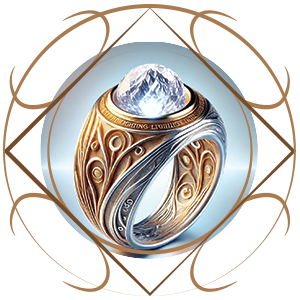
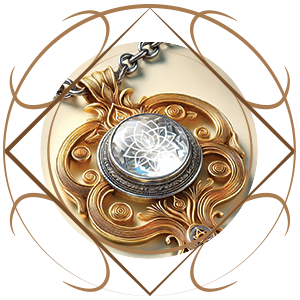
A sword is never merely a sword. A shield is never merely a shield. A stained-glass window is more than decoration. A book is more than parchment. A ring is more than an ornament. A garment is more than cloth.
Every object fashioned by Lohiran hands carries a question within it:
What purpose do you serve?
In Lohiras, craftsmanship is born of the belief that matter itself can bear the light. Not because stone, steel, glass or gold are inherently sacred, but because the hand that shapes them dedicates itself to a greater purpose.
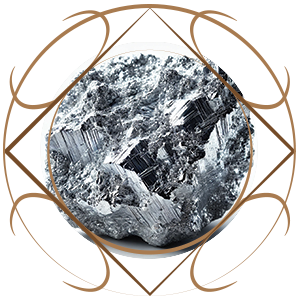
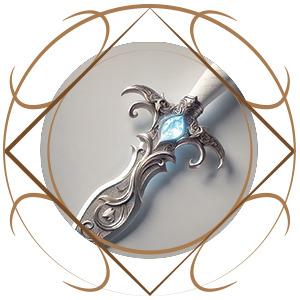
Lightsteel is among the most renowned materials of Lohiras: shimmering silver, lightweight, resilient and capable of absorbing and reflecting light as though a tranquil dawn rested within its depths.
A work of lightsteel must do more than endure.
It must be worthy of bearing a blessing.
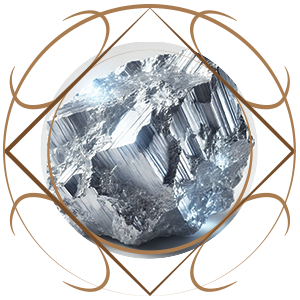
In Lohiras, craftsmanship often begins in silence. Before undertaking an important work, the master artisan speaks a brief prayer:
May this serve before it shines.
Within these words lies much of the spirit of Lohiras.
An object may be beautiful. Beauty is not despised. Yet beauty must never become hollow. A gleaming sword wielded out of vanity is worth less than a simple blade raised in defense of the helpless.
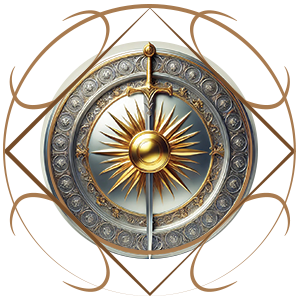
Lightsteel is used to forge paladin blades, shields, armor and sacred insignia. Silver represents clarity, protection and purity of spirit. Gold symbolizes Luxarion’s radiance rather than worldly wealth, yet Lohiras must remain vigilant, for gold has always spoken the language of power as well.
Precious metal does not sanctify the hand.
The hand must dedicate itself to the purpose the metal is meant to serve.
Glass, too, holds a revered place among the great arts of Lohiras. Within the white halls of the Circle, vast windows scatter sunlight into gold, blue, silver and warm white. Mosaics tell stories of healing, penance, truth, the building of bridges, lowered swords and the first rays of Luxarion’s light.
A stained-glass window is not mere decoration.
It is a teaching written in light.
Yet even art can blind. A window may be so beautiful that a poor man standing before it forgets to voice his grievances. A temple may appear so flawless that a guilty soul comes to believe there is no place for them within its walls.
That is why every creation of Lohiras must serve the light.
Never seek to replace it.
And so the most important question a master artisan must ask is not:
Is it perfect?
But rather:
Does it serve the truth?
Does it serve healing?
Does it serve mercy?
Does it serve duty?
Or does it serve only the desire to appear pure?
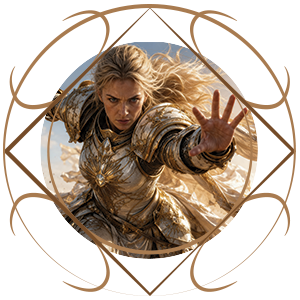
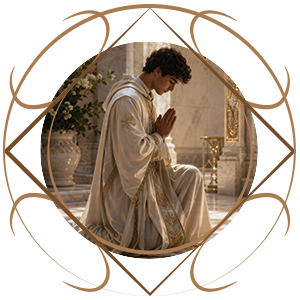
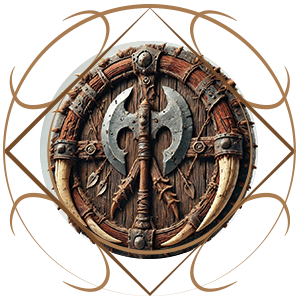
The paladins of Lohiras carry swords, lightsteel armor, blessed shields, sacred runes and crystals embedded in their blades and breastplates.
Yet none of these is the true measure of their worth.
Not the blade.
Not the shield.
Not the radiance.
Not the number of enemies they have slain.
The true measure of a paladin lies in a single moment that, to many warriors, scarcely resembles glory:
When they lower their sword.
Not out of fear.
Not out of weakness.
Not because they shy away from battle.
But because they recognize that an enemy has repented, that a life may yet be redeemed and that justice need not demand blood merely because blood would be so easily spilled.
In Lohiras, it is said:
True strength lies not in the sword, but in the hand that lowers it.
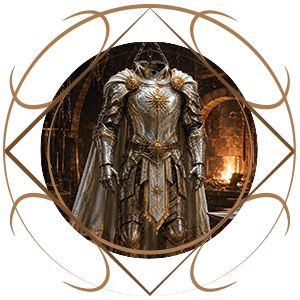
The paladins exist so that the light may have room to work. They protect roads, temples, crystal sanctuaries, pilgrims, healers, diplomatic delegations, border settlements and those who suffer beneath the weight of violence. Their sword is meant to be their last resort. Their shield, their first act of service.
Their fighting styles reflect this very spirit.
Lux Ferio, the Style of the Sunblade, is the art of precise clarity. No strike should be wasted. No movement should exist merely for show. No blow should be born of anger. A blade wielded in Lux Ferio should move like a ray of sunlight: direct, unwavering and striking only where it must.
Custodia Lux, the Style of the Eternal Shield, is the art of defense. A shield wielded in Custodia Lux is more than a means of protection. It is a declaration.
Here, your reach ends.
Here stands someone between you and the defenseless.
Here, violence shall go no further.
Veritas Ultima, the Style of Radiant Mercy, is the most difficult and perhaps the most distinctly Lohiran of all fighting styles. It is not designed to kill an enemy, but to end the threat without needlessly destroying the one who poses it: to disarm, incapacitate, subdue, sever a dark bond or grant an opponent the chance to surrender.
Many outsiders mistake this style for weakness.
They are wrong.
It is easier to kill a person than to bring them under control without breaking them.
Yet even paladins can fall.
Not only through death.
But through self-righteousness. Through holy wrath. Through blind duty. Through truth without mercy. Through protection twisted into control.
And so their greatest trial is not the enemy standing before them.
But the judge within.
A true paladin is not one who never doubts.
But one who brings their doubts into the light.
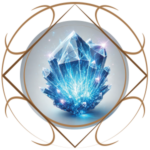
To the people of Lohiras, magic is not a power to be seized in order to rise above others.
It is a gift entrusted to their care.
A light that does not belong to them, yet may work through them. A prayer given form. A protection that arises where duty and purity meet. A healing that begins where truth is no longer concealed.
Lohiras possesses vast deposits of sacred crystals, shimmering in pale white, light blue and violet, capable of absorbing, storing, amplifying and channeling Luxarion’s light.
A small healing crystal can close a wound. A protective crystal can raise a barrier around a temple. A shard set in lightsteel can strengthen a paladin’s shield against dark magic.
Yet every crystal is vulnerable.
It does not absorb light alone.
It can also be corrupted.
And this is what Lohiras fears above all else:
That something meant to heal might itself become diseased.
No crystal in Lohiras is ever used without consecration. It is cleansed in the waters of the Candrian, bathed in the morning light, tested through prayer and dedicated to a sacred purpose.
The first question is not:
How powerful is this crystal?
But rather:
What purpose may it serve?
Healing.
Protection.
Ritual.
Paladin armor.
Temple barriers.
Preservation of archives.
Examination of the soul.
Healing magic works through crystals, prayers, touch, water, herbs, rhythms of breathing and spiritual concentration. A blessing of light can stem bleeding, close wounds, reduce fever, slow the spread of poison and ease pain.
Yet perhaps the highest art of Lohiras is not the healing of the body.
But the healing of the soul.
Soul healers work with those whose wounds cannot be seen: guilt, trauma, grief, hatred, shame, loss of faith, broken oaths, fear of truth, spiritual scars left by dark magic and that inner numbness born when a person has been forced to remain strong for far too long.
Their magic is quieter than that of the battlefield.
No glowing shield.
No radiant blade.
No lightning unleashed against darkness.
Only a room.
A crystal.
A voice.
Water.
Silence.
And the willingness not to look away.
A soul healer does not work by erasing pain. For pain often carries truth. The art lies in drawing it out of the darkness without allowing it to overwhelm the one who bears it.
Yet this very art is fraught with danger. Those who touch another person’s soul hold power over them. They may help – or manipulate. Encourage someone to open their heart – or pressure them into doing so. Walk beside them – or seek to control them.
And so, in Lohiras, it is held:
Truth must never be forced if healing is to take place.
The light must remain warm.
Otherwise, revelation becomes an act of violence.
The culture of Lohiras is one of words, sounds, images, rituals and sacred forms. Music is not mere entertainment, but prayer. Art is not simply representation, but teaching made visible. Every window, every statue, every mosaic, every book and every hymn is meant not only to be beautiful, but to bring something within the human soul into harmony.
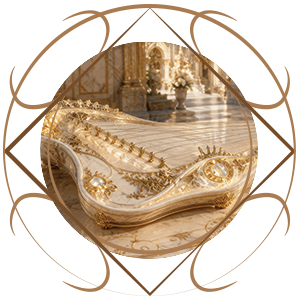
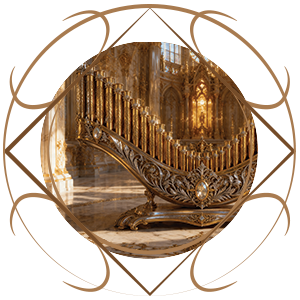
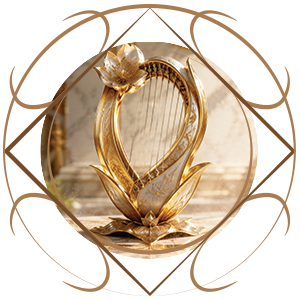
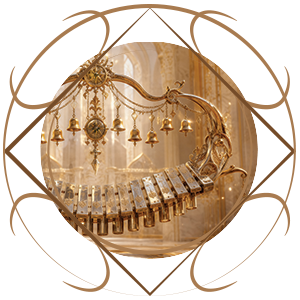
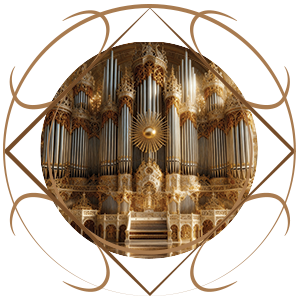
The celestial organ Lyrath fills great temples with long, almost otherworldly breaths of sound. The light zither Elyssar seems to resonate with a gentle radiance. The angelic flute Aurelian sings with crystalline clarity. The divine harp Sirilion soothes the spirit. Floating bells, known as Or’Thalir, respond to the wind, to movement and to that peculiar stillness that precedes a confession.
Yet music in Lohiras must do more than sound beautiful.
It must be true.
A choral song that conceals grief rather than carrying it offers no healing.
A hymn that sings of guilt so beautifully that no one feels compelled to act is an act of betrayal.
The language of Lohiras is called Liréth: the language of knowledge, unity and the Circle. Yet even these descriptions fall short of its true meaning.
To Lohiras, language is a sacred responsibility.
A word can open or close. Heal or wound. Bring truth into the light or conceal it beneath beautiful expressions.
Liréth sounds gentle, but never weak. A sentence spoken in Liréth should not strike. It should carry. Its central concepts are teachings in themselves: Valéon, the Gathering of Voices. Solûn, understanding and wisdom. Séraviel, an open heart for all peoples. Athuér, harmony in words. Thirian, Listener of Wisdom.
One detail is especially significant: Thirian does not primarily honor the one who speaks.
But the one who listens.
For in Lohiras, true understanding is regarded as a virtue that must be actively practiced.
Yet even Liréth can fall. Not by becoming ugly, but by becoming too beautiful to remain truthful. It falls when it cloaks power in sacred phrases, diminishes the voices of ordinary people, softens the weight of guilt, disguises judgment as purity or speaks of healing while seeking control.
Then the language of knowledge becomes a language of certainty.
And certainty is not the same as truth.
The festivals of Lohiras embody this same spirit. The Festival of the First Light takes place after the longest darkness. In the deepest hours of the night, the cities fall silent. Then the first flame is lit.
Not many.
One.
Then a second.
Then thousands.
As the sun rises and its first rays touch the stained-glass windows of the Circle, colors flood the halls.
Gold.
Silver.
Blue.
White.
Warm red.
The festival is more than a celebration of the sun.
It is the annual declaration of Lohiras:
We have witnessed darkness.
And still, we choose the dawn.
Luxarion is not a god of fear.
Not above all else.
The people of Lohiras do not tremble before him as they would before a cruel judge who waits only to count their weaknesses. They love him. And yet they fear him – not with the terror of a slave, but with the reverence of one who knows that there exists a light in which nothing can remain concealed.
Luxarion is the Immortal Ray: God of Light, Truth, Healing and Justice.
His light is warm. As warm as the first ray of sunlight after a long illness. As warm as a hand resting upon the forehead of someone burning with fever. As warm as candlelight in a hall where two enemies speak to one another without hatred for the very first time.
Yet this gentle light does not lie.
It does not flatter.
It conceals nothing.
Those who step into his light are not judged first.
They are truly seen.
And sometimes, being truly seen is harder to bear than any punishment.
In the art of Lohiras, Luxarion is rarely depicted in mortal form. He is portrayed as a figure of living light, golden warmth and flowing radiance. Where his eyes should be, two dazzling rays rise upward, gazing not upon flesh, but into the soul.
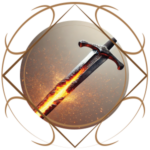
In his right hand, he bears the Sword of Sun Essence. Yet this sword is no ordinary symbol of war. According to the legends, its blade does not first cut flesh.
It cuts through lies.
Deception.
Self-delusion.
Dark bonds.
False oaths.
Power disguised as truth.
Thus, the people of Lohiras do not fear that Luxarion’s sword will slay them.
They fear that it will reveal what they can no longer deny.
Luxarion is the God of Truth, for nothing that remains hidden can be healed. The God of Healing, for truth is not meant to bring destruction. The God of Justice, for wrongdoing must never be allowed to vanish beneath beautiful words. The God of Mercy, for a person can become more than their guilt if they are willing to face the light.
After death, the people of Lohiras believe, the soul stands before Luxarion’s light. Not before a throne of fear, but before a truth from which nothing can be concealed.
The righteous enter the Realm of Light, a sphere untouched by lies, pain or the sorrow of being lost. Those who have sinned but repented must undergo trials of purification. Not as cruel punishment, but as a final revelation.
Yet those who knowingly chose darkness and refused every path of return are banished from the light.
Not because Luxarion hates them.
But because a soul that has utterly rejected truth can no longer endure the light.
And so, funerals in Lohiras are ceremonies of light. The dead are not sent forth into darkness. Water, candles, Light Lilies, prayers and sacred hymns accompany the departing soul. Their name is spoken, along with the truth of the life they lived – not merely its beautiful moments. For a memory made beautiful by concealing the truth offers no healing.
Luxarion does not demand perfection.
He demands that nothing remain hidden.
And therein lies the hope of Lohiras:
Not that darkness shall never exist.
But that it need not have the final word.
The light must remain warm.
Otherwise, it ceases to reveal.
It burns.